Nikola Tesla Articles
He Pointed the Way
TYNDALL WAS THE EXPONENT OF LITERATURE THAT PAYS.
He Charmed Vast Audiences With His Finished Lectures — Men Who Could Make Fortunes If They Would Speak or Write Science as a Subject of Popular Interest.
(Special Correspondence.)
New York, Dec. 26. — One of the ablest literary men of the United States, and a very conspicuous editor as well, was asked recently what he thought the next popular development of literature was going to be and whether fiction as we now know it was going to hold its place in the estimation of readers of the next century. The question was asked a day or two after the report of the death of Professor Tyndall had been published, and this American litterateur, musing for a few moments, at last said:
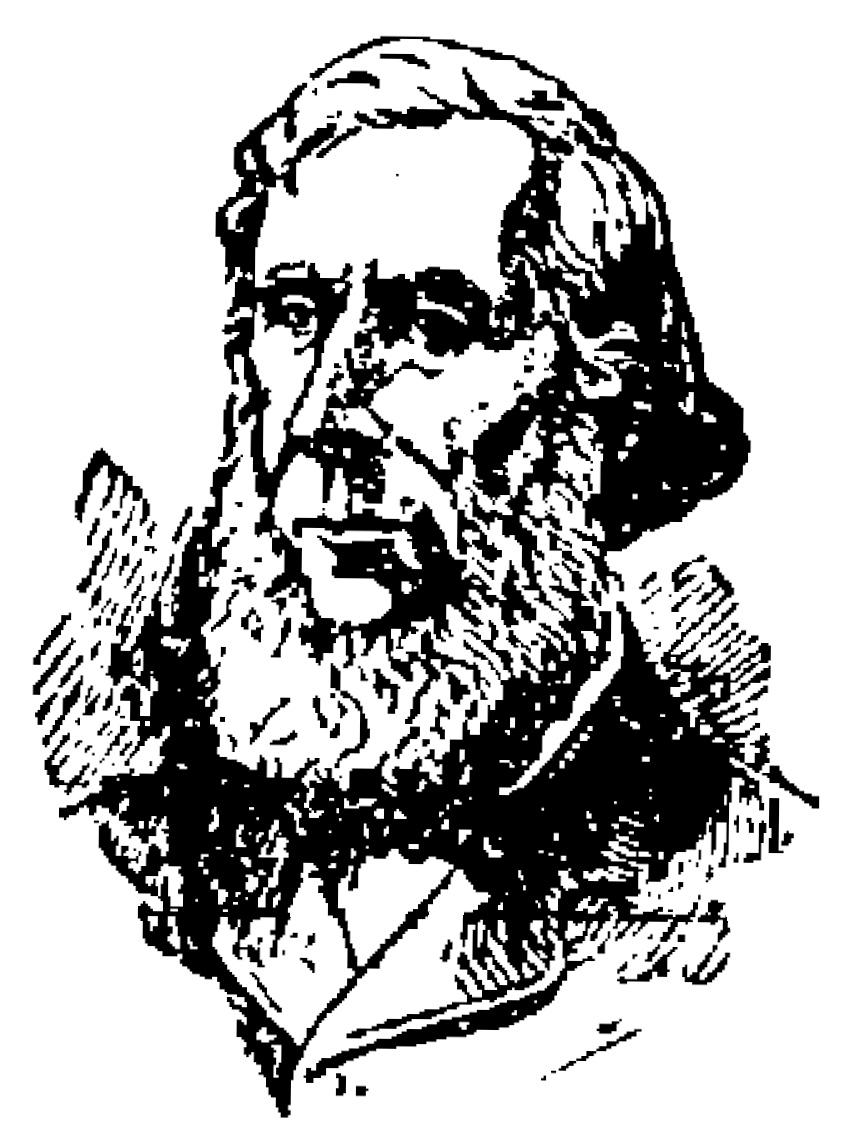
“The English speaking race has just lost the man who has pointed the way to the most popular and successful writing, as I believe, of the immediate future. Professor Tyndall not only did as much if not more than any one man to make science popular, and to cause scientific subjects no longer to be regarded with dread by those who are fond of light reading, but he made of science a literature, and I might almost say of literature a new science. Before his time Faraday, Sir William Thompson — who, after all, was contemporaneous with him — and some of the greater English scientists had attracted to their lectures and to their writings a considerable number, but these were for the most part persons seeking scientific instruction. Humboldt had indicated what might be done with scientific subjects popularly treated, and Hugh Miller in his enchanting work, ‘Old Red Sandstone’ — a book which deserves to be read far more nowadays than it is — had shown the English people that it was possible to write even of such flinty things as rocks entertainingly.
“But after all it remained for Tyndall to charm vast audiences with his lectures, written in such beautiful style that they were understood by those who were uneducated, while enjoyed by persons of cultivation. Proctor followed the hint that Tyndall’s lectures furnished by writing and speaking upon astronomy most successfully pecuniarily. But astronomy, unlike most other sciences, has always appealed strongly to the imagination even of rude and savage peoples. So I have been inclined to think, watching the development of literary tastes among the great masses, that the time is near at hand when there will arise a great writer who will do for scientific literature what, for instance, Fielding, Scott and Dickens did for tales and romances.”
The manager of one of the lecture bureaus in New York is reported to have said recently that if Professor Tyndall had been willing to sign a contract to deliver a series or two series of lectures in the United States, extending perhaps for a period of six months, he would have been able to take back to England with him more money than any English reader, excepting possibly Dickens, or than any English actor or singer, with the exception possibly of Henry Irving and Patti. He had several propositions from American publishers to write a book upon any scientific subject that he might choose, and the terms offered him were probably larger than those ever mentioned in any other contract made with an English writer.
Nikola Tesla discovered the extraordinary popular interest in science, and especially the strange and weird manifestations of it, when he delivered a lecture in London in which he explained and then illustrated by experiments his extraordinary discovery that by a certain development of the electric current he was able to transmit it from one point to another without any other medium than the ether which is the natural medium of electricity, and standing in the middle of a room through which such current was passing, holding up an incandescent lamp, it was illuminated.
Tesla might have repeated that lecture in every considerable city in the United States, with a guarantee from lecture managers of a large sum of money for each appearance, and he has received propositions from editors of magazines and publishers for writing both short essays and longer works, for which he could have been paid at his own price. He is, however, very busy in the commercial development of his discoveries, so that he felt that he could not spare the time; from this work he will have made for himself an enormous fortune.
If Edison had consented to accept a proposition made to him by a lecture manager, he might have made as much as $50,000 for a short series of lectures to be delivered in some of the larger cities of the United States, and Edison would have furnished not only the interest which attached to his personality and the value which attends anything which he might say upon scientific matters, but would have revealed a splendid, although not polished, English style. He writes with force, nervous vigor, using strong idioms, but writes very clearly. Edison might, too, have received many thousands of dollars for purely literary work and has been beset for the past two years for contributions, but he, too, has no time for such pursuit.
The popular interest in science romantically treated was illustrated by a work recently completed by Flammarion, the famous French astronomer. His book was not so well received in this country, where the subject, the end of the world as viewed from the possibility of science, was not a success at once. But it was well received in England, and in France commanded almost as much attention and excitement as did some of the romances of Alexandre Dumas when they were being published. The next successful writer, and the one who will make great fortune, will be undoubtedly a man who can make scientific discoveries from a literary aspect.
R. H. R.

Reprints
- He Pointed the Way (reprint)Utica Observer-Dispatch — December 28th, 1893