Nikola Tesla Articles
Tesla's Weapons Against War
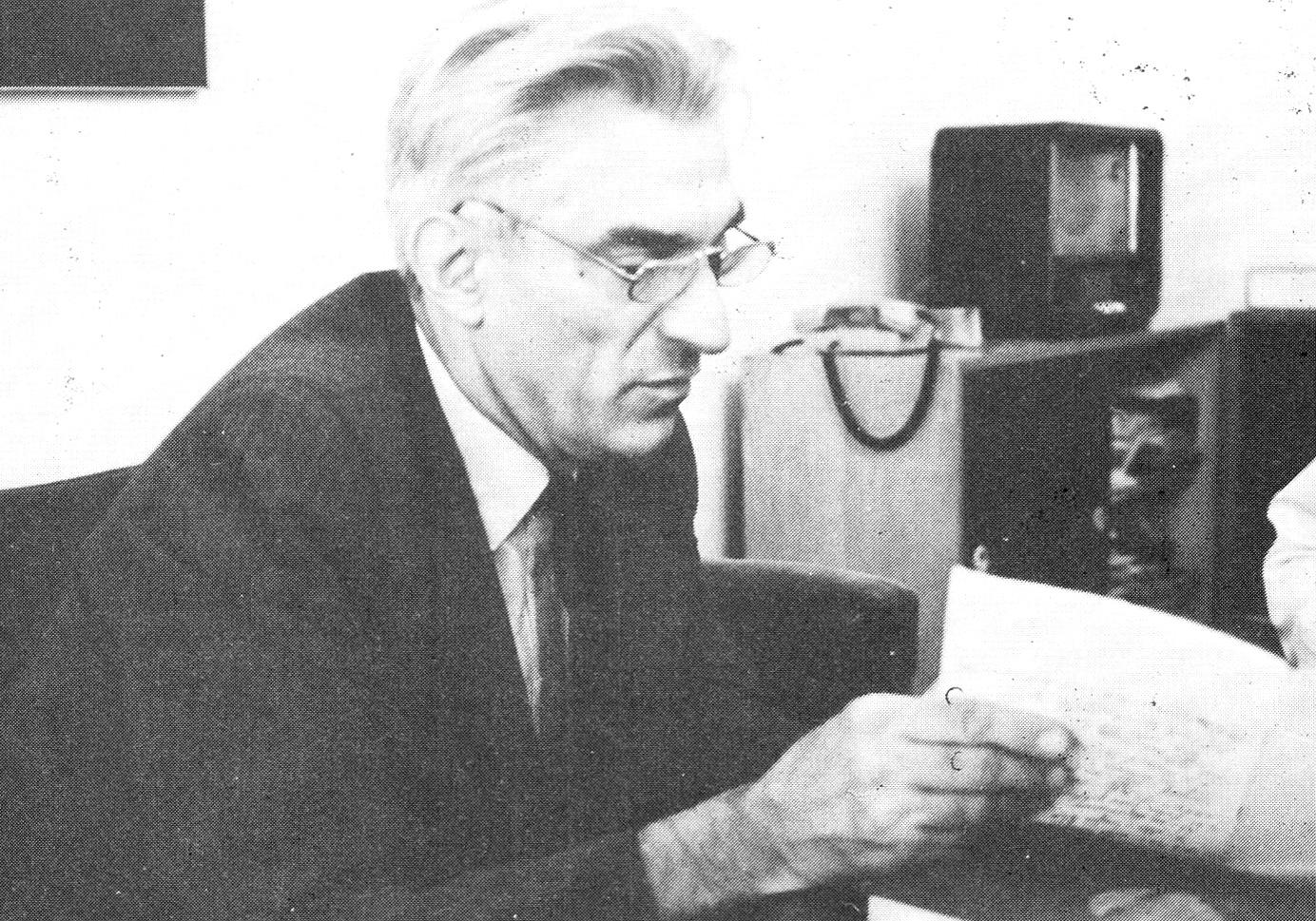
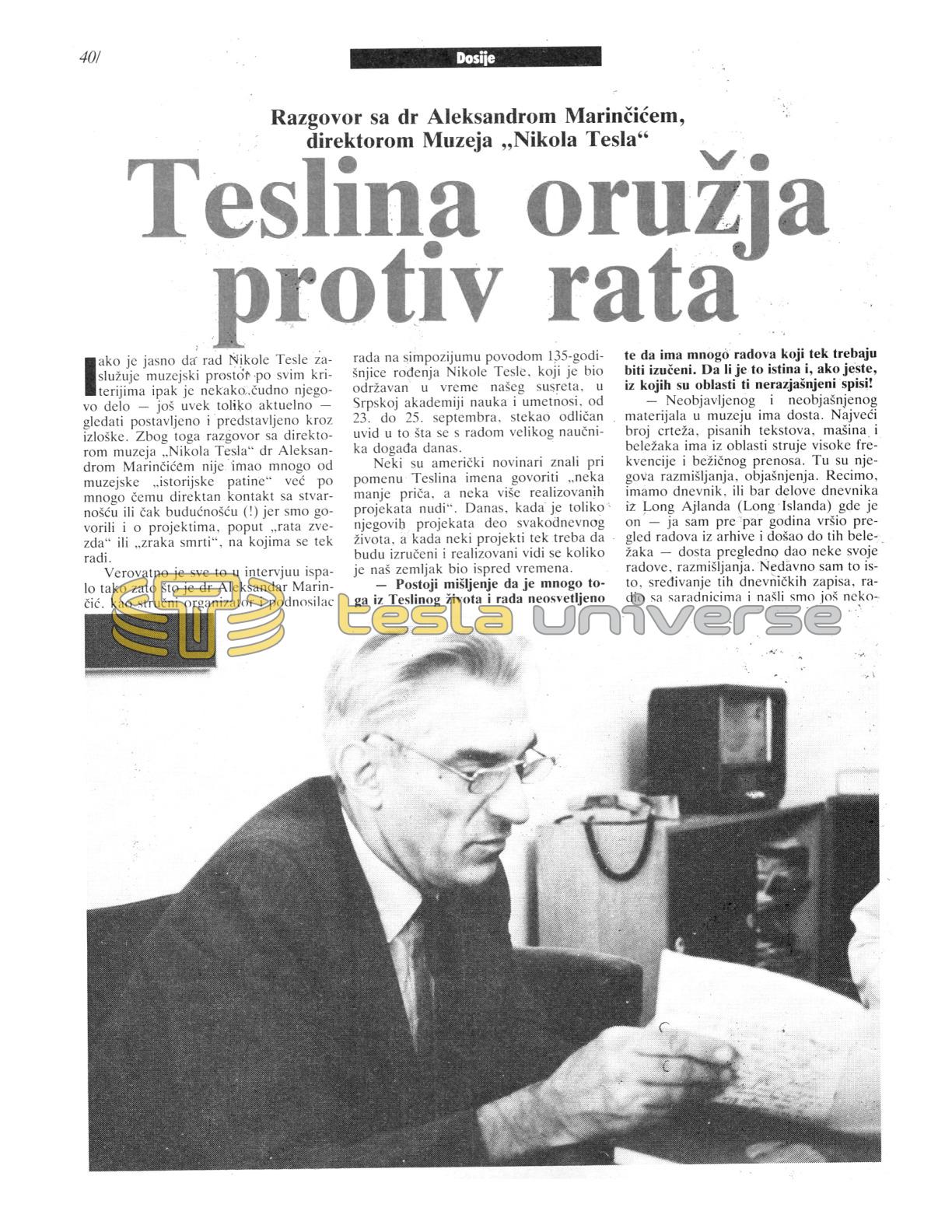
Although it is clear that Nikola Tesla’s work deserves museum space by every criterion, it is somehow strange to see his work — still so current — set out and presented through exhibits. For that reason the conversation with the director of the Nikola Tesla Museum, Dr. Aleksandar Marinčić, had little of a museum’s “historical patina.” In many ways it was direct contact with the present, or even the future (!), because we also spoke of projects such as “star wars” and the “death ray,” on which work is only now being done.
It probably came out that way because Dr. Aleksandar Marinčić, as the professional organizer and the author of a paper at the symposium marking the 135th anniversary of Nikola Tesla’s birth, held during our meeting at the Serbian Academy of Sciences and Arts from 23 to 25 September, had gained an excellent view of what is happening today with the great scientist’s work.
Some American journalists, at the mention of Tesla’s name, used to say that he “offers fewer stories and more realized projects.” Today, when so many of his projects are part of everyday life, and when some have yet to be studied and realized, one sees how far ahead of his time our countryman was.
— There is a view that much of Tesla’s life and work remains unilluminated, and that many papers have yet to be studied. Is that true and, if so, from which fields are these unexplained writings?
— There is a good deal of unpublished and unexplained material in the museum. The largest number of drawings, written texts, machines and notes is from the field of high-frequency current and wireless transmission. There are his reflections and explanations. We have, for example, a diary, or at least parts of a diary, from Long Island, where he — I went through the archive a couple of years ago and came upon these notes — set out some of his works and thoughts quite clearly. Recently I did the same sorting of those diary entries with colleagues, and we found several hundred more sheets and prepared them for study. Unfortunately, that diary of his is not like the one from Colorado Springs, in which he writes in detail from day to day and practically nothing is missing, except perhaps photographs.
Tesla did not keep such a diary on Long Island, because he was occupied with other things. For a couple of days he would write nothing at all, then write something, then again nothing. He was very irregular about it, compared with the way he kept the diary in Colorado Springs. He would practically forget what he was doing, begin something else, and so on, in turn. It is hard to find one’s way in that diary. We hope that one day a detailed survey will be made of everything he did. The rest remains to be filled in, like some enigma. He may have written it, but some parts have been lost. Colorado Springs is a period of five or six months, and Long Island is five or six years. Some years are dense, full of work and notes, and some considerably thinner, with individual parts missing.
— Have all the materials that his nephew Sava Kosanović brought into the country been preserved?
— Everything Sava Kosanović brought is here, and it is kept.
— How many papers and other materials that speak of Tesla’s discoveries do the Americans have?
— That I do not know. We have contacts with institutions that may have something — the Smithsonian archives, for example, and then the National Library in Washington, which has quite a lot. Individually we know some researchers, for example the well-known Miller, who has been occupied with this research for a very long time.
The work is a real hunt for papers. He has been at it for nearly half a century, and they say that in the United States there is no one who knows more about Tesla and has so many documents. I have had occasion to meet him and talk with him, so I know what he has. It is not as impressive as the collection of our museum, but from time to time we find that he has some photograph we do not.
— Does Miller concern himself only with facts from the life, or does the technical side interest him as well?
— He is chiefly occupied with collecting facts from Tesla’s life, but, as he is an engineer and quite expert, he follows that side successfully too. He has just written some papers on Tesla’s priority in the discovery of radio. He has been at that for a long time. It is cited everywhere as proof that Tesla had significant work which is not really recognized in the world, especially when one looks at books on the history of radio. Occasionally you will find Tesla’s name mentioned in that field as well, but certainly much less than he objectively deserves.
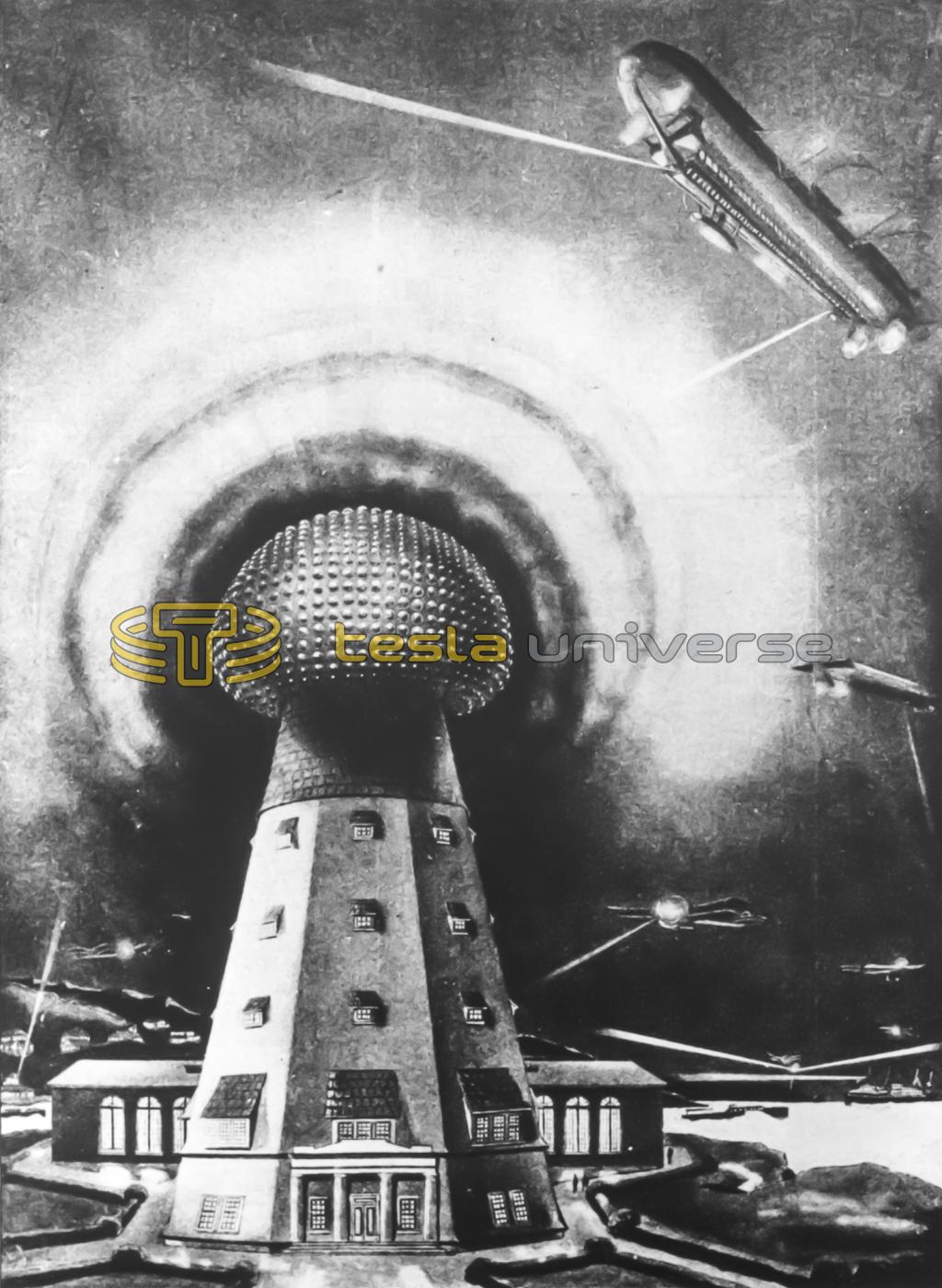
“Star wars” and “death rays,” which Nikola Tesla designed, were meant, by their enormous power, to turn man away from thoughts of conflict. He said: “What has been made so far has a borrowed mind, because it hears you from a distance, to which you send commands. The next step will be when that automaton has senses of its own.”
Star wars
— These are old disputes, but there are possible new ones as well. Tesla is often mentioned in connection with the “star wars” project. How large a part did Tesla have in that project, indirectly of course?
— We have not investigated it systematically, but I know there is material which gives grounds for believing that Tesla really did foresee all of it. Some of his ideas have been used. Who used them in particular, and in what way, cannot yet be known. In the museum, for example, we have drawings of Tesla’s machine which, to put it simply, by means of an electric field accelerates certain electric projectiles, and he even worked out a scheme for how it would be done. I have not seen any detailed calculations, but it is given how he would carry it out and then combine it into a system.
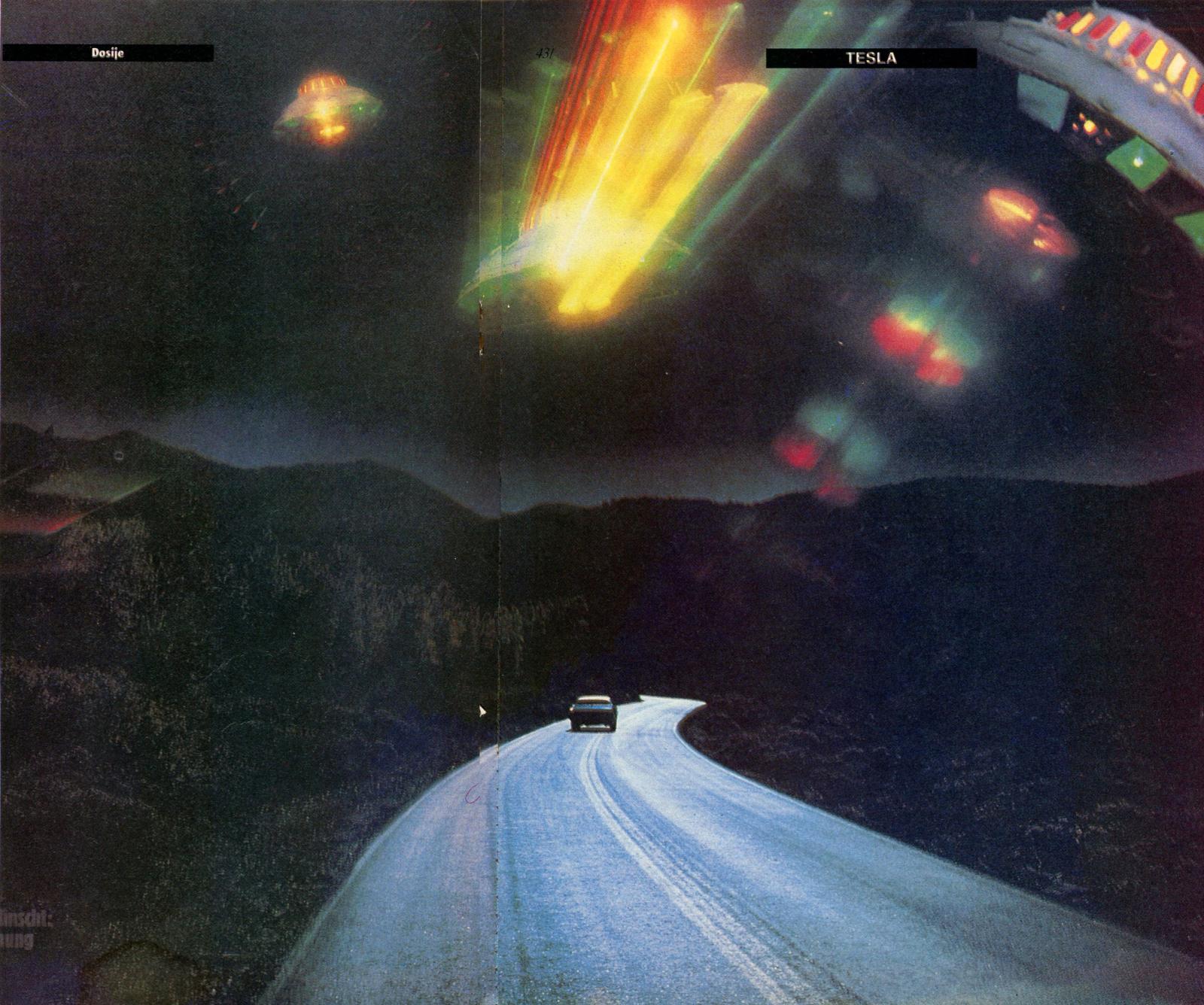
He later considered that it would be a kind of revolver within the limits of the earth, and that the projectiles would be accelerated in a vacuum. There he made use of his special tube, or hydraulic diode, which he had been researching somewhere at the beginning of the century, between 1905 and 1910, and he also held patents in that field. He used that hydraulic diode at the outlet of his — let us call it a weapon — so that it could be used within the limits of the earth. When you look at what the Americans have realized, and what they have published in the literature on similar weapons, you see only that the same sort of weapon has been transferred into space and intended for satellite warfare — a satellite, or for the destruction of certain rockets in space. That was probably the weakest point in the design of that weapon: the passage from a vacuum, that is, from rarefied space, into air makes the weapon suddenly lose its usefulness and become complicated. In the dimensions of space, where the air is very rarefied, you do not have to make that hydraulic diode at the outlet of the tube; the projectile simply flies out of it. Experiments exist, confirmed and published, showing that satellites can be destroyed with such devices. That is, a very great acceleration is obtained by means of an electrostatic field. And it is not a true electrostatic field, because the acceleration keeps increasing. This has been realized. You see, it is very much like what Tesla actually worked on and conceived.
A humane weapon?
— He was, of course, fully aware that he was dealing with a powerful weapon. How did he, as a humanist, look upon it?
— It is clear that he had to be aware of what he was planning. As a pacifist he did not conceive this weapon, or similar tele-directed weapons, such as guided rockets, ships and moving objects in general, in order to destroy another. He supposed that the weapon would destroy German submarines. He made and offered such proposals somewhere at the beginning of this century, or rather somewhat later, before the immediate danger of war and the outbreak of the First World War, when German submarines seriously threatened maritime traffic and merchant ships…
— Did he want to stop the German naval force?
— Yes. He said that a torpedo could be remotely controlled and entirely effective in the fight against German submarines attacking ships on regular lines across the ocean. He gave the idea of how it was to be done, but the technology lagged behind his thinking.
— Tesla had already had some projects devoted purely to the properties of combat, in fact defensive ones. Yet neither then, nor during the war not a single project of his was used, is that not so?
— Exactly. For example, as early as 1878 he spoke and worked on tele-directed torpedoes or some kind of defensive devices, but this was not used even by the end of the Second World War.
— Did he work on these projects on someone’s order, or for some other reason?
— There were no orders. He worked on it himself, and in an almost science-fiction manner. Clearly it was not in the sense of Jules Verne, who had a lively imagination and a superficial knowledge of technology. Tesla, as a man of imagination and enormous knowledge, accurately sensed the path technology would take. As early as 1900 he wrote an article on the increase of human energy, and in it he describes automata and treats man as a perfect automaton with sensors, which connect him with the external world and, on the basis of the connection with the external world, create their reactions. Tesla describes his automaton project in outline and says: “What has been made so far has a borrowed mind, because it hears you from a distance, to which you send commands. The next step will be when that automaton has senses of its own.”
The automaton and sensations
He spoke of eyes, even of certain sensations, and so on. This tele-directed Tesla automaton was almost meant to become independent and to serve as a weapon which would really make man superfluous in war. That is why he worked on perfecting it, for he was in a way similar to Nobel (Alfred Nobel, the discoverer of dynamite, after whom the greatest prize for exceptionally good results in several fields of human activity is named, and who, when he discovered dynamite, believed that people would give up warfare when they saw its destructive power), and likewise believed that his discoveries would turn man away from conflict. Tesla had a far more precise idea of this than Nobel. For if we create such perfect machines, then they will wage war with one another, and not people. Wars will become senseless and terribly expensive. But the question then arises of who will fight when the machines are destroyed. Again people, with fists, with stones… Still, in any case, it was conceived that even small countries would be able to defend themselves. That is why he at one time worked on those “death rays,” which — terribly simplified — were designed in some of his papers.
— How did he actually conceive the “death rays”?
— He conceived the “death rays,” at least as I have seen and understood them from some of his writings, very logically, as certain particles which you accelerate greatly because they acquire great energy and great penetrating power. In the end that is a general principle. It is not like a laser, as people imagine, but more like a rifle or some anti-tank weapon. You have a projectile which has speed, mass and adequate energy according to the formula !$ m \cdot v^2 = E !$, If you increase the speed, and in the formula that is !$ v^2 !$, you get more energy. It is therefore better to increase the speed than the mass. In other words, if you double the mass you get twice the energy, but if you double the speed you get four times the energy. And so, on that simple principle, he said “small mass, but great speed results in great energy.”
He did not know, and did not understand, that there are limiting speeds. When one reaches the speed of light, one goes no further. He had some mechanical model of those rays.
When rays, X-rays and cosmic rays were later studied, one had to come onto Tesla’s ground and his thinking on that problem. Cosmic rays are characterized by the fact that their effects ought to be such that they are really under some acceleration at enormous speeds, close to the speed of light, and with a small mass which acts with tremendous energy. You see, in that philosophical sense Tesla was very close to these solutions.
Why did he need it? Because such a ray would not be deflected. He knew, on the other hand, that if you take an ion, like an electron, which you can obtain in a space where you have exposed rarefied gas to a strong electric field, different effects are achieved. But these particles, as soon as they enter a magnetic field, it acts upon them and they no longer become a deadly weapon, because you simply do not know how that ray will be deflected. Unlike that ray, this terribly accelerated ray has no such deviation. I am giving you a terribly simplified model, but with the essential elements. It resembles what we call a “neutron ray,” which is a consequence of neutral particles flying through space at great speed and therefore having striking power.
An original ecology
— Apart from weapons, Tesla dealt with questions of energy in a very original way. His view of the traditional sources of energy, and of what will happen in the future, is particularly interesting…
— He spoke of two shortcomings of coal, for example. First, when coal burns, gases are produced, carbon dioxide, which pollutes the atmosphere. On the other hand, coal is a finite resource, so above all it is not what is called renewable energy. Once coal is burned it is definitively lost. Tesla spoke of this and pointed to the problems of energy and the world energy question very early, around 1895. He thought of using clean energies, such as water and the sun. For these are energies otherwise lost if you do not use them, and in fact you have consumed nothing. That is what ecologists today advocate and stand for. He was thinking about it even then.
— Long before many others, he spoke of renewable sources of energy…
— Yes. He gave the basic elements. Do not pollute the atmosphere, and make the greatest use of renewable sources of energy and conserve renewable sources of energy. Those are also the basic postulates of present-day ecologists. Only the most lucid grasped that this is how it should be done, and the United Nations began to deal with this problem only in the seventies of this century, that is, far into the twenties. And the UN strives to have programs in advance, showing people what ought to be done in the next stage. He was doing this a good eighty years before the UN.
— How much do you yourself occupy yourself with Tesla’s work, and in what way?
— Every day I am in some way in contact with Tesla’s work, as director of the museum that bears his name. A man thinks a little about all those views of his on life and the world. You know, with the years a man begins to philosophize a little. I think everyone does it, because accumulated experience makes a man value things which, as an ordinary engineer, never occurred to him before.
It is not the same as when you want to make a little machine, some model, some electronic device, without looking at the general context. Tesla always set his projects precisely in that broader context, and that is what is very valuable. That is why I think Tesla’s work ought to be presented anew to young people, and I am glad that a fine biography of Tesla will soon appear. Very seriously done, I would not say perfect, but excellent…
— Which biography do you mean?
— It is Margaret Cheney’s book Tesla, which appeared in 1983. That book is still highly regarded today, and every month it sells about a thousand copies, which is a fantastic printing. Wherever I have looked abroad, in a library, I have come upon this book. That clearly shows how much interest there is in Tesla today. There are several other foreign books on Tesla, fine books, but not one has done as well as this. At one time John O’Neill caused a sensation with a biography published immediately after Tesla’s death. That book has been translated into Serbo-Croatian, but with certain abridgements in the parts where Tesla appears to have some supernatural power. You know, in those times such things did not really go over. Although I do not see Tesla that way, it ought not to have been abridged, simply because there are people who like to see him that way — so let them. The main part always remains, Tesla’s creative work, which is untouchable.
Visions and fictions
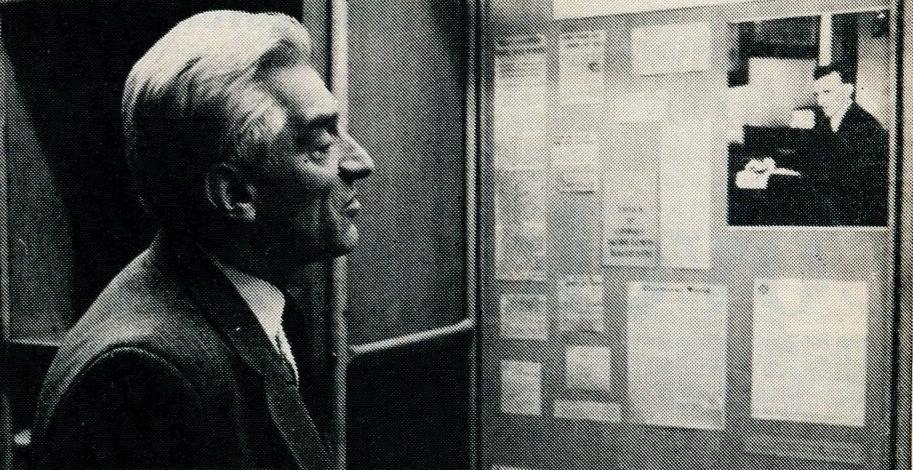
I always say that the Nikola Tesla Museum in Belgrade has, in its standard presentation, something that becomes clear to everyone who comes here and sees it. These are things that have passed all tests and checks, and where there is no talk of any ambiguities. There is no mistake there. But to speak of certain border areas into which Tesla entered, and of which he spoke, is a very uncertain and slippery area, attractive to people in its own way, of course. When this too is looked at logically, not going to extremes, as when one speaks only of fictions and visions, then things fall into place. We can read Tesla’s notes on his first patents very carefully, and in them we find not only the beauty of a brilliant mind but also very useful things, so that you can enter into a wonderful logic.
Several times in my life I have experienced, even at a time when I was occupied with some specialized field of my own, telecommunications for example, how I understand some of his things in a new way. Before that I had spoken, I had probably interpreted exactly what he said and thought, but I had no real feeling for what he wanted to achieve. Only when a man grasps modern telecommunications does he understand where it comes from. There is a modern approach — the spectrum approach of radio engineering, by which a desired region is controlled. In radio engineering there is always the problem of interference, interception, eavesdropping… As early as 1900 Tesla was occupied with that problem, and in a very fine way. That patent of his passed almost unnoticed by the people who were occupied with Tesla’s work. It was as if no one paid it any attention. When I learned of this new technique and began to understand it and to connect it with Tesla, I discovered that it was “that” which Tesla had thought, and which was in essence what he had worked on. Then I showed it to people who are occupied with this modern technique of the spectrum today and put the question whether that was the essence of the problem. They confirmed that it was.
This is not a problem of the history of his development of ideas. What happened in the forties or fifties is unconnected with what is done today. Ideas continue to live over a long period of time. I think the role of the museum, and of the people who know Tesla exceptionally well, is here. Why? To connect the work, to build a bridge, and for Tesla to receive the due recognition for his work. Great and intelligent people who long ago paid him great compliments have from time to time considered certain elements of his work, but many others who admire Tesla do not consider these things; they only admire. They simply believe that he gave something great, since everyone praises him so, and they have no objection. It is not a matter of that. Tesla is current even today, and we ought to learn from him.
Borislav Soleša