Tesla Universe classic Tesla coil

English Mechanic and World of Science

Nikola Tesla articles from English Mechanic and World of Science
Displaying 1 - 10 of 15
This article is a reprint from Electrical World of September 1, 1894 and is intentionally not duplicated here.

Since Mr. Nikola Tesla’s first work in alternating current motors was published, he has been busily engaged in working out other types, one of which is described below. In Mr. Tesla’s motors, it will...
The cause of the innocuousness of these seems not to have been determined with certainty. If the impulses alternate at the rate of a million per second, it can easily be imagined that one of these...

Tesla Coil. — "P. B. P." will find all he wants in " The Inventions, Researches, and Writings of Nikola Tesla ," by T. C. Martin, published by the Electrical Engineer , New York; but in case he has...

The oils generally used for such are those of high insulating power, such as heavy petroleum (fluid vaseline) and boiled linseed oil. Resin oil is also excellent. The reason for boiling linseed oil is...
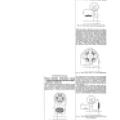
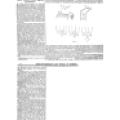
The subjoined figure will, I hope, do away with the necessity for a very verbose description:— Procure a glass tube, 2in diameter and 6in. in length. This can be bough for 5d. or 6d. — the short glass...

From an American paper we learn that "Tesla's Idea" for curing consumption is to pass 500,000 volts of electricity" through the body. Thus we read: — Nikola Tesla has recently invented an electrical...

The following extract from the long lecture delivered recently by Mr. Nikola Tesla will be found of especial interest from several points of view: — Some enthusiasts have expressed their belief that...
The remarkable experiments in a new system of electric lighting shown by Mr. Nikola Tesla at the Royal Institution last week seem to have astonished those who do not keep themselves abreast of the...

Without going very deeply into a description of the apparatus used by M. Tesla in his experiments with electricity at high voltage, and which have been recently described in the “E. M.,” it will be...