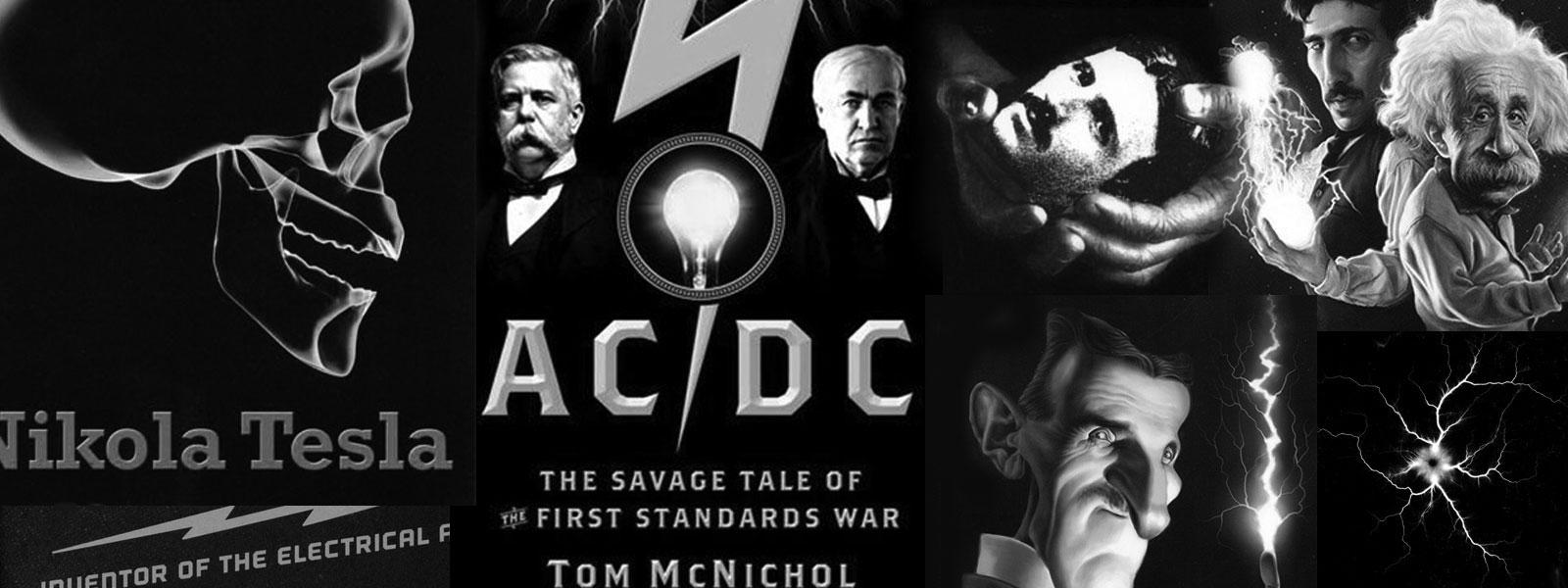
Nikola Tesla Books
Direct-current power stations were unable to transmit electrical energy over long distances, and for that reason every larger city had several power stations, each supplying electrical energy to its own relatively small district. It is understandable that, because of this, the costs of producing electrical energy were high, and before long other companies also began manufacturing Tesla's three-phase generators and motors without purchasing the patent rights, counting on the fact that they could easily extricate themselves from difficulties through long-drawn legal proceedings. As mentioned above, Westinghouse, according to the contract, paid Tesla royalties; in order to accommodate Westinghouse, Tesla renounced his royalties, which amounted to millions in value, and in this way freed Westinghouse from all difficulties. When Tesla later found himself in financial trouble, Westinghouse's heirs wished to help him, but he refused any support.
It is interesting that Tesla, in his research, displayed an almost incomprehensible energy and interest in various scientific problems, but only until he arrived at the knowledge that those problems had been solved, even though in his imagination he clearly foresaw their further development. He did not consider questions of further development and practical exploitation of inventions on an industrial basis sufficiently worthwhile to sacrifice more time to them. He left such matters to others to take care of. Because of this he suffered material losses, but this did not trouble him greatly.
Tesla was not interested in technical and financial affairs. This is shown by the case of the construction of the first hydroelectric power plant in the world, which, at the proposal of Professor Rowland, was built according to Tesla's principle at Niagara Falls. Edison and Lord Kelvin unconditionally
