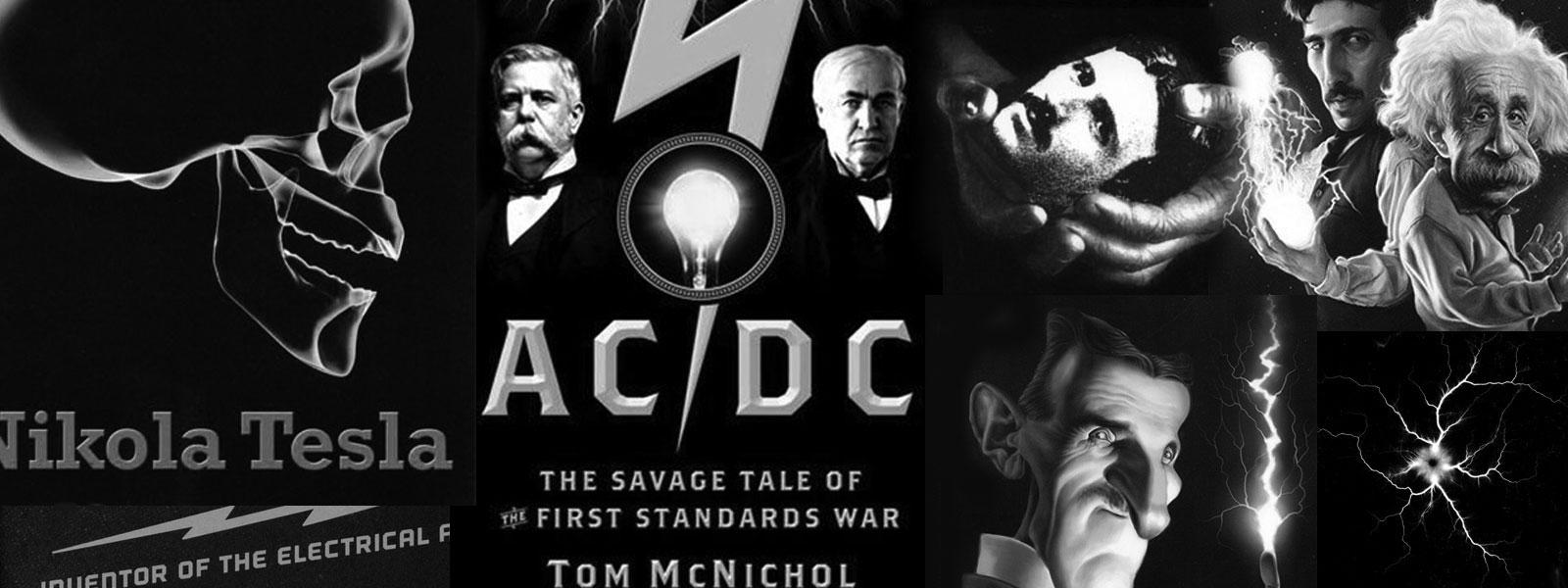
Nikola Tesla Books
I could say that I belong among the greatest idlers. Every occupation carried out according to prescribed rules and a strict program requires a certain sacrifice of life energy. I have never paid such a price for my work. On the contrary, I progressed in developing my thoughts without expending energy to any great extent.
In his later years, Tesla worked on the construction of a steam turbine, which was intended to differ significantly from other turbines, as well as on some other inventions, but without any particular success. Others overtook him in that field. The greatest discoveries of his genius were made in the 1880s and 1890s. Later, he often made statements that he would astonish the world with new inventions, but none of that materialized.
In the final decades of his life, Tesla no longer had his own laboratory. He solved the problems he set for himself simply through thought, which he called his "mental laboratory."
Naturally, Tesla's name began to fade. His work - the electrification of the entire civilized world - had become something ordinary and a daily necessity for millions of people. Scientists and engineers turned their full attention to other problems: motorization, aviation, X-ray optics, natural and artificial radioactivity, atomic energy, radio, television, the synthesis of dyes, medicines, vitamins, hormones, rubber, and other inventions. All of this is based on general electrification. Tesla grew old, and even during his lifetime his name began to enter the history of science, to be placed alongside the names of Galvani, Volta, Ampere, Watt, Ohm, Faraday, and others equal to him. Even today, the names of these great men live on in terms such as galvanism or as the names of various electrical units, such as the volt, ampere, ohm, watt,
