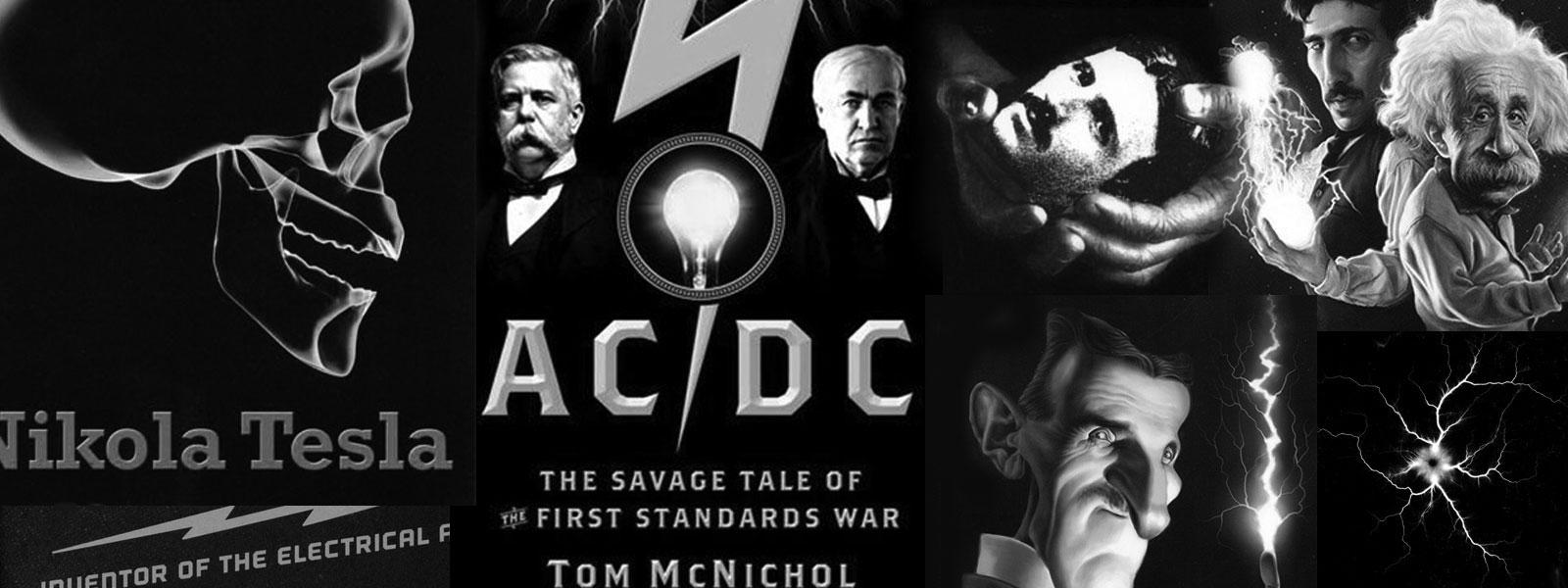
Nikola Tesla Books
we do not mean to disdain Tesla; on the contrary, we aim to show that by emphasizing his characteristic features, his greatness stands out even more. Great people often times do not differ much from ordinary mortals in everyday life. The difference lies only in this: ordinary people, apart from their weaknesses, often have nothing else, whereas in the case of geniuses their weaknesses fade in the face of their positive qualities, and such weaknesses often appear merely as a kind of "spice" to their character. Each and every one of the smallest details from the lives of such people can serve us in "psychological analysis" of their character.
There are many such examples. I presented several cases in my "Basics of Chemistry," so I will briefly mention them here.
Here's a faithful and fluent English translation:
For example, the great English scientist Henry Cavendish (1731-1810), who discovered, among other things, hydrogen and was the first to "weigh" the Earth, that is, to determine its specific density, never completed his university studies and was an eccentric of his own kind. Although he was wealthy and came from a distinguished aristocratic family ("the most learned bachelor and the richest scientist of his time"), he lived very modestly, dressed in an old-fashioned manner, and in society was extremely shy and withdrawn. He never accepted Lavoisier’s theory of combustion.
His compatriot and contemporary Joseph Priestley (1733-1804), of whom the English are also very proud, was a doctor of theology and published many works in the fields of theology and law, and relatively few chemical papers. He was the first to discover oxygen and many other gases, and among other things was the first to produce soda water. He regarded his work in chemistry merely as a pastime in his leisure
