Nikola Tesla Inventions
Radiant Energy Utilization
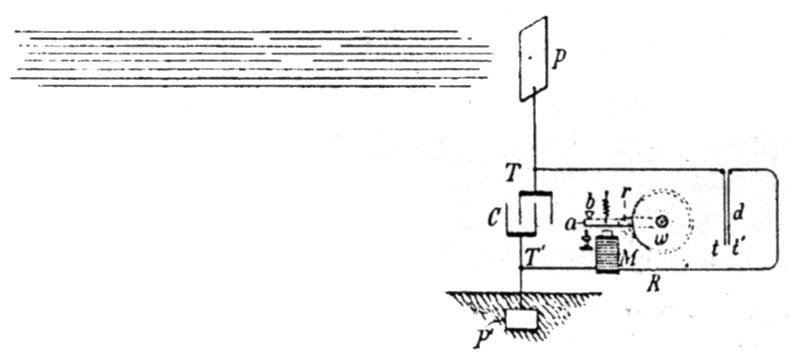
Patented in 1901 under U.S. Patent 685,957, Nikola Tesla's radiant energy utilization device sought to harness cosmic rays, atmospheric electricity, and other invisible radiations for free power generation. Inspired by observations during high-voltage experiments in the 1890s, where linesmen reported eye irritations from "radiant energy," Tesla designed an apparatus with an elevated insulated plate acting as an antenna to collect charged particles from the environment, connected to a capacitor and grounded circuit for storage and discharge. The system exploited natural electrostatic gradients, like those between the ionosphere and Earth, to accumulate voltage without mechanical input, potentially powering devices continuously. Tesla viewed it as a step toward unlimited energy, predating solar panels by capturing "streams of matter" from the Sun and space.
Though uncommercialized due to low yields and technological limits, the invention anticipated renewable energy harvesting, influencing atmospheric electricity research and modern photovoltaic concepts. Tesla's experiments in Colorado Springs illuminated distant bulbs using radiant effects, blending with his wireless transmission work. Today, it inspires ion collectors, space-based solar power, and ambient energy scavengers for IoT devices. Ethical debates arose from Tesla's free energy dream challenging monopolies, but its legacy promotes sustainable alternatives to fossil fuels, highlighting his humanitarian vision for democratizing power.