Nikola Tesla Inventions
Wireless Power Transmission
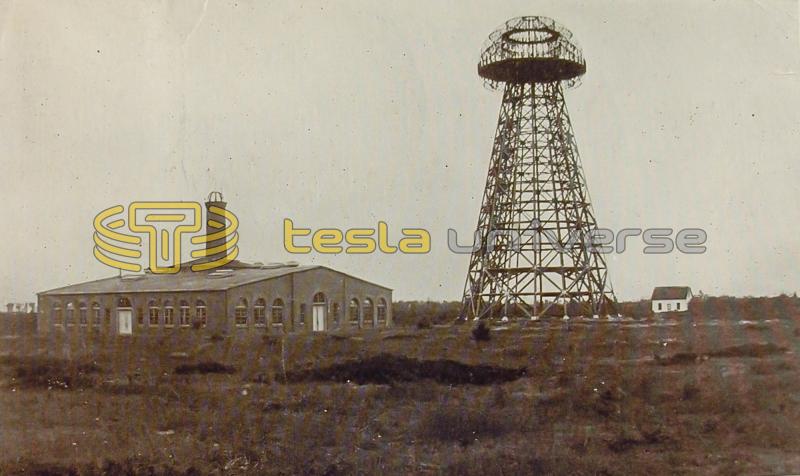
Nikola Tesla's wireless power transmission system, explored through patents like U.S. Patent 649,621 in 1900, aimed to distribute electricity globally without wires by using the Earth and atmosphere as conductors. Beginning experiments in 1891 with high-frequency resonant transformers, Tesla built the Colorado Springs laboratory in 1899 to test large-scale transmission, creating 130-foot artificial lightning bolts and illuminating bulbs miles away. The system relied on resonant inductive coupling, where a primary coil generates a high-voltage oscillating field that excites a secondary coil tuned to the same frequency, transferring energy efficiently over distances. Tesla envisioned magnifying transmitters like the Wardenclyffe Tower (started in 1901) to create standing waves in the Earth's ionosphere, enabling power reception anywhere with grounded antennas. Funding cuts from J.P. Morgan halted the project in 1903, but it demonstrated wireless energy's potential.
Historically, Tesla's work influenced radio broadcasting and modern wireless technologies, though dismissed as impractical in his time due to energy losses and safety concerns. He proposed humanitarian applications, like powering remote areas, but military interests emerged later. Today, resonant coupling inspires Qi wireless charging for devices, electric vehicle induction roads, and biomedical implants. Research into beamed power via microwaves or lasers for satellites echoes Tesla's vision, with companies like Emrod advancing long-range systems. Despite unfinished, his concepts challenge wired infrastructure, promoting a future of ubiquitous, free energy and underscoring Tesla's foresight in sustainable global electrification.