Nikola Tesla People
Titus de Bobula
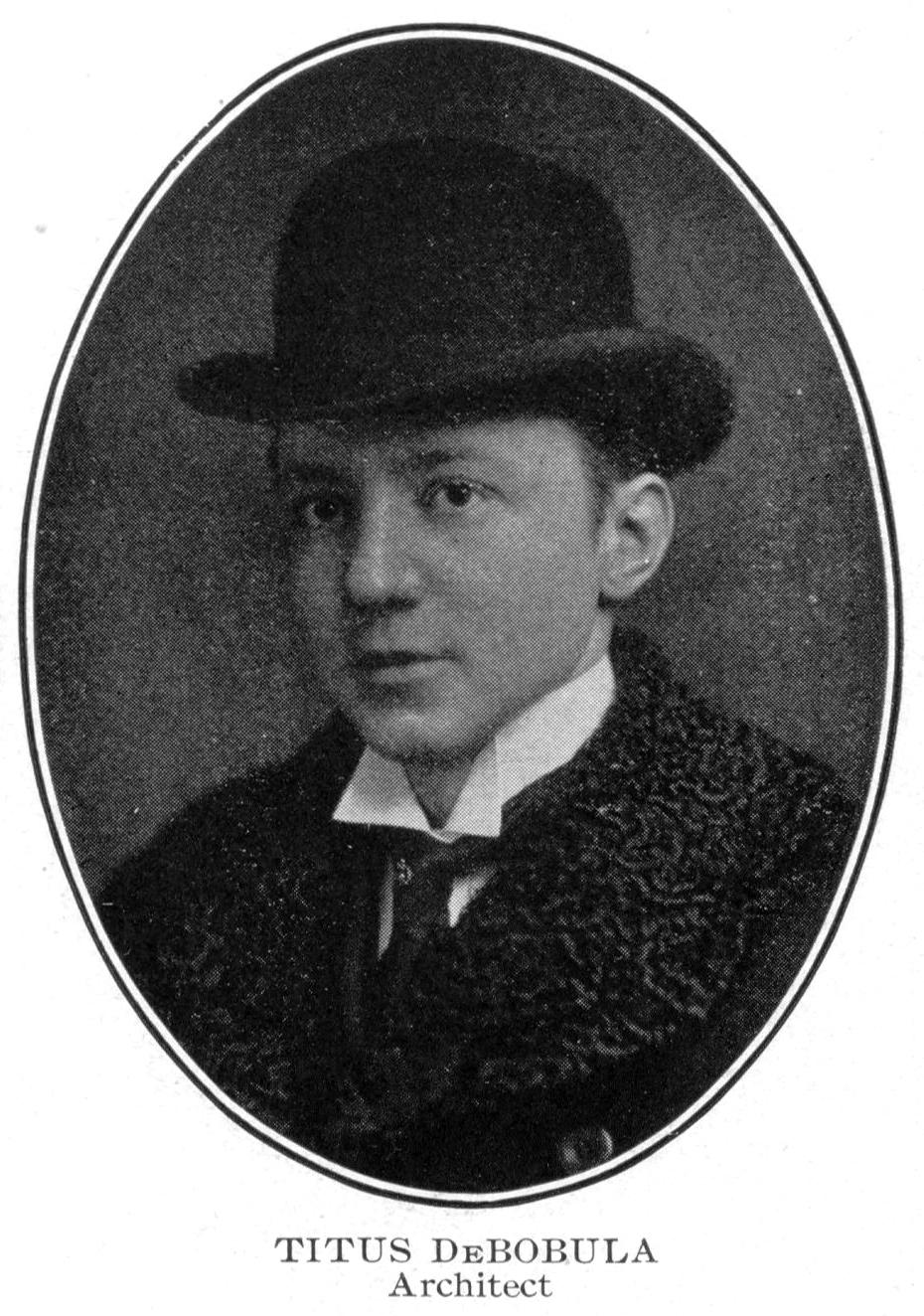
Titus de Bobula (24 December 1878 – 1961) was a Hungarian-American architect, businessman, and political figure.
Born Titusz Bobula in Budapest, he was the son of the architect and politician János Bobula Sr. He studied architecture in Budapest and emigrated to the United States around 1897, later adding the nobiliary particle “de” to his name. After brief periods in New York and Ohio, he established a practice in Pittsburgh in 1903. There he designed several distinctive churches in an Art Nouveau / Secessionist idiom, most notably St. John the Baptist Greek Catholic Church in Munhall, Pennsylvania, and became an early advocate of reinforced-concrete construction and an “American Style” of architecture.
In 1910 he married Eurana Dinkey Mock, a niece of the wife of steel magnate Charles M. Schwab. The couple later lived in New York. In the early 1920s de Bobula returned to Hungary, where he became involved in right-wing political activity; he was arrested in 1923 in connection with a plot against the Hungarian government and subsequently returned to the United States.
In the 1930s he worked in New York as an arms dealer and prepared architectural drawings for a tower, power plant, and related structures connected with Nikola Tesla’s proposals for a defensive “impenetrable shield” or particle-beam system (death ray). He spent his later years in Washington, D.C., and died there in 1961.