… to mass) ratio, finding it smaller than the hydrogen atom, and thus a sub-atomic particle. The combination of Birkeland's observations … earth and - as in the discharge tube - collided with gas atoms in the upper atmosphere giving off auroral light. …
Search results - Page 13
… sustained by photon interaction with electron shells of the atom. Gravitational aspects occur primarily in and of the nucleus of the atom, since most of the mass of the atom is there. However, … by radiation interaction with the screening electrons in atoms, (2) all our notions of mass, space, time, and …
… question: Limited by what? For example, consider a single atom floating somewhere in a totally isolated section of the universe with the nearest atom, say 100,000 light years away in any direction. The atom undergoes some kind of transition wherein a photon is …
… its movements must come from the environment. So, the atom, the ulterior element of the Universe's structure, is … force. It is the force which governs the motion of the atoms, which causes them to collide and develop the … provided that the small particles of matter, molecules or atoms, are evenly distributed, no motion of the sphere …
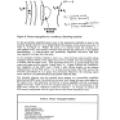
… spatial observer to be emitted from the nucleus (intra-atomic precursor of wave A, in Figure 7). Within the atom, it is emitted from the nucleus as a sine-squared wave, …
… by Pierre and Marie Curie, in Paris, of radium, whose atoms were exploding spontaneously without apparent cause, … and other investigators describe these rays as shattering atoms of matter producing showers of débris-just as Tesla …
… with an ordinary microscope. These particles are called atoms, and atoms are made up of even smaller particles-protons, …
… of inconceivable speed. These vibrations turn the atoms of the gases in the tubes into, as it were, little …
… is quite feasible. Even if released in macroscopic matter (atoms), the gain factor may be as high as 1030 or so. Even … of a classical photon with an orbital electron of the atom. In comparison to an orbital electron, the nucleus of …