Nikola Tesla Articles
Harnessing Niagara Power (speculative title)
Webmaster note: This article is incomplete, but because of its uniqueness, it is being posted as-is with the hope that someone will be able to help locate the missing portion. If you have any information, please contact us.
BACKERS of the proposed new Niagara power development knew where they wanted to go early in 1889. But the question as to how to get there remained unanswered.
On the upper Niagara River would be built a new power project, using the water of the Niagara to develop some sort of power.
Would this power be electric or mechanical?
If it were electric, how would it be distributed? How, for example, could the difficulties inherent in delivering power produced at Niagara to Buffalo be overcome?
EDWARD DEAN ADAMS, partner in a New York City banking firm and president of the Cataract Construction Co., went abroad to try to find some of the answers.
“Chances of methods of producing and conveying and using power were taking place which gave promise of great extension and development,” Adams recalled later.
“There was need of attracting the thought of the best scientific engineers and manufacturers to the Niagara problem that they might evolve new methods and new machinery to meet unprecedented conditions.”
ADAMS’ trip early in 1890 resulted in several conclusions, including the decision to generate all power from the new project at a central powerhouse.
“Our true way,” Adams said, “might be to build this tunnel and develop the whole in this one central station, transmitting the power . . . to different places.”
The tunnel, as it had been designed, could permit development of 150,000 horsepower if undertaken at a central powerhouse. The saving in construction costs would be considerable if the separate intake canals and branch raceways under the proposed mill sites could be eliminated.
It should be noted that this central powerhouse concept was evolving before construction of the Schoellkopf Station No. 2 in the gorge. It was an innovation in the thinking of power planners.
But the decision on location still left the question of transmission unanswered. Still sought was the best method of long-distance transmission of the power without losing so much of the production that the project would not be a financial success.
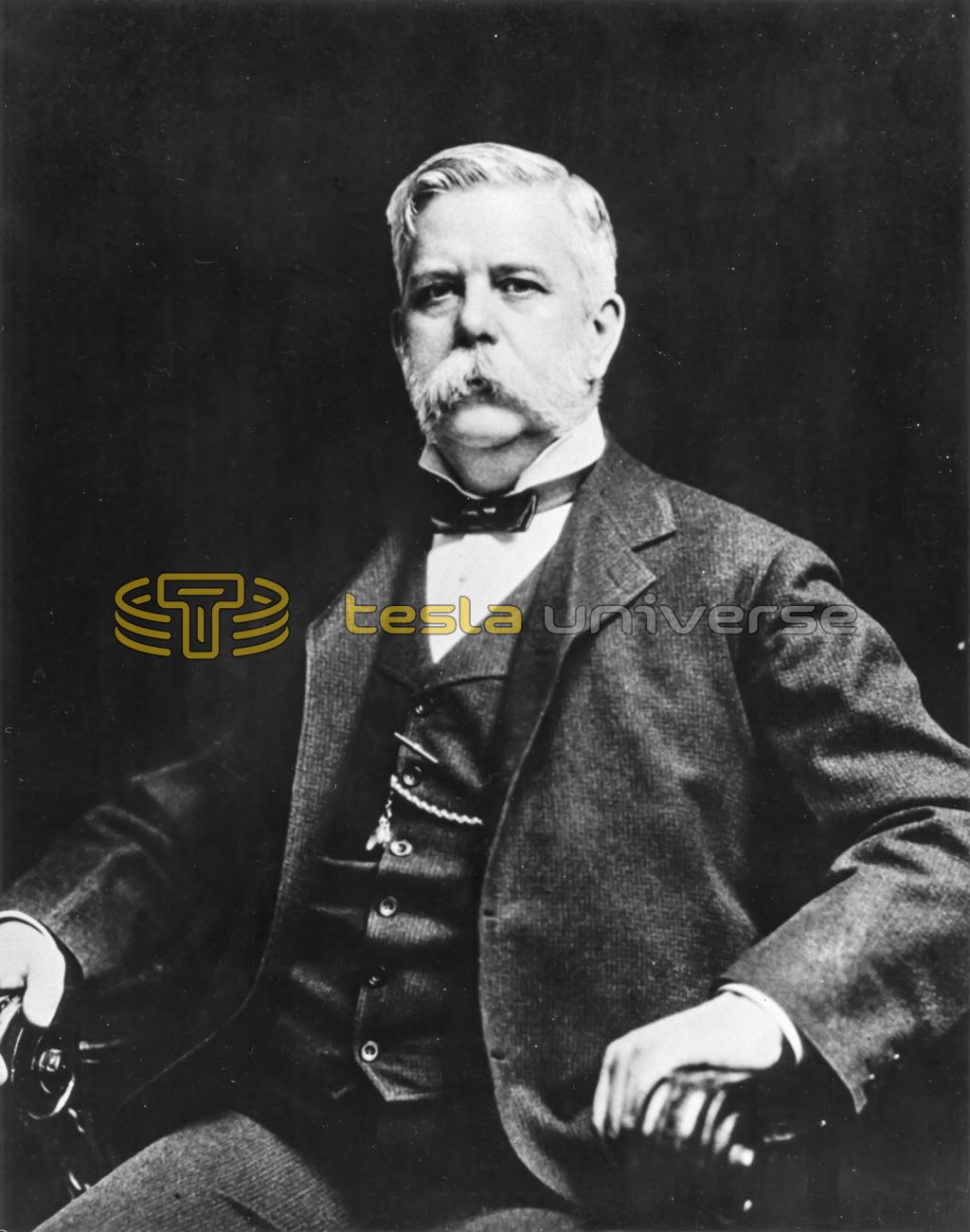
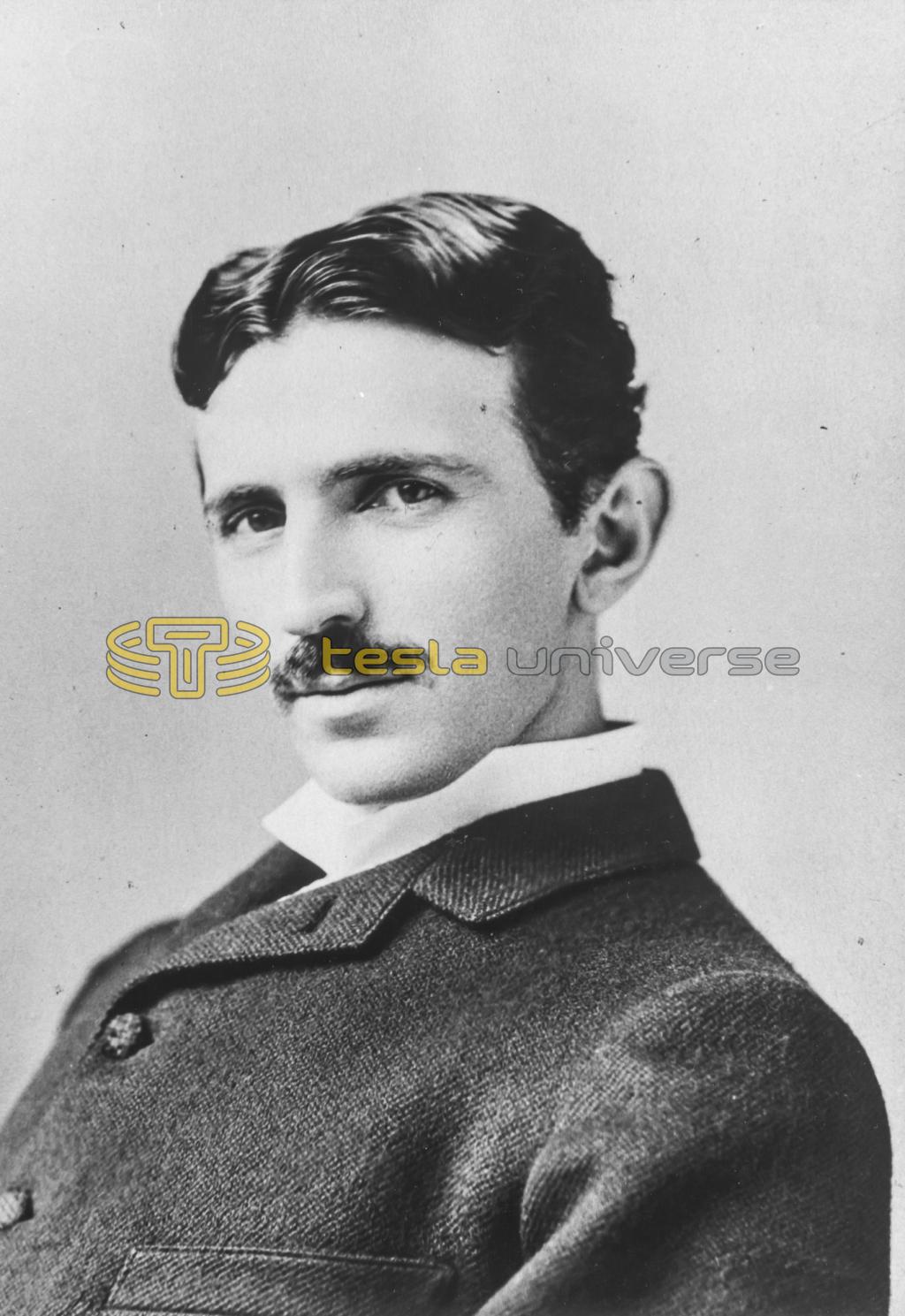
THE SEARCH for a method of transmission attracted the best scientists in the world. Among them was a small, but insistent band which believed in a relatively new system—alternating current.
Aligned against them was an equally distinguished group, one of whose members was Thomas Alva Edison. Edison looked into proposals for the Niagara project and recommended transmission by the established direct current, which would limit the distance the electricity could be sent from the powerhouse.
So, while plans for construction of the tunnel progressed, the Cataract Construction Co. launched a “scientific symposium on the utilization of the waters of the Niagara.”
THE “SYMPOSIUM” was undertaken by a special group established for the purpose. The International Niagara Commission was organized in mid-1890 in London. Its goal was to find the best system for the Niagara project.
Two members of the commission were from England and one each from France, Switzerland and the United States. Coleman Sellers of the Cataract Construction Co. represented the firm as the U.S. commission member.
Prizes were offered for the best engineering plan, and the competition attracted 18 entries.
The judging started in January, 1891. When it was completed, there was no first prize awarded for a combined program of hydro production and electrical distribution of power. Also lacking was a prize for the distribution system. A great deal of modification was needed for all proposals in the various detailed fields. The solution to the problem of long-distance transmission of Niagara’s power still was to be determined.
THE COMMISSION reported that its members could not agree on a future for the new-fangled alternating current system.
Commissioners, the report said, “were not convinced of the advisability of departing from the older and better understood methods of continuous (direct) currents in favor of the adoption of methods of alternating currents.”
Faced with this report, power company officials hedged against the system toward which they had leaned.
This is what they then proposed to do:
Two central power houses flanking the canal from the upper river would be built. One would provide direct electrical current. The second would produce and distribute compressed air as power.
Such a development, it must be remembered, might not fulfill the potential, because it was felt it would take some time to attract large industries to Niagara Falls. Limited distribution of the power which could be produced at Niagara would close the large Buffalo market to Niagara’s output.
THEN, on May 6, 1893, the board of directors of the company, reaching the point of no return, decided to travel along a new road.
In retrospect, it must have taken a great deal of courage to make the move toward the comparatively new system of alternating current.
This was the final decision:
The entire production of the two powerhouses would be electric power. The electricity would be transmitted by alternating current.
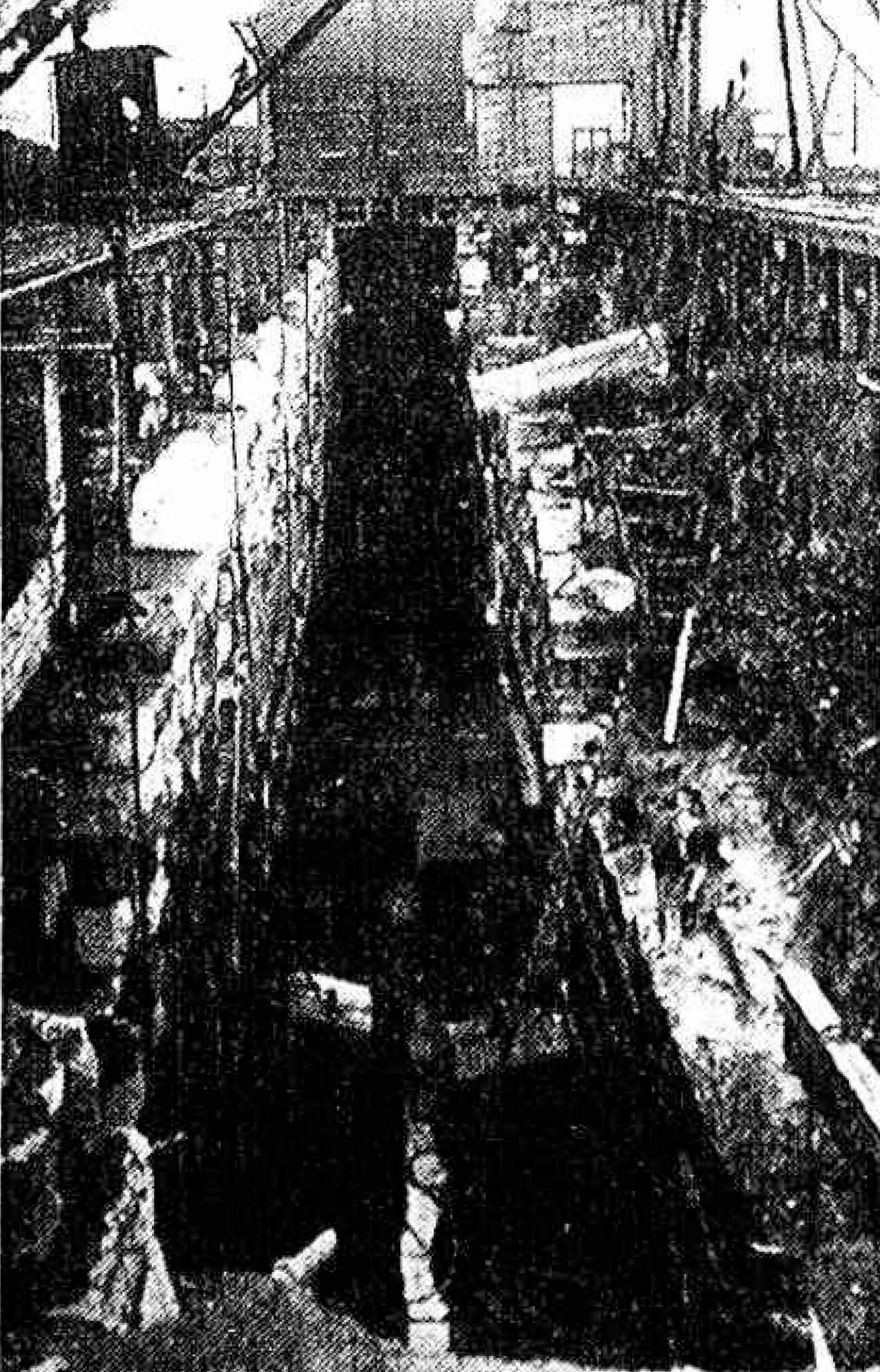
A force of some 2,500 men labored to dig the giant tunnel beneath the Village of Niagara Falls and the pits which would house the turbines.
And the order went out late in 1893 to the Westinghouse Company of Pittsburgh for three alternating current generators.
MUCH of the salesmanship had been accomplished by George Westinghouse. He had convinced the Niagara Falls power officials that a new system, invented only a few years before by an immigrant from Austria-Hungary, could do the job.
The immigrant was a technical genius named Nikola Tesla. He had invented a polyphase alternating current motor and system. Although it had passed all its tests, it had never been used on a large scale. Westinghouse had confidence it would work at Niagara.
TESTS of the first hydroelectric unit at Power House No. 1 of the Niagara Falls Power Co. began in April, 1895.
First commercial delivery of power from the station was made to the Pittsburgh Reduction Co. on Aug. 26, but it traveled less than a half-mile. Direct current could have done as well.