Nikola Tesla Inventions
Electrical Meter
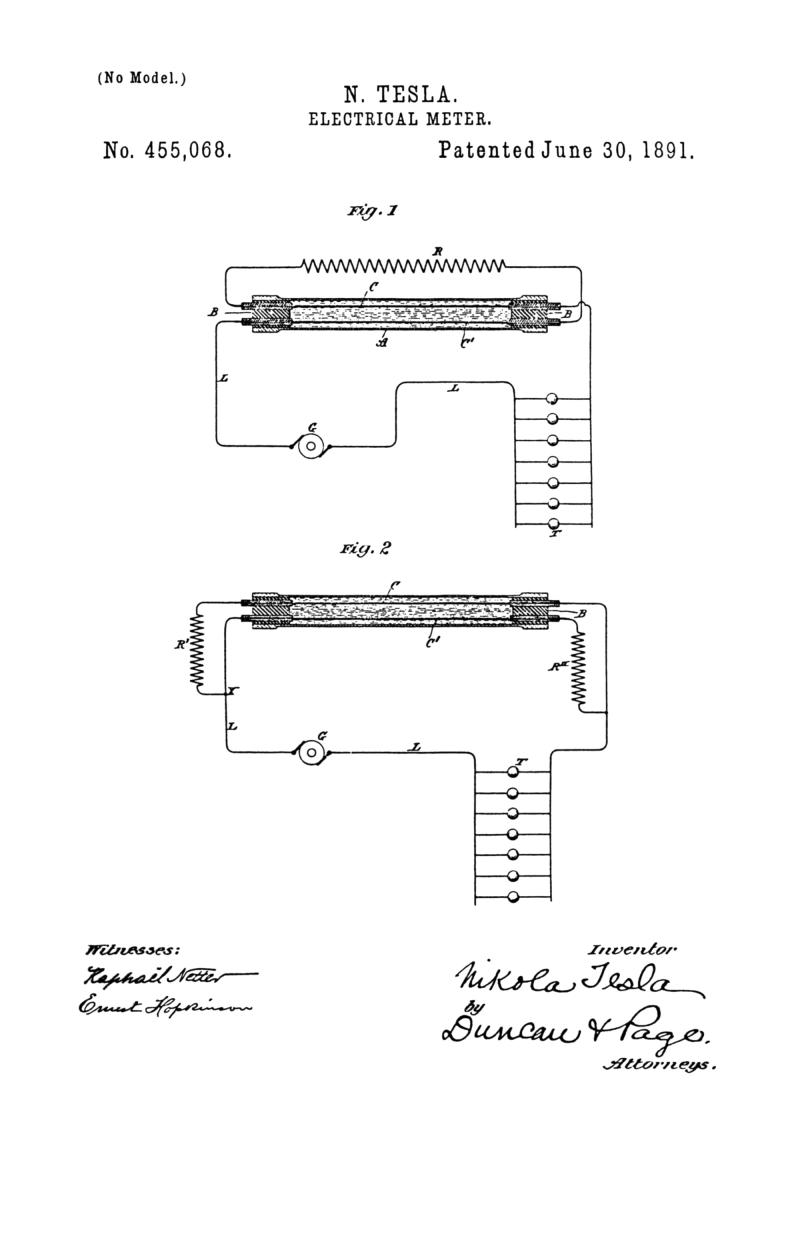
Tesla's electrical meter, patented in 1891 under U.S. Patent 455,068, provided an innovative electrolytic method for accurately measuring energy consumption in electrical circuits over time. The device maintained a uniform potential difference between two conductors immersed in an electrolytic solution, causing metal deposition or erosion proportional to current flow. By quantifying the mass change in one or both conductors through electro-deposition, the meter computed expended energy without mechanical moving parts prone to wear. Tubular cells with sealed ends contained the solution, ensuring precise, reliable readings for billing and monitoring in early power systems.
This invention addressed the need for dependable metering as electricity distribution expanded, offering a chemical-based alternative to mechanical counters. Assigned to companies like Waltham Watch, it reflected Tesla's precision engineering background. Historically, it standardized energy measurement, enabling fair utility practices during electrification's growth. Today, its principles echo in electrochemical sensors and modern smart meters, which build on accurate consumption tracking for efficient grids and consumer awareness.