Nikola Tesla Inventions
Electrical Transformer
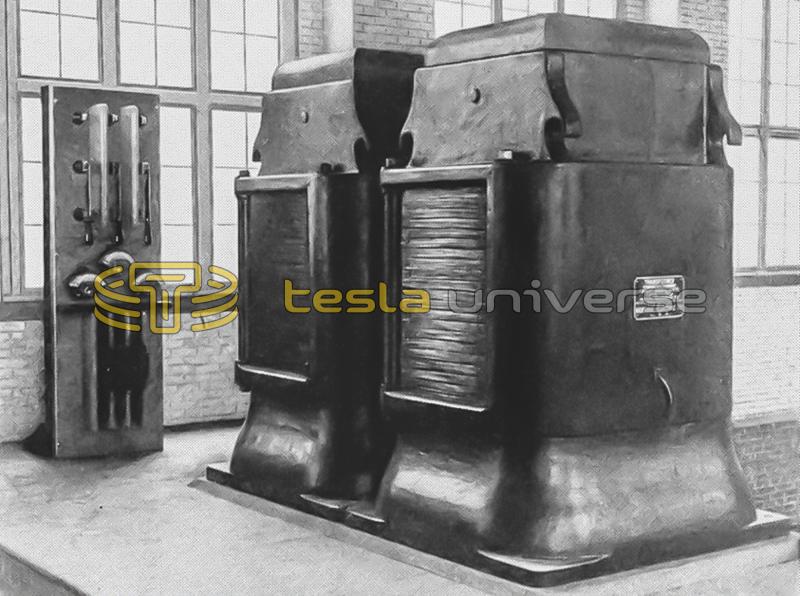
Nikola Tesla's electrical transformer, patented in 1890 under U.S. Patent 433,702, introduced an innovative induction device designed to create a phase difference between primary and secondary currents in alternating current systems. The core of the invention involved placing a magnetic shield or closed magnetic circuit between the primary and secondary coils, which acted to retard the magnetization of the core portion carrying the secondary coil. This setup ensured that the secondary current lagged behind the primary, producing a quarter-phase difference ideal for operating his polyphase motors. The transformer could be configured with multiple primaries and secondaries, allowing for flexible current conversion while maintaining constant output regardless of load variations. Tesla's design addressed inefficiencies in early converters by providing a reliable method to adapt currents for motors and other devices, enhancing overall system performance.
This patent represented a key refinement in Tesla's electrical apparatus, building on his work with high-frequency and polyphase systems. It was particularly useful for converting two-phase currents into forms suitable for driving motors, with applications in power distribution and machinery. Although part of the broader AC ecosystem, the transformer's focus on phase control and constant current output made it a specialized tool for optimizing energy transfer. In modern contexts, similar principles underpin phase-shifting transformers in power grids, influencing high-voltage transmission and industrial controls. Tesla's emphasis on magnetic shielding to manipulate current phases highlighted his deep understanding of electromagnetic induction, contributing to the efficiency of early electrical networks and inspiring advancements in power electronics.