Nikola Tesla Inventions
Fluorescent and Neon Lighting
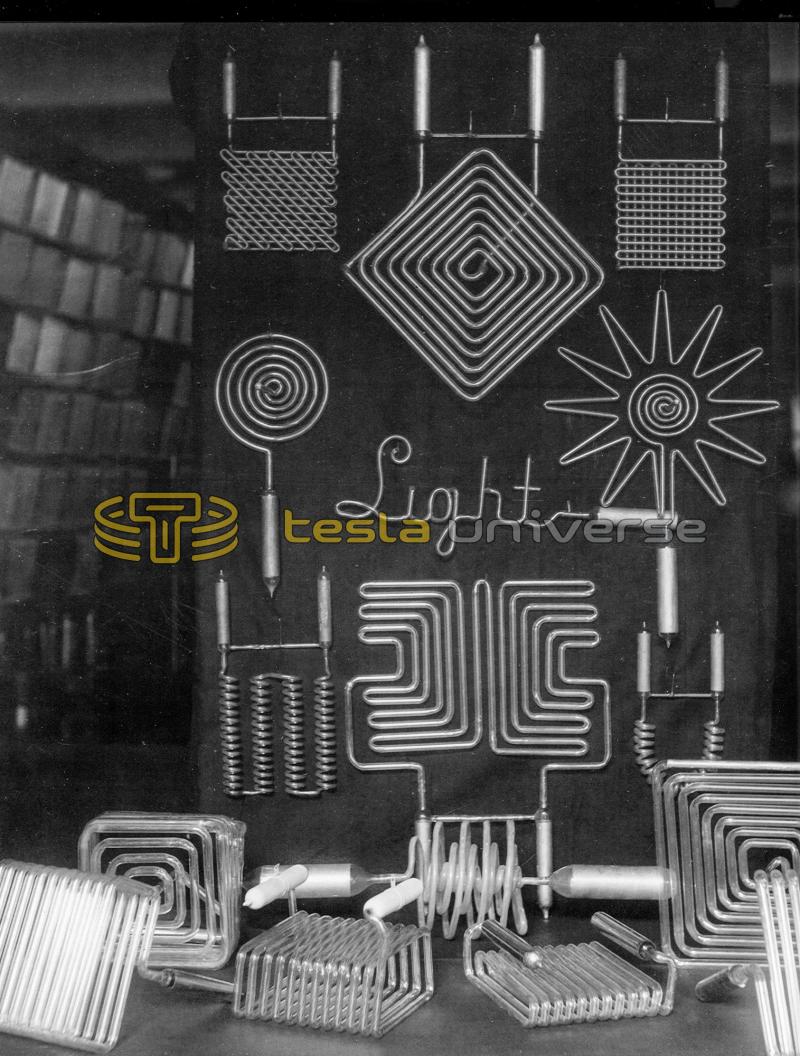
Tesla developed early versions of fluorescent and neon lights by passing high-frequency electricity through gas-filled tubes, creating illumination without a filament. Demonstrated at the 1893 World's Columbian Exposition in Chicago, these lights used electrical discharges to excite gases like neon or mercury vapor, producing bright, efficient light. This was a departure from Edison's incandescent bulbs, offering longer life and lower heat output.
His experiments with Geissler tubes and high-voltage currents showed that adjusting frequencies could light tubes wirelessly, influencing modern lighting technologies. Although Georges Claude commercialized neon signs in 1910, Tesla's foundational work in high-frequency applications paved the way for energy-efficient lighting used in signs, displays, and homes today.