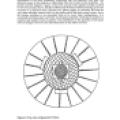
… from its normal continuous motion, by its jumping from one atom to another, or from one orbit to another about the same atom. This is a very simple theory, but it is often the … wave is produced by the vibration of the whole molecule or atom as shown by the big arrows and dotted wave line in Fig. …
Search results - Page 11
… is quite feasible. Even if released in macroscopic matter (atoms), the gain factor may be as high as 1030 or so. Even … of a classical photon with an orbital electron of the atom. In comparison to an orbital electron, the nucleus of …
… force in the form of the electrostatic repulsion of the atomic residues. Electrostatic repulsion increases with the …
… with an ordinary microscope. These particles are called atoms, and atoms are made up of even smaller particles-protons, …
… which make up an electrical current are passed along from atom to atom in a copper wire, according to a difference in polarity … called amperage , the number of electrons passed along from atom to atom. (In a single second, engineers now know, one …
… Science Writing Medal from A.A.A.S., 1946. Revealed that atomic energy had been released, Mar. 1940. Mem. Arts and …
… my currents of 15 million volts and higher, I have split atoms, but no energy was released," he stated.77 Tesla's … was based on direct experience. Having literally split atoms on a routine basis since 1899 with millions of volts …
… sustained by photon interaction with electron shells of the atom. Gravitational aspects occur primarily in and of the nucleus of the atom, since most of the mass of the atom is there. However, … by radiation interaction with the screening electrons in atoms, (2) all our notions of mass, space, time, and …
… by Pierre and Marie Curie, in Paris, of radium, whose atoms were exploding spontaneously without apparent cause, … and other investigators describe these rays as shattering atoms of matter producing showers of débris-just as Tesla …
… spatial observer to be emitted from the nucleus (intra-atomic precursor of wave A, in Figure 7). Within the atom, it is emitted from the nucleus as a sine-squared wave, …