Nikola Tesla Articles
Lightning in His Hand - The Life Story of Nikola Tesla (Book Review)
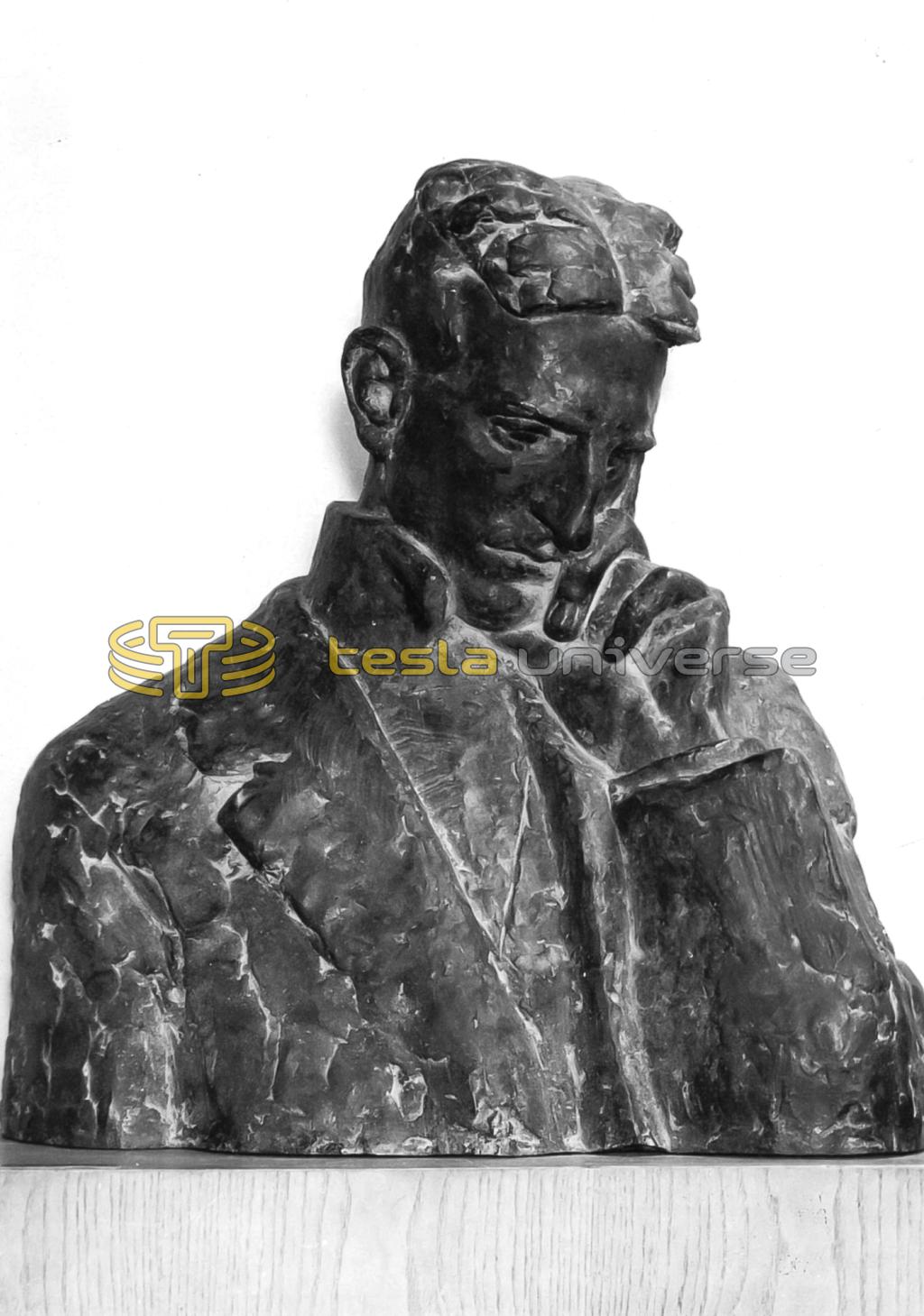
The career of Nikola Tesla, one of one of the great scientific minds of all history, is given only 20 lines in the Encyclopedia Britannica. But two Colorado Springs authors, Inez Hunt and Wanetta W. Draper, have made up for the slight by writing the best biography by far on this strange genius who nearly blew the top off Pikes Peak in 1899 with his experiments on Knob Hill.
They call their book “Lightning in His Hand” and it goes on sale this week at Springs book stores. The price is $5 and the publisher is Alan Swallow of Sage Books, Denver. The illustrations are excellent and many of them are rare.
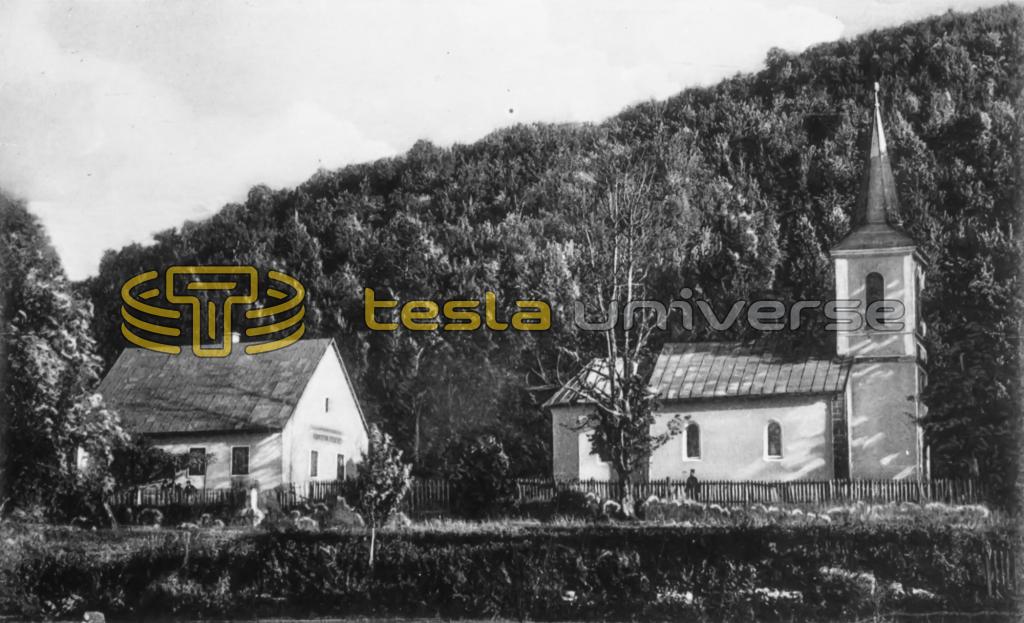
Tesla was born in Serbia in 1856, came to the United States in 1884, and died in New York in 1943. Every one knows that Faraday invented modern chemistry, Thomas A. Edison the incandescent lamp and Alexander Graham Bell the telephone.
And what did this Tesla invent? Just about every scientific principle that makes our atomic world go around.
In the 1880s he hit on the idea of alternating current — the “A. C.” marked on your electric mixer as distinct from “D. C.”, or direct current. The idea was applied successfully at a Colorado gold mill near Telluride in 1891. Thereafter, electricity moved into every American home and factory because alternating current made possible the long distance transmission of power.
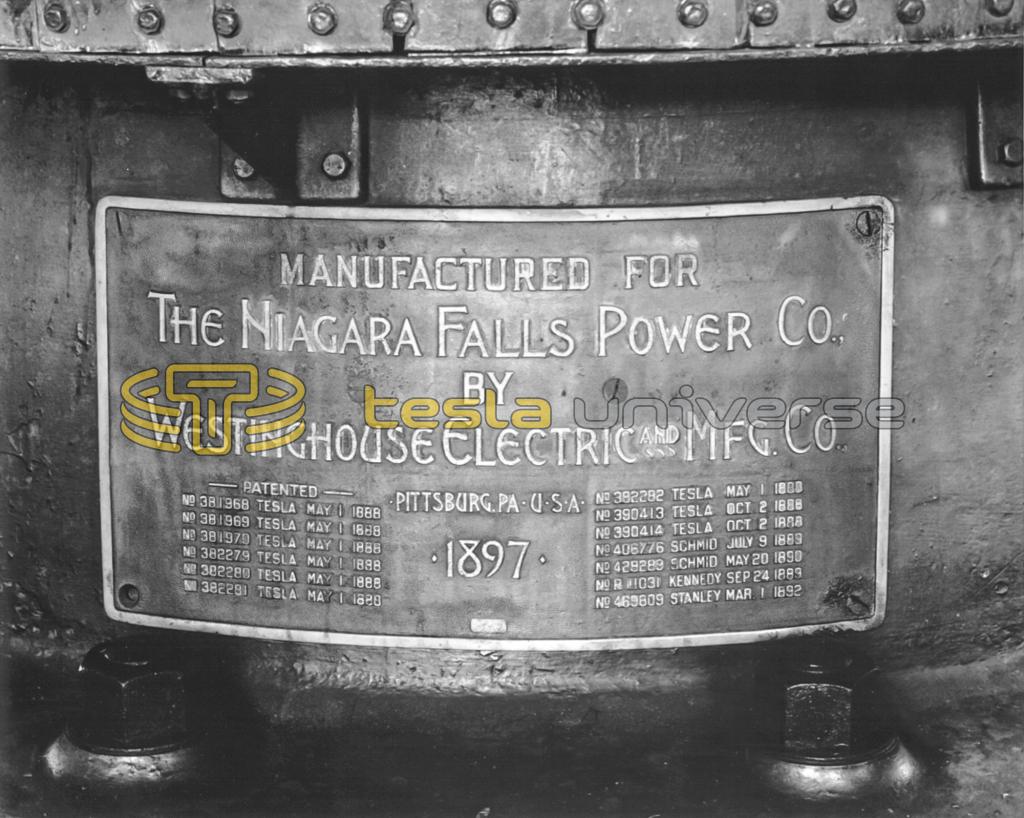
The book tells the thrilling story of how Tesla’s discoveries harnessed Niagara Falls in 1895 to make the Buffalo region the largest electro-chemical community on earth. Traction firms adapted Tesla methods to motors for street cars, and that immense industry was on its way. Before he reached 40, Tesla received a million dollars from George Westinghouse for various patents. And so he came to Colorado Springs in May, 1899, at the urging of an old friend, Leonard Curtis, who lived in the 1400 block of N. Cascade Ave. His purpose was to use his affluence trying out electrical ideas so revolutionary that he didn’t dare talk about them.
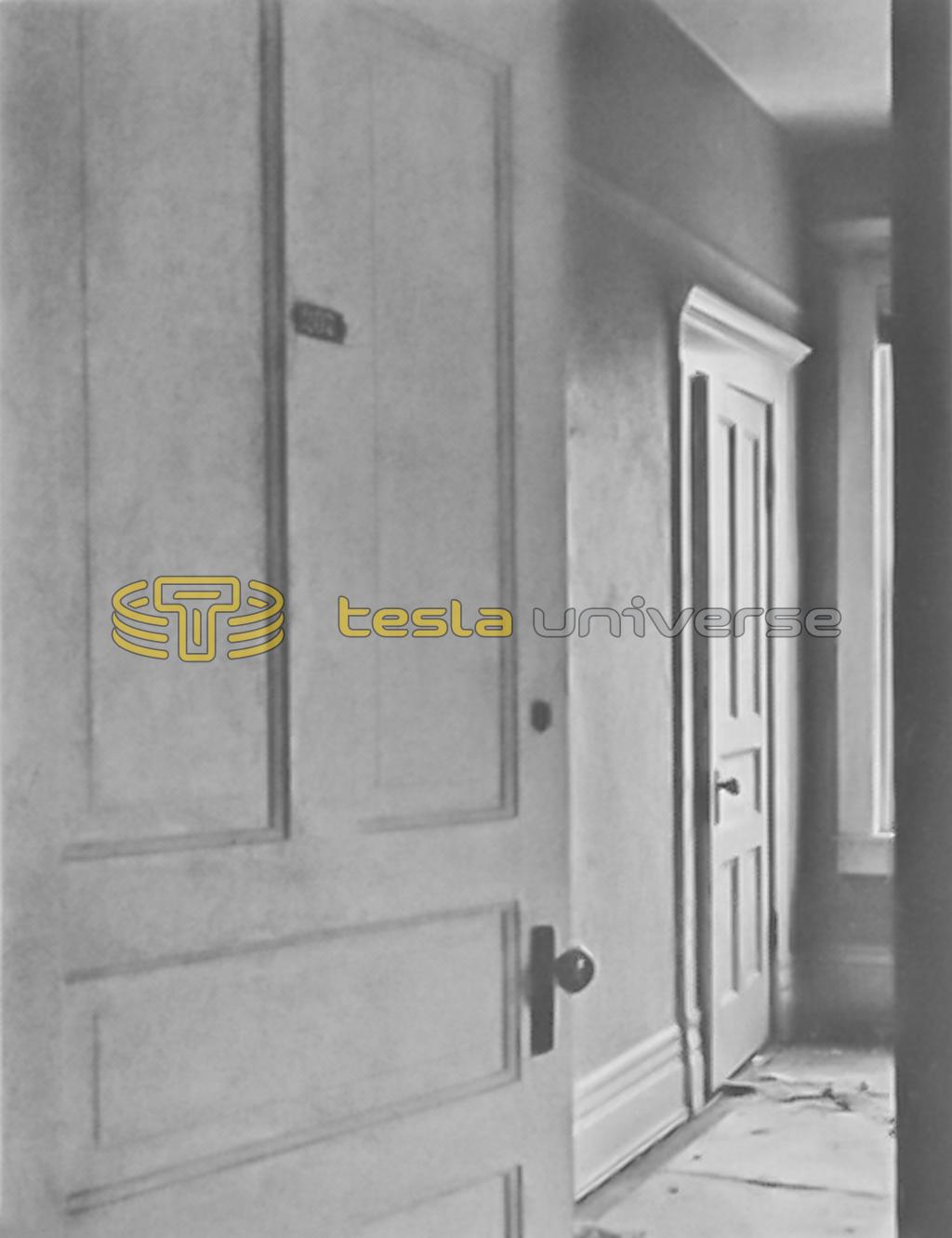
At Hoyt Stevens’ Alta Vista Hotel, Tesla took room 207, since the number was divisible by three — a good omen. The child Julie Stevens pleased him with her piano playing — today’s charming Julie Hoefer who lives on Fillmore in the Colonial Columns Nursing Center.
Using $30,000 advanced by John Jacob Astor, Tesla built on Knob Hill east of the Deaf and Blind School a weird laboratory with a mast 200 feet high supporting a copper ball. Here he took current supplied free by the Colorado Springs Electric Co. and began stepping it up to reach a voltage higher than that in the huge Niagara Falls plant.
As the book’s title suggests, his plan was to produce with his own hand lightning even more terrible than natural lightning.
He succeeded.
In one of the book’s fine scenes, Tesla told his lab assistant, Czito, “I must stand outside where I can see the top of the mast. I will give the signal and you are to leave the switch closed until I signal you to open it.”
A few minutes later he called, “Czito, close the switch.”
Czito obeyed orders. Now Tesla was certain the short circuit would come.
The crackling repeated and then came a tremendous surge of sound as the power built up. There was a crescendo of vicious snaps from above. The noises became machine-gun staccato — then roared to artillery intensity. Flames began to jump from the ball at the top of the mast — first a few feet long — then longer and brighter — thicker, bluer.
The heavens reverberated with a terrific thunder that could be heard 15 miles over the ridge in Cripple Creek. Suddenly the inferno ceased with dramatic silence.
The power had failed, of course. Frantically, Tesla phoned the Colorado Springs Electric Co., asking the employees not to ruin his experiments.
They replied that his lightning had set fire to their generator and plunged the town into darkness. They added that he could expect no more free current from the company.
All told, he spent eight months in the Springs.
Tesla’s later years in New York were filled with loneliness, approaching poverty and frustration. The world rejected his ideas that the whole earth and planetary system stood ready to receive electric impulse sent without wires. Telephone, television, telephotos, all the marvels of modern electronics were suggested by him half a century ago.
The new Hunt-Draper biography tells of honors heaped upon him by scientific societies, but he never received the popular recognition given to lesser men such as Edison and Marconi. He died alone in his room on the 33rd floor of a New York hotel with only $2,000 left of the money he had earned in changing the face of society through his inventions.
“Lightning in His Hand” is a fascinating story told with great charm and sympathy. It is a long step ahead of the authors’ earlier and most engaging book “To Colorado’s Restless Ghosts.”
