Nikola Tesla Articles
Stages and Types of the Tesla Oscillator
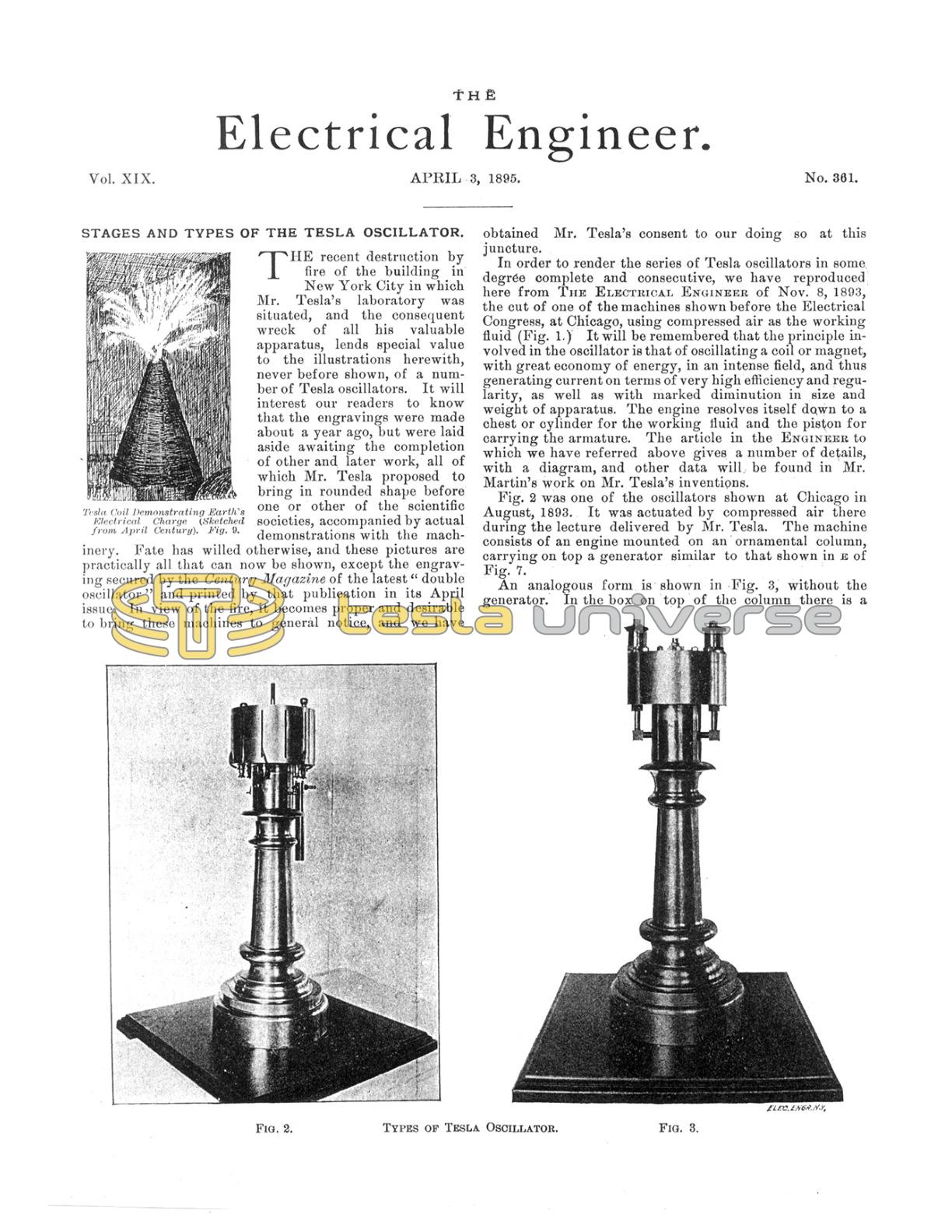
The recent destruction by fire of the building in New York City in which Mr. Tesla's laboratory was situated, and the consequent wreck of all his valuable apparatus, lends special value to the illustrations herewith, never before shown, of a number of Tesla oscillators. It will interest our readers to know that the engravings were made about a year ago, but were laid aside awaiting the completion of other and later work, all of which Mr. Tesla proposed to bring in rounded shape before one or other of the scientific societies, accompanied by actual demonstrations with the machinery. Fate has willed otherwise, and these pictures are practically all that can now be shown, except the engraving secured by the Century Magazine of the latest "double oscillator" and printed by that publication in its April issue. In view of the fire, it becomes proper and desirable to bring these machines to general notice, and we have obtained Mr. Tesla's consent to our doing so at this juncture.
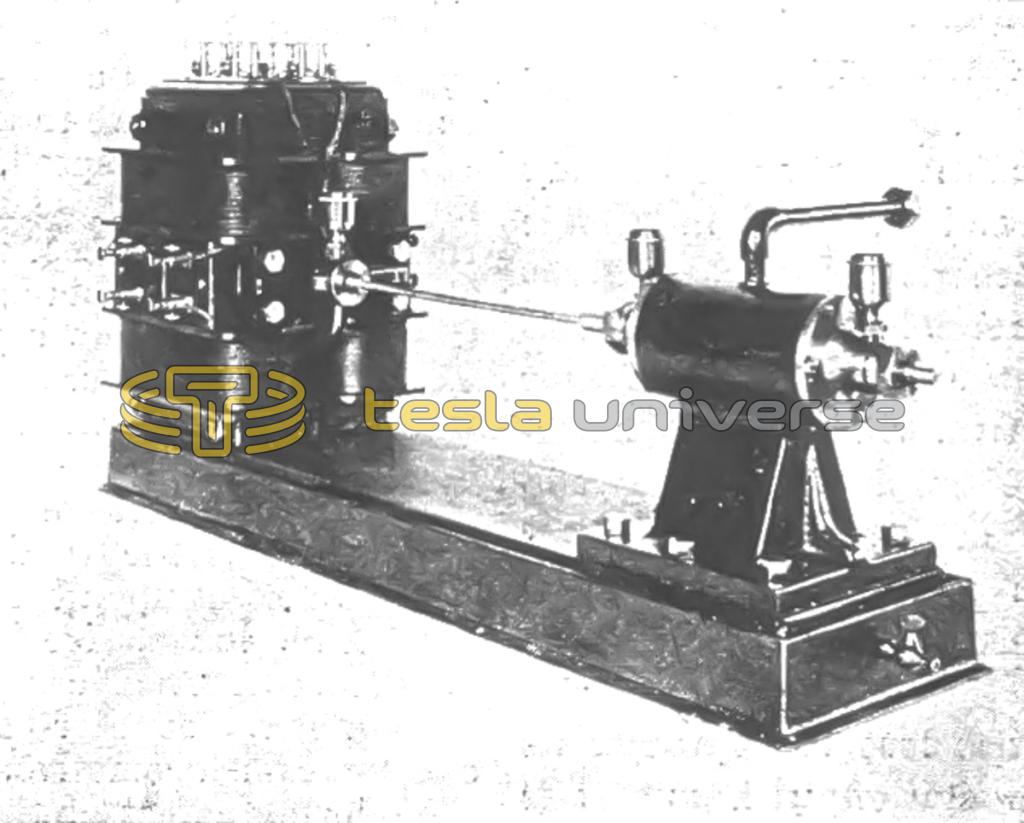
In order to render the series of Tesla oscillators in some degree complete and consecutive, we have reproduced here from The Electrical Engineer of Nov. 8, 1893, the cut of one of the machines shown before the Electrical Congress, at Chicago, using compressed air as the working fluid (Fig. 1.) It will be remembered that the principle involved in the oscillator is that of oscillating a coil or magnet, with great economy of energy, in an intense field, and thus generating current on terms of very high efficiency and regularity, as well as with marked diminution in size and weight of apparatus. The engine resolves itself down to a chest or cylinder for the working fluid and the piston for carrying the armature. The article in the Engineer to which we have referred above gives a number of details, with a diagram, and other data will be found in Mr. Martin's work on Mr. Tesla's inventions.
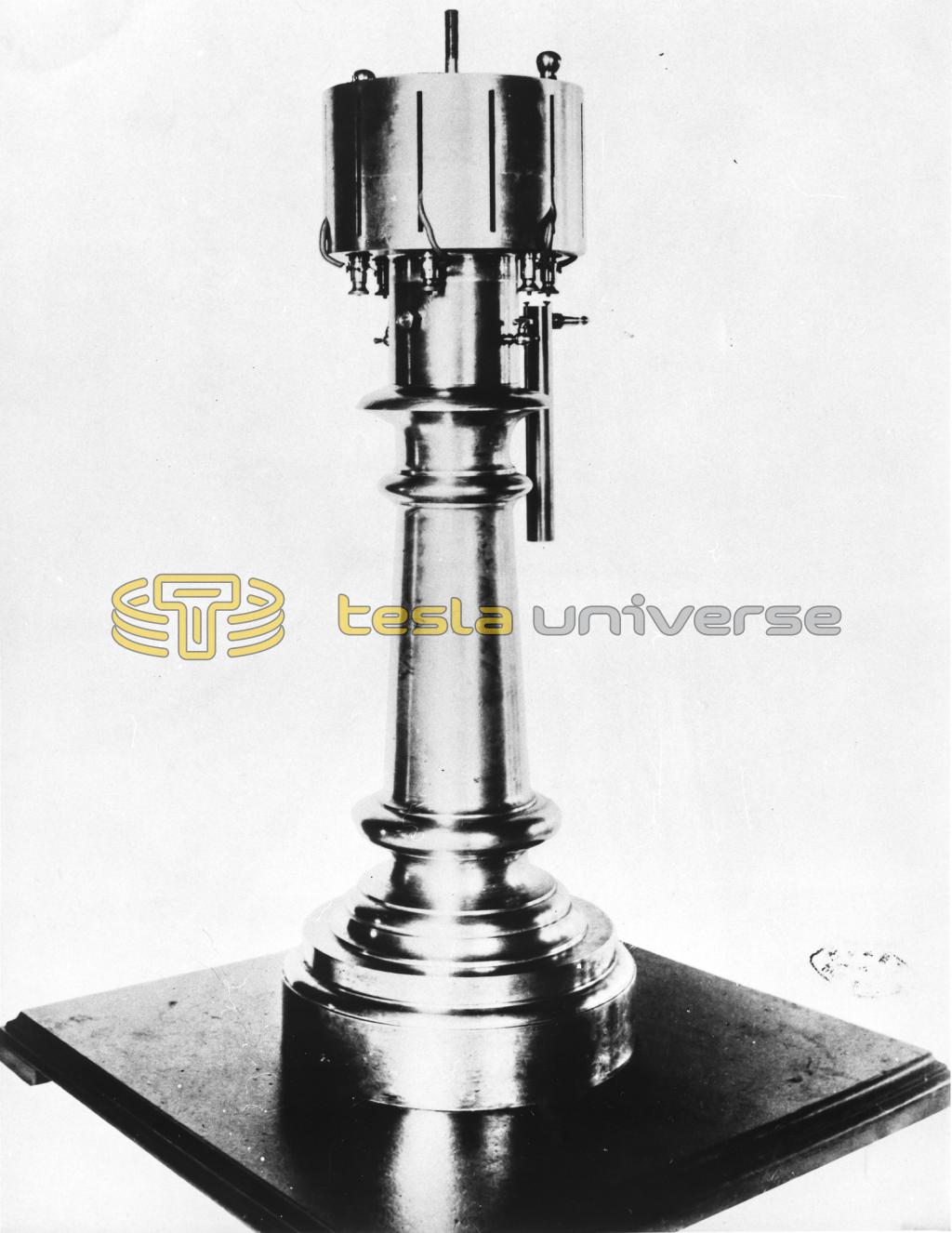
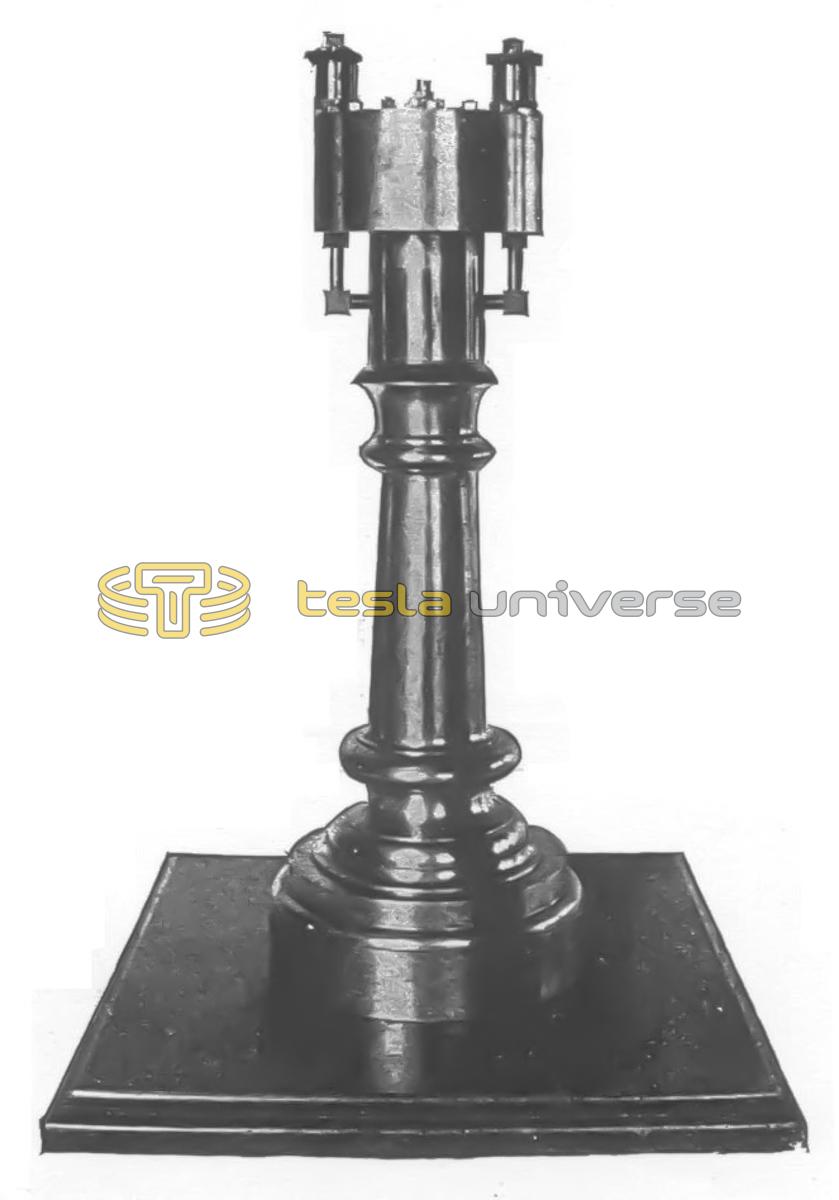
Fig. 2 was one of the oscillators shown at Chicago in August, 1893. It was actuated by compressed air there during the lecture delivered by Mr. Tesla. The machine consists of an engine mounted on an ornamental column, carrying on top a generator similar to that shown in E of Fig. 7.
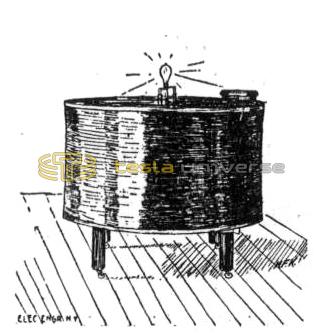
An analogous form is shown in Fig. 3, without the generator. In the box on top of the column there is a very strong air spring. The construction is such that the engine is always in exact synchronism with the vibrations of this spring. The engine can do nothing else but keep the spring vibrating, and eventually will alter the amplitude of the vibration, but the period remains the same, i. e., it is the natural period of vibration of the system. The recoil of the spring is, of course, incomparably greater than the impulse received each time from the engine. There is a chamber around the spring which can be maintained at a constant temperature by any usual means. As the frictional losses are vanishingly small compared with the enormous elastic force, the isochronism is perfect.
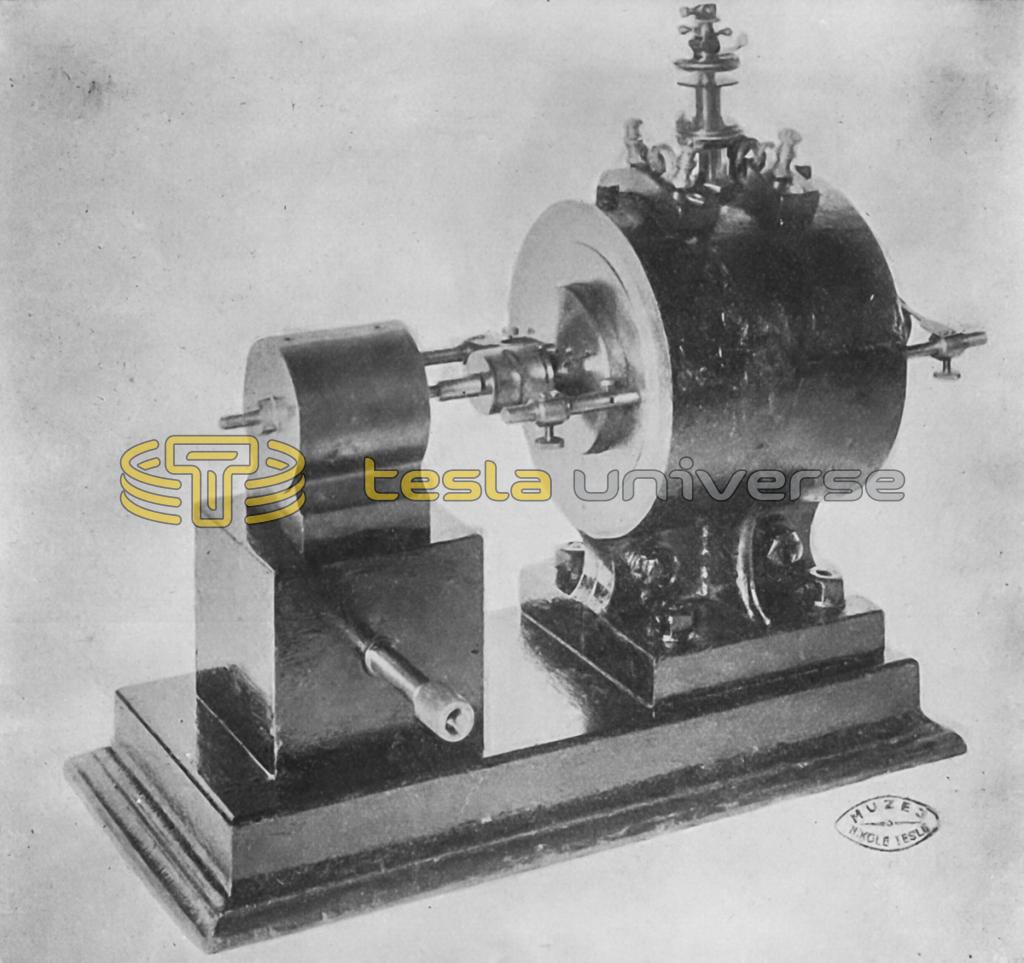
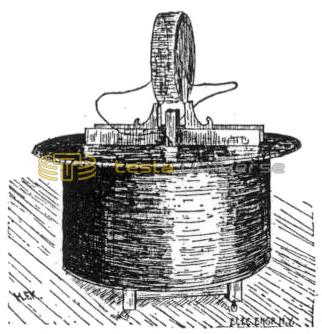
In Fig. 4, another quite distinct type is shown. A small oscillator is mounted on a stand with a dynamo of somewhat unconventional form. This dynamo comprises a circular field magnet in which are arranged to move on each side circular coils. The coils are carried by an arbor which is connected directly to the little engine; and the currents are produced by vibrating the coils within the field of the magnet. In this form, Mr. Tesla says, there is absolutely no useless wire, as all of it is within the field and all equally active.
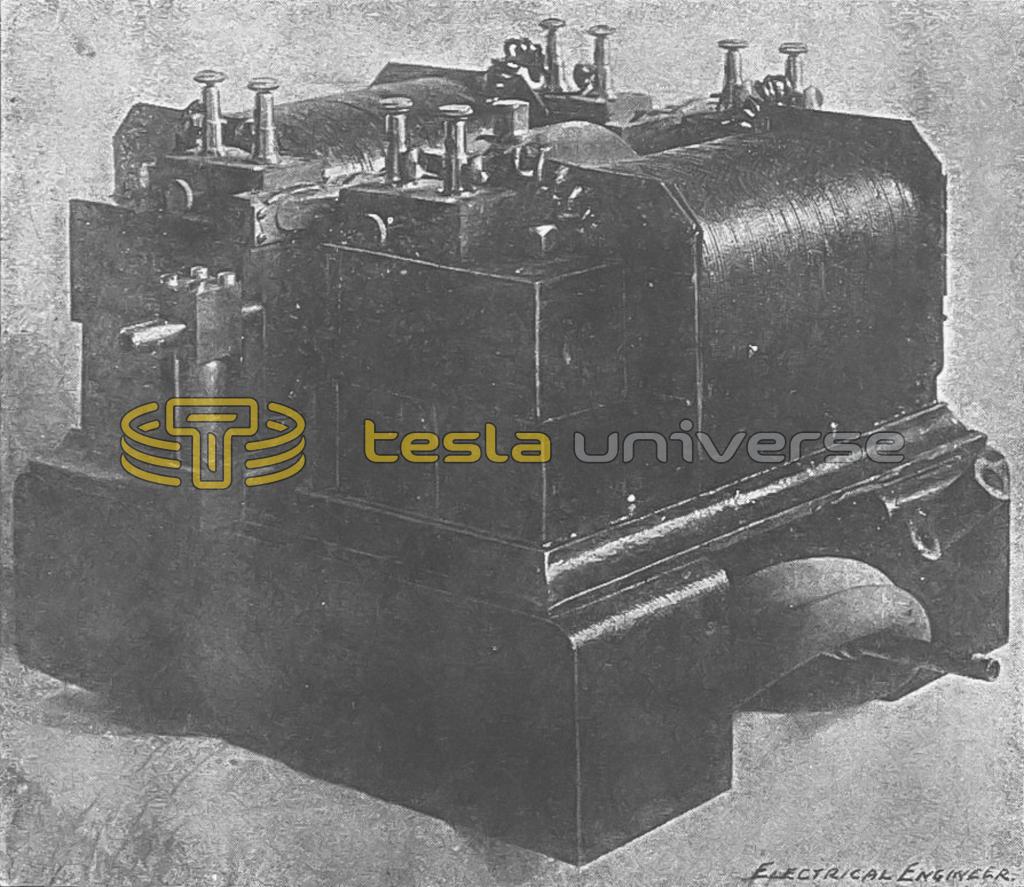
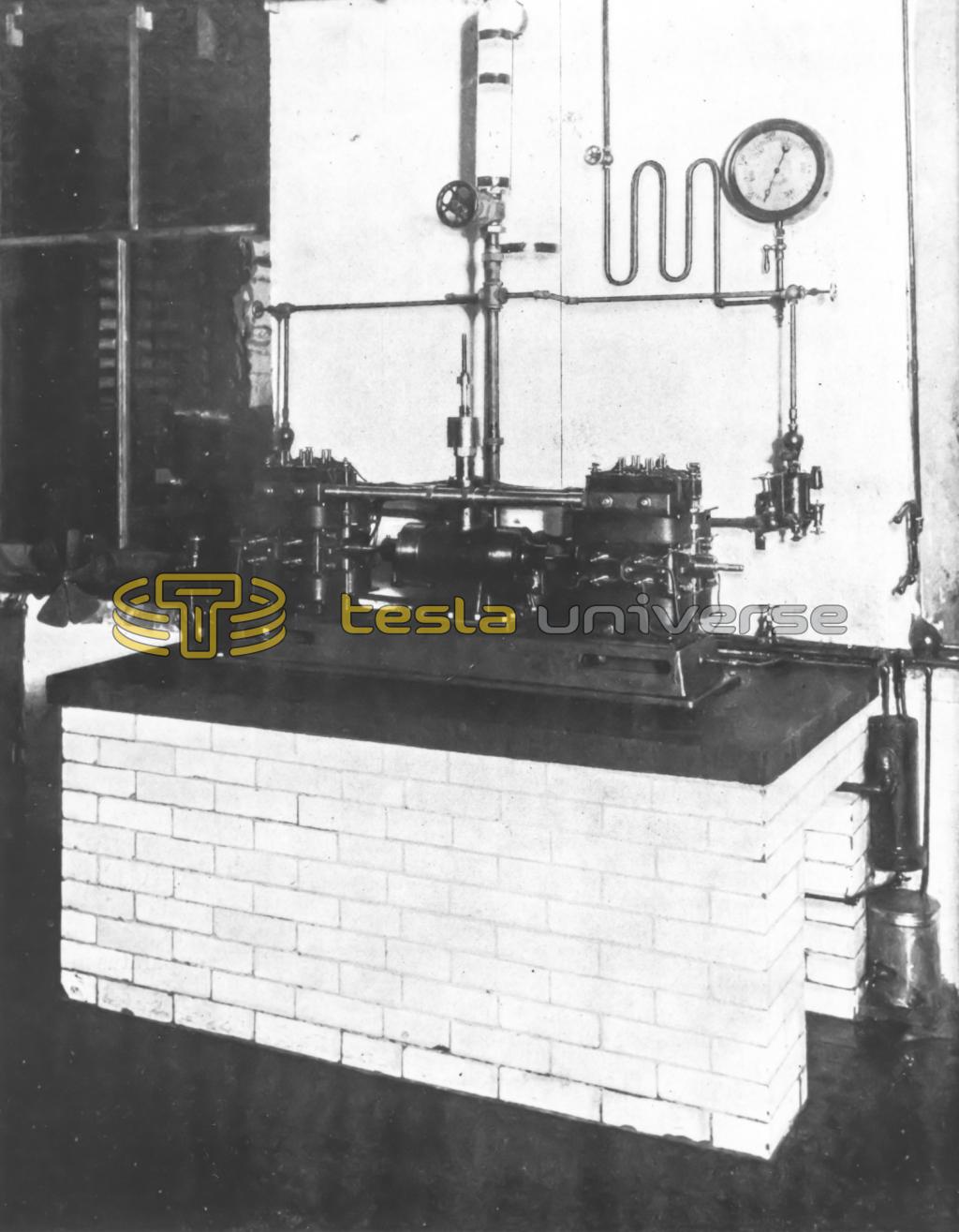
In Fig. 5, a more advanced form of oscillator is shown, operated by steam and freely used for laboratory purposes. This minute machine had a capacity of 12 lights. It consisted of a small oscillator and a dynamo, the latter comprising a field magnet with its exciting coils and an armature merely of iron. The magnet had on its inside a number of pole projections upon which the induced coils were wound. The armature had projections of lesser number than those of the field. In this way the output of the dynamo was increased, by the number of teeth.
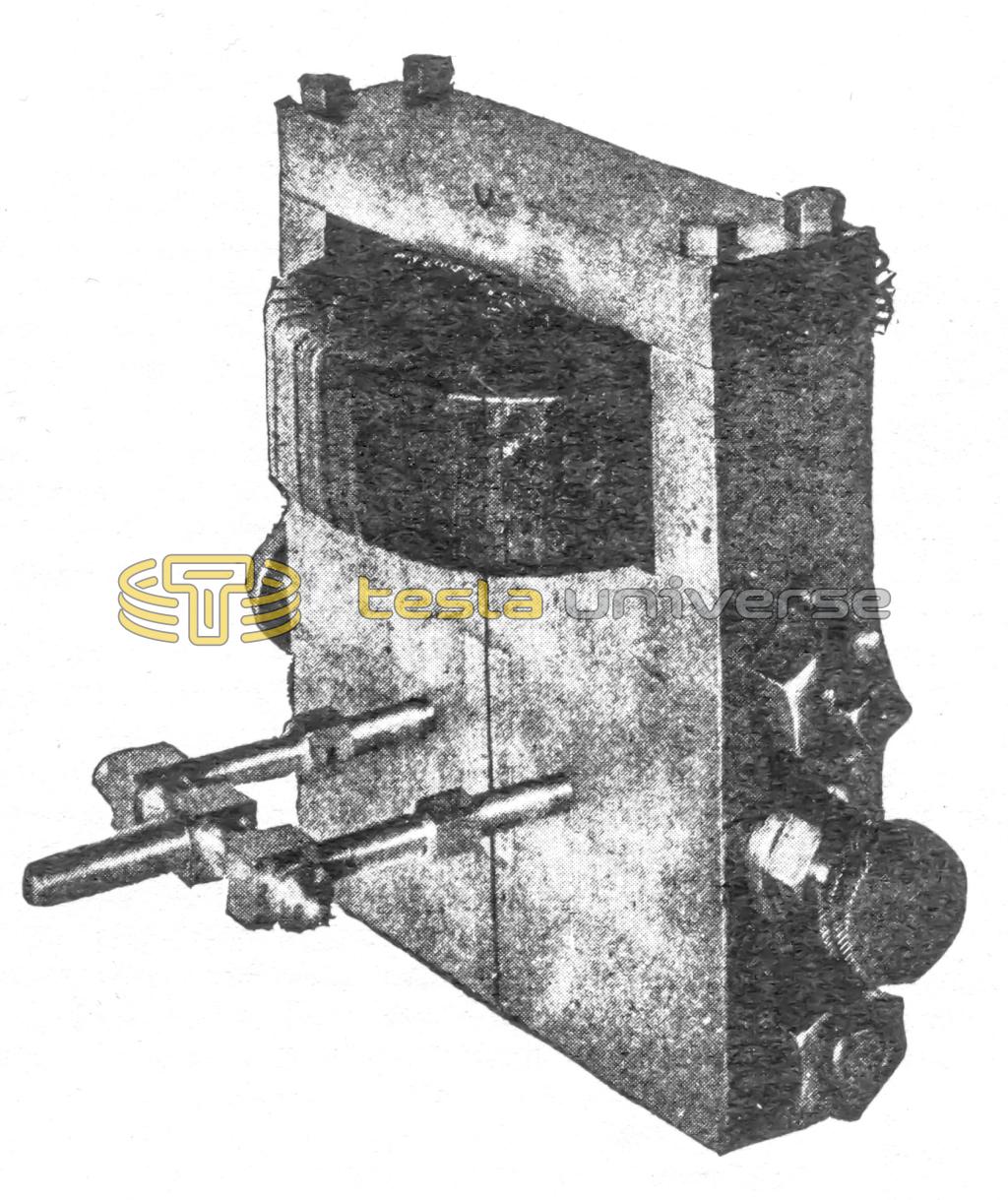
In Fig. 6 we have an interesting experimental apparatus consisting of a field magnet within which there is arranged to vibrate a tongue of steel carrying on its end a coil. This tongue and coil were vibrated in the strong field. There were adjusting screws on each side which allowed the attainment of any periodicity, within wide limits. This apparatus was used for scientific research solely.
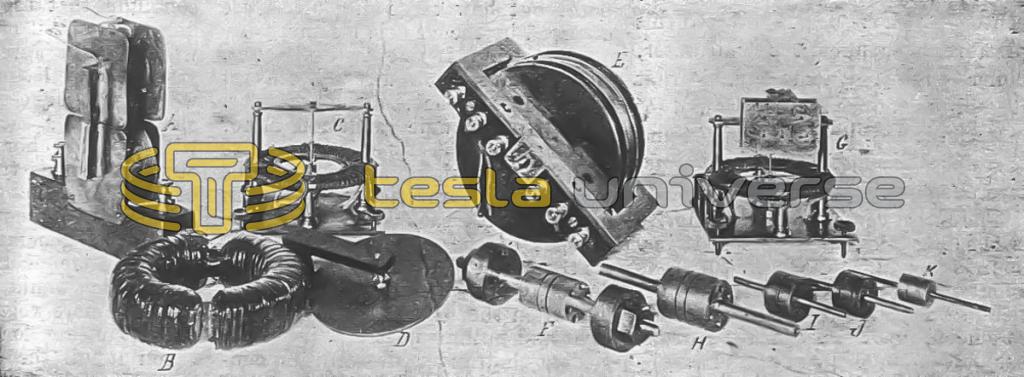
Fig. 7 comprises a most interesting group of parts which were shown by Mr. Tesla in his demonstrations. Several of the instruments were used for the exemplification of novel features. The magnets in A, for example, were used to elucidate the principle of the preponderance of one impulse over the other in the current produced by the oscillator and creating virtually the effect of a direct or continuous current. In B a magnet is shown which was vibrated. When the copper disc D, arranged to rotate freely in bearings, was held between the poles, i. e., in the field of the vibrating ring magnet, it was rotated in one direction, showing that the currents distributed in the disc were asymmetrical. In other words, they were preponderating in one direction.
C, in Fig. 7, is a little motor used to illustrate the constancy or invariability of the speed of the oscillator. G was also a little motor with clockwork, which was used to count the revolutions. Both of these little motors were driven from one circuit, the difference of phase being obtained artificially. E was a little generator comprising three coils, two inducing and one induced; and an iron coil which was vibrated by the oscillator to which it was attached. F, H, I, J, K, are parts of an oscillator for short and long stroke respectively.
In Fig. 8, which we reproduce here by courtesy of the Century Magazine, is seen one of the latest types of the Tesla oscillator. It is a steam mechanism, but the "engine" part may be said to have disappeared, so far as that word implies an aggregation of fly wheel, governors, etc. On the one base were mounted two dynamos, or electro-magnetic generating systems and a small steam chest. There were two pistons which were vibrated by the steam 80 to 100 times a second. Each of the pistons carried an armature which was plunged reciprocatively into the field of the magnets. Normally the engine was run with the two pistons in opposite phase; but they could be set by an independent device in any phase. Above the chest was mounted an independent little oscillator, which in some experiments controlled the steam admission, and made the vibration of the engine quite independent of the load.
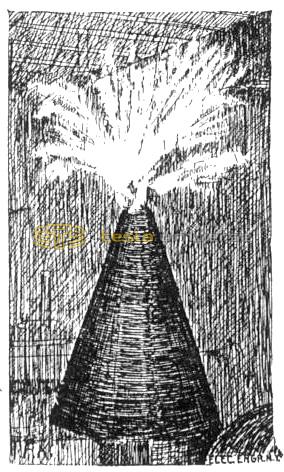
This oscillator was operated with steam at 350 pounds pressure, when it needed no packing, as there was no leakage. It was also used at pressures down to the ordinary 80 or 100 pounds. It was used to light up a bank of 50 or more incandescent lamps, some arc lamps, and to run various motors; while it also furnished current for a variety of most interesting and novel experiments, all of them suggestive of new departures in the electrical arts, including phosphorescent lighting, the transmission of intelligence long distances without wires, the utilization the earth's electrical charge, etc. Some of these branches of work are touched on, in a popular manner, in the April Century, from which we have made or two sketches, in Figs. 9, 10 and 11, illustrative of the devices employed in connection with the oscillator.
Our readers will be glad to know that although, in the fire, Mr. Tesla's apparatus which we have shown above was practically wiped out of existence, the inventor has been most indefatigably at work ever since and will soon have reproduced his oscillator in its latest and most perfect form. There can be no doubt that in this appliance we have a mechanism for the simultaneous utilization of steam and generation of current under conditions that must effect large economies in every direction; while it should also prove a powerful instrument for exhaustive research. one