
Nikola Tesla Articles
In Essence - He Was a Philosopher
William Terbo (Trbojević), Nikola Tesla’s closest living relative
"He was indeed an eccentric, especially in later life, but it seems to me that he himself did a lot to encourage certain beliefs about his eccentricity . . . In essence, he was a philosopher. Not in a theoretical sense, so much as in essence."
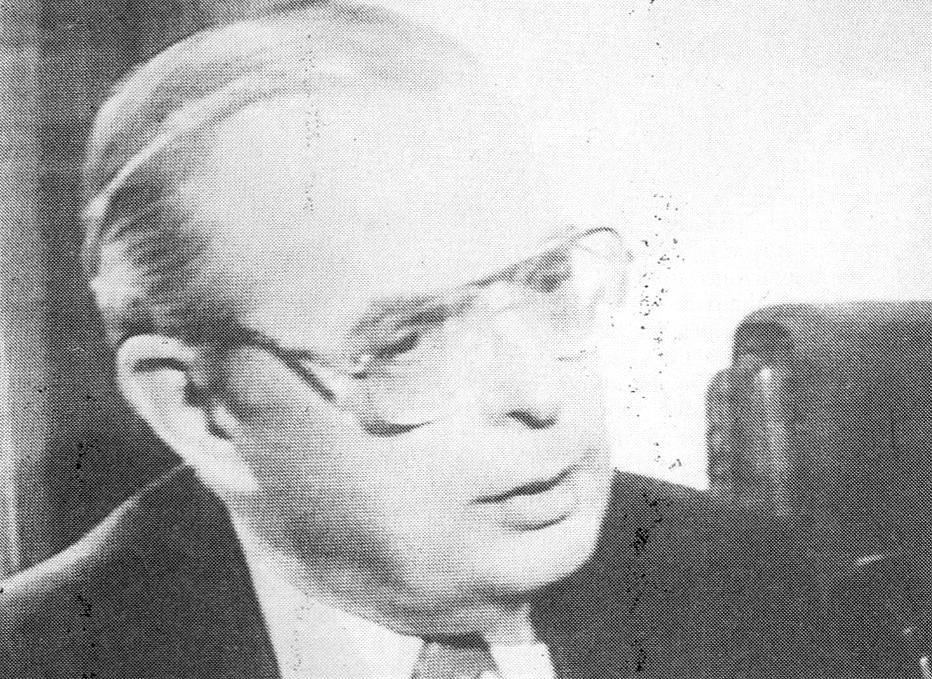
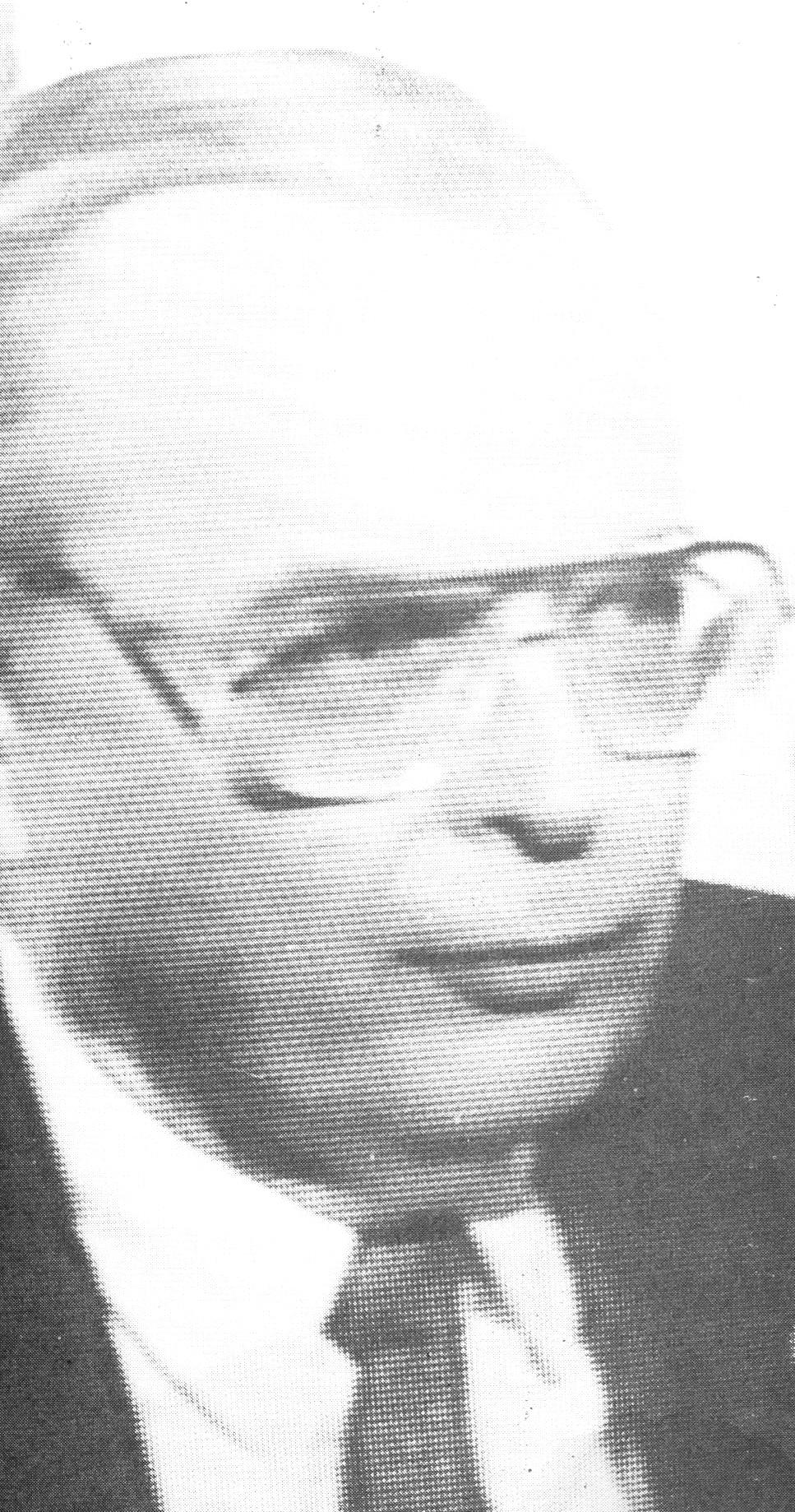
Nikola Tesla’s closest relative, a descendant of his sister Jelena, married Trbojević, bears the name William Terbo and strives with all his strength, as the honorary chairman of the "Tesla Memorial Society," to preserve the memory of his great ancestor, of whom not only his kin and the countries where he lived are proud, but the entire world. This non-political and non-profit society aims to preserve and continue the memory and ideals of the great scientist and inventor Nikola Tesla through appropriate academic conferences, school scholarships, and other cultural activities.
William Terbo’s arrival in Belgrade and his participation in the symposium marking the 135th anniversary of Nikola Tesla’s birth at the Serbian Academy of Sciences and Arts (SANU) surprised many and made the entire three-day gathering, from September 23 to 25, run in a more relaxed atmosphere. We used one of the free afternoons to meet and converse about many dilemmas and speculations surrounding Tesla’s name. Since their connections are familial, I took the opportunity to uncover some personal secrets.
— There is a belief that Nikola Tesla engaged in some strange mixture, clear only to him, of yoga and Eastern philosophy combined with Western technical teachings. He did not eat meat, he was a vegetarian, he wore gloves, and he did not shake hands so as not to disrupt his energy field, which he considered crucial for his line of thought. How much truth is there in such a view of Tesla?
— That happens when certain characteristics of his are singled out. He was indeed an eccentric, especially in later life, but it seems to me that he himself did a lot to encourage certain beliefs about his eccentricity. His attitude toward silverware and toward the number three, for example — those were pure affectations. You know, he had a flair for that.
In essence, he was a true philosopher. Not in a theoretical sense, so much as in essence. Being so abstract in his teachings and projects, he simply had to be. As far as yoga is concerned, I am convinced that was not his choice, just as I do not believe he practiced Eastern religions. I think he had little interest in religion in general. I don't mean that he lacked an ethnic or ethical relationship to religion, but rather that he did not show much interest. He was, as am I, the child of a priest of the Serbian Orthodox Church, in a family that yielded several generations of clergymen. People who want to believe he was a mystic can find some sort of thread or "data point" for it and build entire theories upon it.
If I were to give an assessment of that part of his life, I would say he was very realistic, but prone to affectations.
Devotion to Science
— There is also a lot of speculation put forward about his relationship with women. People even spoke about him practicing a certain transmutation of sexual energy into intellectual energy.
— That is one of the fictions that grew around him. I wouldn't go into that at all. He was interested in women, he was not asexual, certainly not homosexual, but I think he viewed it in the manner of a bachelor, which he also wrote about to my mother. He believed he had to dedicate himself to research. Since he knew a similar problem troubled both my father and my mother, he corresponded with her about it in particular. My father had over two hundred inventions, along with his basic patents. That work demanded great sacrifices from him, being away from home and family. My mother used to complain about it. In a way, she felt neglected. Tesla knew this, and since he held that innovations and patents were a serious field, just as he had a responsible attitude toward women and family, he concluded that those two things were mutually exclusive. They simply cannot go together at the same time. And he made his choice. We know what it was.
— Much is known about his work, but there is also a lot of guesswork. What do you think about Tesla's secrets, specifically his undiscovered legacy?
— You mean his scientific legacy?
— Yes.
— I think science has advanced a great deal. You know, ten years in engineering is a long, very long time. If you have some basic research of the Tesla type, time is not as harsh there. Namely, perhaps that invention would have come about ten or twenty years later anyway, but there would certainly be a difference in execution. He died in 1943, and since 1935 he hadn't said or offered anything new. All he could give and think about was World War II and the atomic program. Every good engineer knows that one simply must stay up to date or fall behind.
— There is also interest in government circles regarding Tesla's reading habits. What did he read besides technical literature?
— He was very well-read, with a classical, strict, and thorough education. I know this from my father, who went through the same kind of education. They shared the same heritage and a similar life path. They spoke six languages. They learned Latin and Greek in school. My father was told that Thomas Hardy was a famous engineer, so he read him persistently. That is how he learned English. Later, he came to love Hardy and studied him rigorously, with the book on one knee and the dictionary on the other.
They spoke excellent English and possessed a wide vocabulary. Both actually had an enormous English vocabulary that improved over time. Looking at Tesla's writings, it is clear that he was an excellent writer.
Coming from Smiljan, Gospić, and Lika, which were under Austria-Hungary, the German language was mandatory for him in school. And then he also spoke Hungarian, Serbian, and Croatian . . .
— Well, that is essentially the same language.
— Yes, but one uses the Latin alphabet and the other Cyrillic. Tesla learned Hungarian while working in Hungary at a telephone company. Not to mention English in particular. He was an avid reader who consumed literature ranging from classical Greek to modern English. I repeat, anyone who has insight into what he wrote knows that he possessed a beautiful, stylized language.
Mark Twain
— Which authors did he particularly like and read?
— Not only read; he knew some of them very well. His friend—I cannot say his best friend, but in any case very close — was Mark Twain. They corresponded.
— Then certain things about Tesla's "mysticism" become clearer to me. Friendship with Twain speaks volumes.
— That is right. Mark Twain had a strong sense of humor, which was also very noticeable in Tesla and my father. Hence their connection and long-standing friendship, which was not only because they were acquainted. I know they had a great time together and made up their own private jokes. He also knew many other people, especially writers. Some of his best friends were journalists as well.
Many books about Tesla depict him as eccentric. That is related to the belief that Tesla had a phobia of germs. When I met Tesla, I did not notice that. It must have been around 1939, as far as my childhood memories serve me. He used to take me on his lap, pat my head, hug me, kiss me, and joke around. I did not like that at all, just like many other young children who dislike someone behaving so paternally toward them, as if they were little babies. If he were afraid of germs, he would not have done that, because young children always have germs.
— How did you come to have the surname Terbo? Only when I heard that you originate from Trbojević did I connect the dots and realize it was a shortened, Americanized surname . . .
— My father arrived in the United States in 1914. He had a contract for an engineering position at "Western Electric." He did not want to change his name because, as an inventor, he had about two hundred patents registered under the name Trbojević. However, he married a girl from a prominent family with British traditions. In such circumstances, the surname Trbojević sounded un-American. So, to please her parents, he shortened the surname to Terbo. Not to Trbo, but to Terbo, adding the letter "e" to make the name more readable in English.
Hall of Greats
— You spoke about meeting Tesla as a child. Your next meeting occurred much later. How did that happen?
— I was in Washington at the time. My mother called me on the phone to tell me she had read in the newspaper in Los Angeles that Nikola Tesla (together with the Wright brothers, Museum, and Marconi) had been inducted into the Hall of Fame. That was in 1975. On television, I saw that Tesla's award was mistakenly accepted by an eleven-year-old girl. Later, I went to the Patent and Trademark Office, and the matter was cleared up. The award was presented a second time, now into my hands as Tesla's closest relative.
— How present is Tesla in American society today?
— He is quite present, and he will be even more so. He is one of those people for whom interest grows as time passes. Many would like to know various details of his life. Director David Lynch (who directed the popular "Twin Peaks") is currently preparing a film about Tesla. Another major director, George Lucas, decided to make a film about my great relative. Both of them — and I completely agree with this — want to make a movie about Tesla as a man of flesh and blood. Previous productions tended to present him almost as a deity, which gave those films a stamp of artificiality, unnaturalness, and unpersuasiveness.
— Many have tried and are trying to use Tesla to promote their own political views. It is obvious that they fail because Tesla cannot be interpreted through any exclusive political idea, right?
— True. Without explaining the family tree again, it is inevitable to mention the name of Sava Kosanović, Tesla's nephew. He was a man of exceptional culture and diplomatic talent, which he practiced both in the Kingdom of Yugoslavia and later in post-war Yugoslavia. That is why I cannot escape the impression that it was Sava Kosanović who influenced Tesla to express some good thoughts about politics. As Tesla was associated with inventions of military significance, people listened carefully to what he said and how he spoke. And he spoke of his Serbian heritage, his Croatian homeland, and essentially about understanding among the South Slavs and all people of the world. That is clear.
Direction of Progress
— How do you interpret the fact that scientific interest in Tesla's work never seems to fade? How interested are scientists in the USA today in his projects?
— His sense for the development of technology and the direction in which progress was heading was amazing. He predicted many things in a fascinating way, knowing what was realistic to design. For example, back in the 1920s and 1930s, he spoke about "death rays," which would contain energy of miraculous destructive power to be transmitted by airplanes. So, something similar to the concept of "Star Wars" that is talked about so much today. Tesla did not develop such projects or conduct additional research on them. It was similar with liquid crystals. He merely hinted at something like that and then moved on to new research.
— What do you think about the development of Tesla's work in Yugoslavia?
— Yugoslavia is an interesting country, but it is better for domestic scientists to speak about that.
— Well, how do Americans view the development of science in Yugoslavia?
— I must tell you that in the United States, people do not think much about Yugoslavia at all. On the contrary. There are very few fields where the names of Yugoslavs are mentioned. Computers, certain areas of physics . . . People look at who has won the Nobel Prize. Those people are in the spotlight. Over fifty percent of those awards go to Americans. The US has a specific way of life and an excellent system for acquiring an education. Yugoslavia falls into the category of countries lacking infrastructure. Western Europe, Japan, and the US have the foundation for a good education. I know that countries like Yugoslavia can produce amazing people, but in the field of engineering, specialized studies are required, and this country (Yugoslavia — editor's note) cannot provide that. Perhaps Yugoslavs can be good architects, artists, talented people, but developing a specialization requires major investments.
Studying atomic energy requires exceptional laboratories, as do other fields Tesla dealt with. That is why I do not believe Yugoslavia has good conditions for those types of research and work.
Borislav Soleša
