Nikola Tesla Articles
Grassroots Effort Brings Electricity Test to Area
By DAVE PETERS
Times Staff Writer
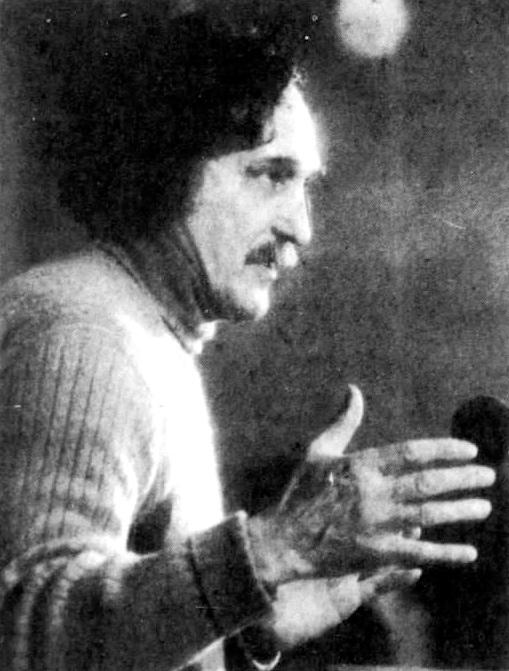
What a New York researcher Monday called a "grass roots movement in science" — wireless electricity transmission — has almost accidentally focused on Stearns County.
"This is out of the hip pocket," said Dr. Andrija Puharich, Ossining, N.Y., at a St. Cloud press conference. "This is the most nonorganized thing you've ever seen in your life."
Years ago Puharich left private medical practice for independent research and long has been interested in the discoveries of Yugoslav inventor Nikola Tesla, who worked for more than 60 years in the United States until he died in 1943.
Puharich described discoveries by Tesla in 1900 which he said could have laid the groundwork for a worldwide grid of wireless power transmission systems.
Without government financing, Puharich and other U.S. and Canadian scientists in the past year or two have been experimenting with and discussing Tesla's theories.
Meanwhile, Minnesotans concerned about a controversial power line proposed across Central Minnesota and organized as the People's Power Project, heard of the possibility of wireless transmission through a Washington Star article reprinted in the Minneapolis Tribune in February.
Contacts were made with Puharich and other "Tesla buffs," as Puharich called them, and they agreed to attempt transmission of enough electricity to run a Belgrade area irrigation system from Timmins, Ontario.
Puharich said he does not know how soon the experiment on farmer Virgil Fuchs' irrigation system may be conducted but local backers of it have said they hope to do it by June.
Construction is under way on a transmitter at Timmins and local supporters say a Seattle physicist is ready to come to Fuchs' farm to begin construction of a receiver.
Tesla's discovery, which Puharich said the inventor used to light bulbs with no wires attached. takes advantage of the natural difference in electrical potential between the earth and the upper atmosphere.
(This difference in potential is the source of lightning.)
With a transmitter containing two large wire coils and with electricity generated on the earth's surface, such as by a hydroelectric facility, "Tesla's discovery gets this static charge moving up and down at a slow frequency and gets a pumping action in the earth," Puharich said.
A receiver identical to the transmitter can pick up the electricity through the earth, he said.
"Once you get it oscillating, you get more power out than you put in," Puharich said, although the apparatus would require priming with genrated electricity.
Thus, electricity is generated through the regular motion of an electric field and transmission he likened to "tapping a metal rod at one end and hearing sound at the other."
The researcher said he has no idea why Tesla has been neglected for his wireless transmission discoveries.
Tesla was a key figure in the development of usable alternating current and various transformers and induction motors in the late 1800s.
"But nobody seemed to be interested in his wireless work," Puharich said. "It's one of the great oversights in history."
Puharich said the Tesla system is a very practical way to get electricity to isolated areas of the earth and predicted that within 100 years, the entire world may be hooked to a wireless system.
Each house and building would have its own antenna to draw in the electricity and electrical equipment also would be equipped to use electricity without being hooked to wires, he said. This would require as many as 50 or 60 generating stations around the world, he said.
He added, however, that before any such large scale implementation, a safety study of its environmental impacts should be made.
"I don't think there is any conclusive evidence to show it's safe or unsafe," Puharich said.
Local backers of the pilot project are responsible for funding the receiver construction, which Puharich guessed could cost $10,000 or more.
Earlier, local supporters had estimated a cost of several hundred dollars but one said, "Where there's a will there's a way and there's a will."