Nikola Tesla Articles
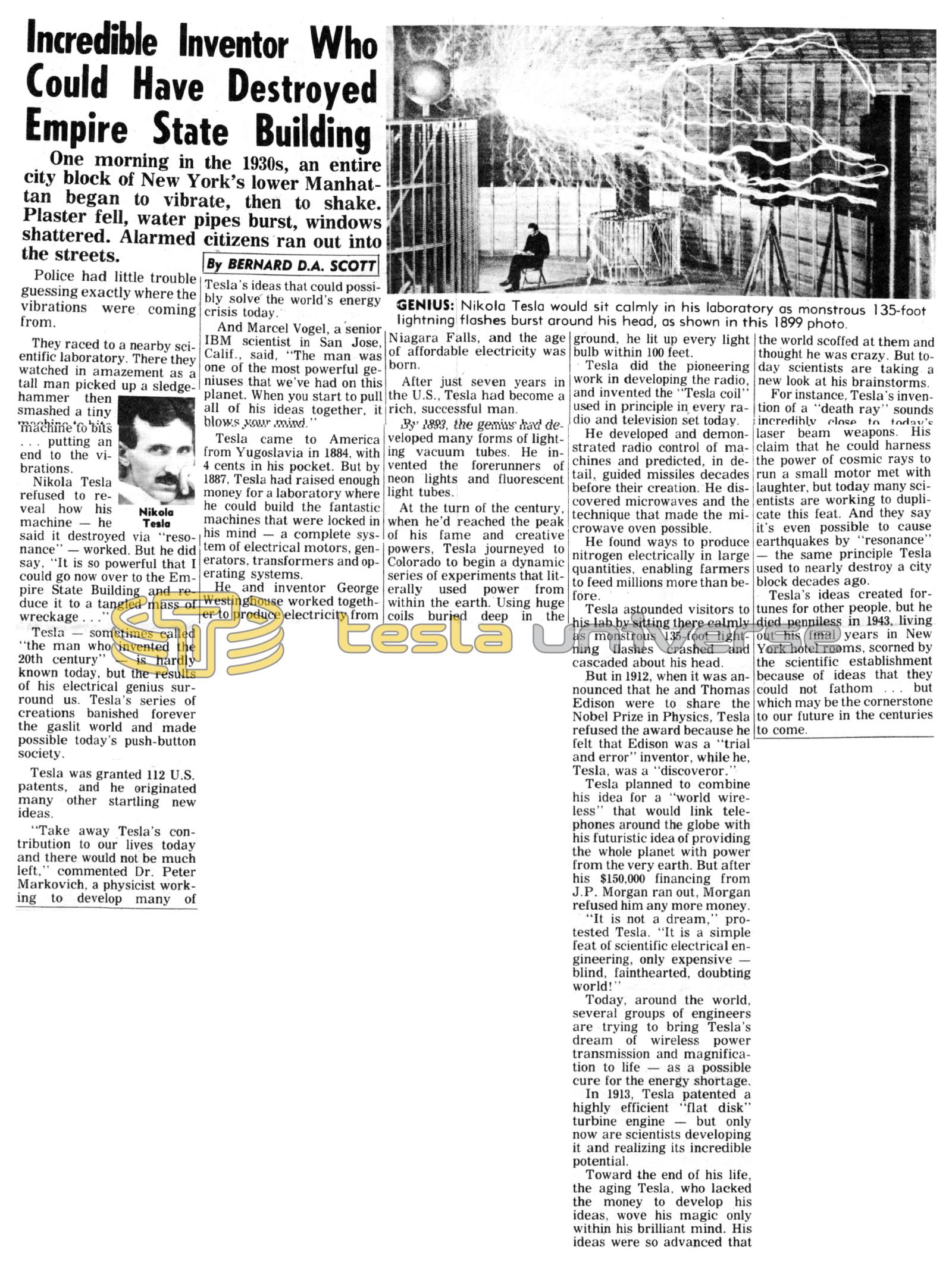
Incredible Inventor Who Could Have Destroyed Empire State Building
One morning in the 1930s, an entire city block of New York's lower Manhattan began to vibrate, then to shake. Plaster fell, water pipes burst, windows shattered. Alarmed citizens ran out into the streets.
By BERNARD D. A. SCOTT
Police had little trouble guessing exactly where the vibrations were coming from.
They raced to a nearby scientific laboratory. There they watched in amazement as a tall man picked up a sledgehammer then smashed a tiny machine to bits . . . putting an end to the vibrations.
Nikola Tesla refused to reveal how his machine he said it destroyed via "resonance" — worked. But he did say, "It is so powerful that I could go now over to the Empire State Building and reduce it to a tangled mass of wreckage."
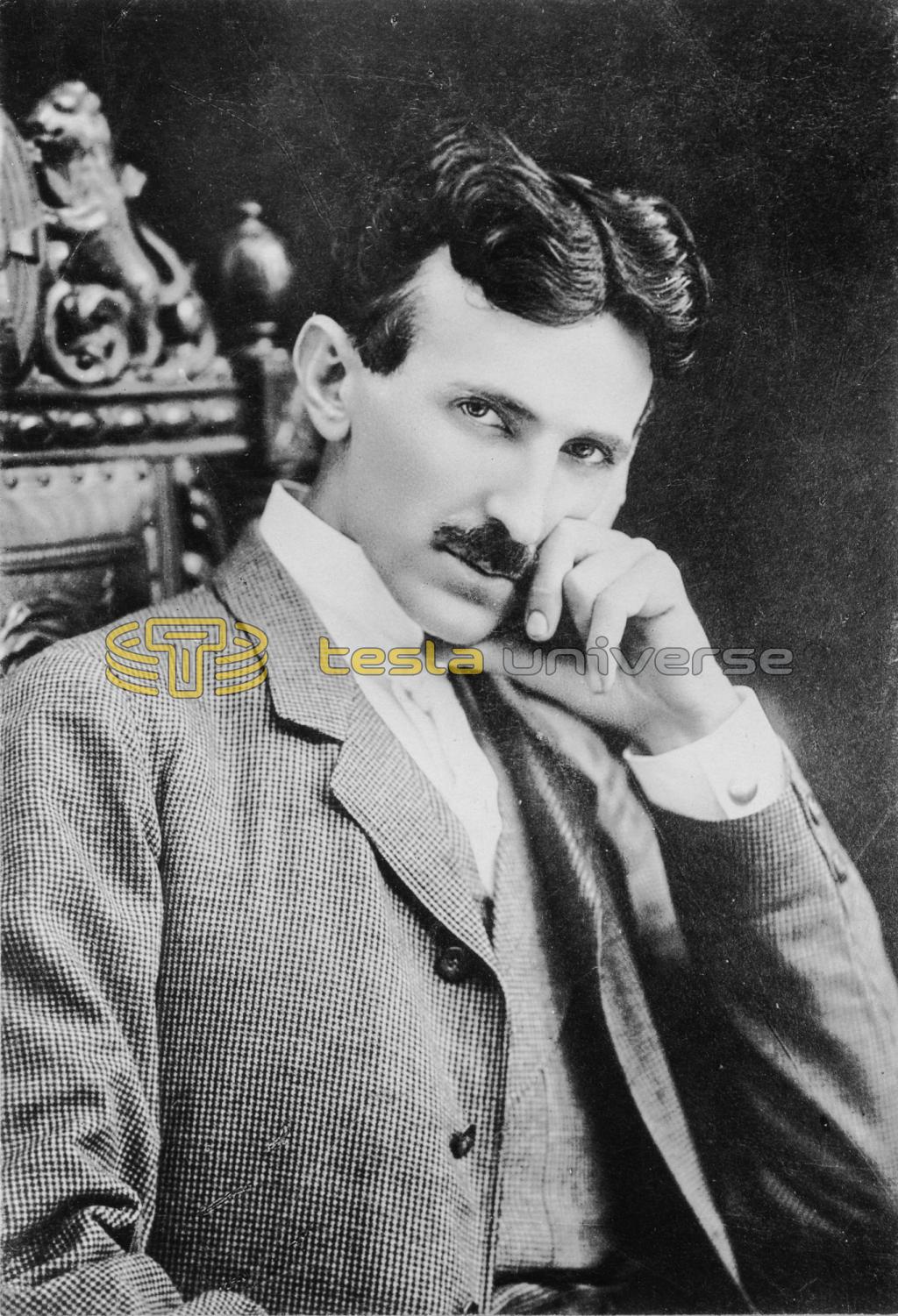
Tesla sometimes called "the man who invented the 20th century" — is hardly known today, but the results of his electrical genius surround us. Tesla's series of creations banished forever the gaslit world and made possible today's push-button society.
Tesla was granted 112 U. S. patents, and he originated many other startling new ideas.
"Take away Tesla's contribution to our lives today and there would not be much loft" commented Dr Rotor Tesla's ideas that could possibly solve the world's energy crisis today.
And Marcel Vogel, a senior IBM scientist in San Jose, Calif., said, "The man was one of the most powerful geniuses that we've had on this planet. When you start to pull all of his ideas together, it blows your mind."
Tesla came to America from Yugoslavia in 1884, with 4 cents in his pocket. But by 1887, Nikola Tesla had raised enough money for a laboratory where he could build the fantastic machines that were locked in his mind — a complete system of electrical motors, generators, transformers and operating systems.
He and inventor George Westinghouse worked together to produce electricity from Niagara Falls, and the age of affordable electricity was born.
After just seven years in the U. S., Tesla had become a rich, successful man.
By 1893, the genius had developed many forms of lighting vacuum tubes. He invented the forerunners of neon lights and fluorescent light tubes.
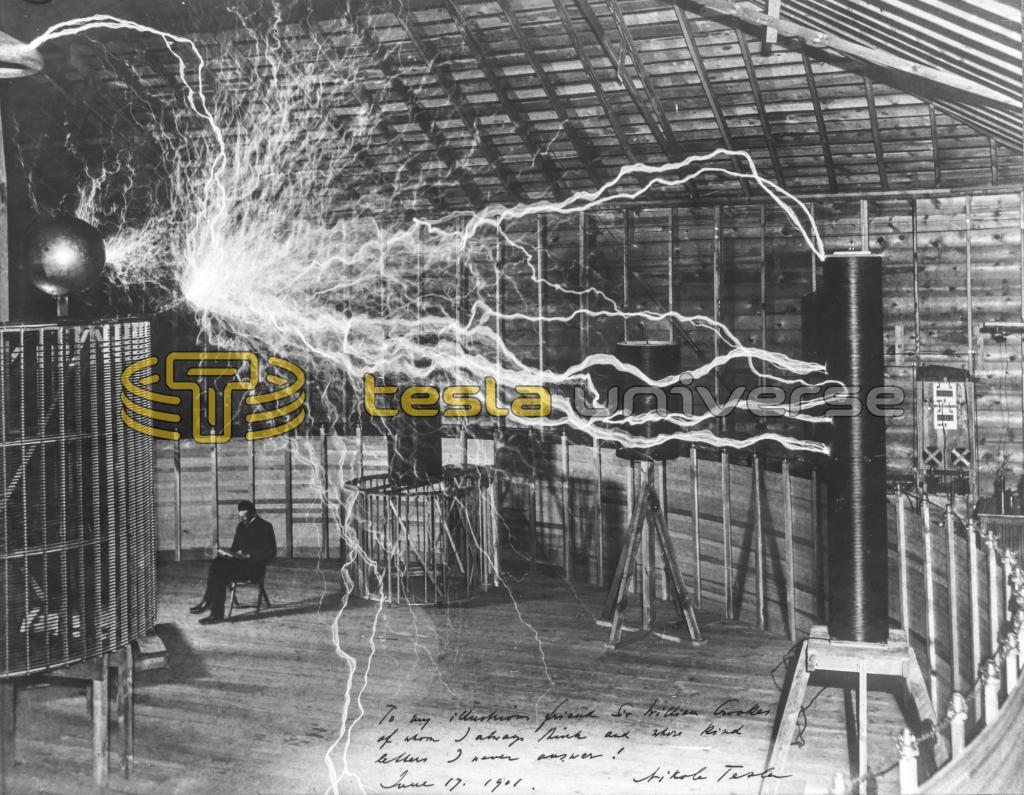
At the turn of the century, when he'd reached the peak of his fame and creative powers, Tesla journeyed to Colorado to begin a dynamic series of experiments that literally used power from within the earth. Using huge coils buried deep in the ground, he lit up every light bulb within 100 feet.
Tesla did the pioneering work in developing the radio, and invented the "Tesla coil" used in principle in every radio and television set today.
He developed and demonstrated radio control of machines and predicted, in detail, guided missiles decades before their creation. He discovered microwaves and the technique that made the microwave oven possible.
He found ways to produce nitrogen electrically in large quantities, enabling farmers to feed millions more than before.
Tesla astounded visitors to his lab by sitting there calmly as monstrous 135-foot lightning flashes crashed and cascaded about his head.
But in 1912, when it was announced that he and Thomas Edison were to share the Nobel Prize in Physics, Nikola Tesla refused the award because he felt that Edison was a "trial and error" inventor, while he, Nikola Tesla, was a "discoveror."
Tesla planned to combine his idea for a "world wireless" that would link telephones around the globe with his futuristic idea of providing the whole planet with power from the very earth. But after his $150,000 financing from J.P. Morgan ran out, Morgan refused him any more money.
“It is not a dream,” protested Tesla. “It is a simple feat of scientific electrical engineering, only expensive — blind, fainthearted, doubting world!”
Today, around the world, several groups of engineers are trying to bring Tesla’s dream of wireless power transmission and magnification to life — as a possible cure for the energy shortage.
In 1913, Tesla patented a highly efficient “flat disk” turbine engine — but only now are scientists developing it and realizing its incredible potential.
Toward the end of his life, the aging Tesla, who lacked the money to develop his ideas, wove his magic only within his brilliant mind. His ideas were so advanced that the world scoffed at them and thought he was crazy. But today scientists are taking a new look at his brainstorms.
For instance, Tesla’s invention of a “death ray” sounds incredibly close to today’s laser beam weapons. His claim that he could harness the power of cosmic rays to run a small motor met with laughter, but today many scientists are working to duplicate this feat. And they say it’s even possible to cause earthquakes by “resonance” — the same principle Tesla used to nearly destroy a city block decades ago.
Tesla’s ideas created fortunes for other people, but he died penniless in 1943, living out his final years in New York hotel rooms, scorned by the scientific establishment because of ideas that they could not fathom . . . but which may be the cornerstone to our future in the centuries to come.