Nikola Tesla Articles
Industry Is Base Of Niagara Area Economy
Power Is Key to Area Growth
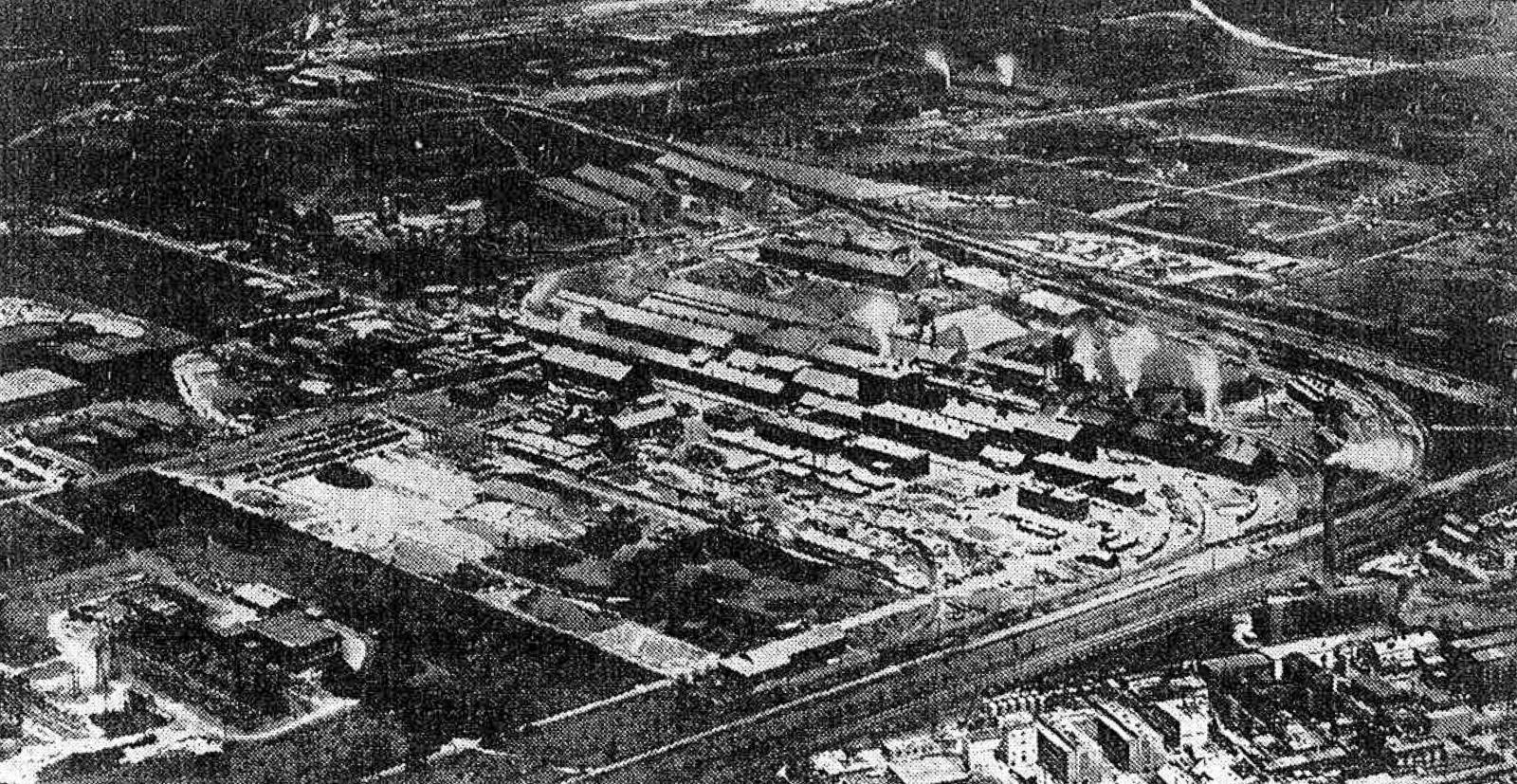
INDUSTRY is the bulwark of the economy of the Niagara Falls metropolitan area, which comprises the city and the Towns of Wheatfield, Niagara, Lewiston and Porter.
Approximately 21,000 persons of a metropolitan population of 136,500 are employed in manufacturing.
There has been a decline in industrial employment since the Schoellkopf rock slide in 1956. There were 26,579 jobholders in industry shortly after the Schoellkopf plant was destroyed as compared with 21,289 in December of last year.
But business and industrial leaders here expect this trend to be reversed now that more favorable power rates have been made possible by the startup of the 2,190,000 kilowatt Niagara project.
When the national recession is overcome — where steel rallies and the national economy regains its bounce — Niagara Falls hopes to be in the forefront of the boom.
It is blessed with natural and man-made assets that should give it a lift. These include abundant low-priced hydroelectric power, considerable available land for industrial development, abundant fresh water and a skilled, highly trained labor force.
The Niagara Falls metropolitan area is part of the vast Niagara-Erie County industrial complex, a two-county area that supports 1,300,000 people on the American side of the international border.
This area offers great potential benefits to consumer goods producers, fabricating industries and service industries looking for a large and concentrated market.
THE RED LETTER day in the industrial history of Niagara Falls was Nov. 16, 1896 the day alternating current from the Edward Dean Adams Station on the upper river was transmitted to Buffalo, almost 25 miles away.
This naturally set off an industrial boom here. Niagara Falls was the only place in the world with a supply of electric power for industry.
Dr. Edward G. Acheson came to town and started the artificial abrasive industry. He had been unable to make a go of his invention of carborundum elsewhere because of power costs.
Power was the magnet that drew the aluminum, calcium carbide, ferro-alloy, electro-chemical and paper industries to Niagara Falls.
Niagara Falls flourished and grew because of electric power. In a little more than a decade, its population expanded ten times.
Electric power also determined the city’s destiny for all time. Niagara Falls was transformed from a resort community — a watering place for aristocrats — into a smoky, dusty complex of industrial plants.
Niagara Falls and area will continue to depend on industry as the principal source of income for the foreseeable future. The tourist business will be important but secondary to manufacturing.
IT’S A FAR CRY from the primitive saw mills and flour mills of the 1800s to the automated chemical, abrasive, metallurgical and carbon plants that today make Niagara Falls an important industrial center. The change was brought about by men of courage and vision — men of genius — who designed and built the power plants and perfected the manufacturing processes.
The roll call would include George Westinghouse, who built the Adams plant generators, and Nikola Tesla, who invented the polyphase alternating current motor that made it possible to transmit Niagara power over great distances.
It would also include Dr. Acheson, who started two companies here; Charles Martin Hall, who invented the process used in the manufacture of aluminum; Dr. Frederick M. Becket, the man responsible for many ferro-alloy production techniques; Dr. Hector R. Carveth of R. & H. Chemical Co.; James G. Marshall of Union Carbide Co.; Elon Huntington Hooker, who founded Hooker Chemical Corp.; Dr. F. Austin Lidbury of Oldbury Electro-Chemical Co.; Frank J. Tone of Carborundum Co.; Wallace W. Kincaid of Spirella Co.; Henry D. Perky, who invented the Shredded Wheat biscuit, and scores of others.
NIAGARA FALLS started its amazing 10-year period of growth in 1895 when electric current from the generators of the Niagara Falls Power Co. was turned into the pots of the Pittsburgh Reduction Co., predecessor of Aluminum Company of America.
In the same year Dr. Acheson started producing silicon carbide (carborundum) at a plant in Buffalo Avenue.
In 1896 Union Carbide Co. and Mathieson Alkali Co. came to town to found two of our basic industries. Union Carbide combined lime and coke in an electric furnace to produce calcium which, mixed with water, becomes acetylene.
Mathieson Alkali used salt in electrolytic cells to produce caustic soda, chlorine and hydrogen, all basic to the chemical industry.
TWO WORLD WARS gave Niagara area industry tremendous boosts.
During World War I, the productive capacity of Niagara Falls plants was increased many fold. The chemical industry especially felt the impact of the war. Chemical processes developed in Germany were put to use here and in other chemical manufacturing centers in the United States.
Again in the years of World War II, defense production assumed prime importance in Niagara Falls. Bell Aircraft Corp. built a plant in Wheatfield to manufacture fighter planes, and many plants worked around the clock producing goods for the war effort. Employment at Bell climbed to the 15,000 mark. Employment at the plant today is approximately 3,300.
Industry here expanded during 1941-45 to meet the greatly increased demands for metals and chemicals.
The industrial economy has faced some difficulties since, but Niagara Falls still can claim top rank among metal and chemical manufacturing centers in the world.
TODAY, the city and area are bidding for more industry and citing the advantages the community offers.
These include, of course, power and water plus transportation facilities, proximity to the St. Lawrence Seaway and two Great Lakes, excellent highways, good schools, a temperate climate and all of the essential public services.
The Niagara Area Industrial Development Corp. has been formed to acquire properties for interested industries and to help existing industry to expand.
An industrial development department has been established by the Niagara County Board of Supervisors to assist in attracting industry to the area.
The New York Central railroad, the State Power Authority, the Marine Trust Company of Western New York, Niagara Mohawk Power Corp. and other banks and utilities also are out to sell Western New York to the world.
Indeed, Niagara Falls and Niagara County are waiting with open arms to welcome all types of industry, business and commerce.
Island Etymology
Goat Island reputedly derives its name from the fact that John Stedman, the earliest white settler in Niagara County, once pastured goats there. All but one old billy goat froze to death in the winter of 1779. The island was once also called Iris Island.
Niagara’s Major Industries
Alox Corp.
Bell Aerosystems Co.
The Carborundum Co.
Chisholm-Ryder Co. Inc.
E. I. duPont de Nemours & Co. Inc. Electrochemicals Department
Electric Autolite Co.
Frontier Bronze Corp.
General Abrasive Co. Inc.
B. F. Goodrich Chemical Co.
Goodyear Tire and Rubber Co.
Graphite Specialties Corp.
Great Lakes Carbon Corp.
Hooker Chemical Corp.
International Cooperage Co. Div. Greif Bros. Cooperage Corp.
International Graphite & Electrode Div. Speer Carbon Co.
International Minerals & Chemical Corp.
International Paper Co.
Kimberly Clark Corp.
Moore Business Forms Inc.
National Biscuit Co. Shredded Wheat Bakery
National Cylinder Gas Div. Chemetron Corp.
Olin Mathieson Chemical Corp. Chemicals Division
Pittsburgh Metallurgical Co.
Pure Carbonic Co. Div. Air Reduction Co. Inc.
Pyron Corp. Div. American Metals Climax Inc.
Rowe Products Inc.
Stauffer Chemical Co.
Titanium Alloy Manufacturing Div. National Lead Co.
Union Carbide Corp. National Carbon Co. Union Carbide Chemicals Co. Union Carbide Metals Co.
Varcum Chemical Corp.
Warder Paper Box Co.
