Nikola Tesla Articles
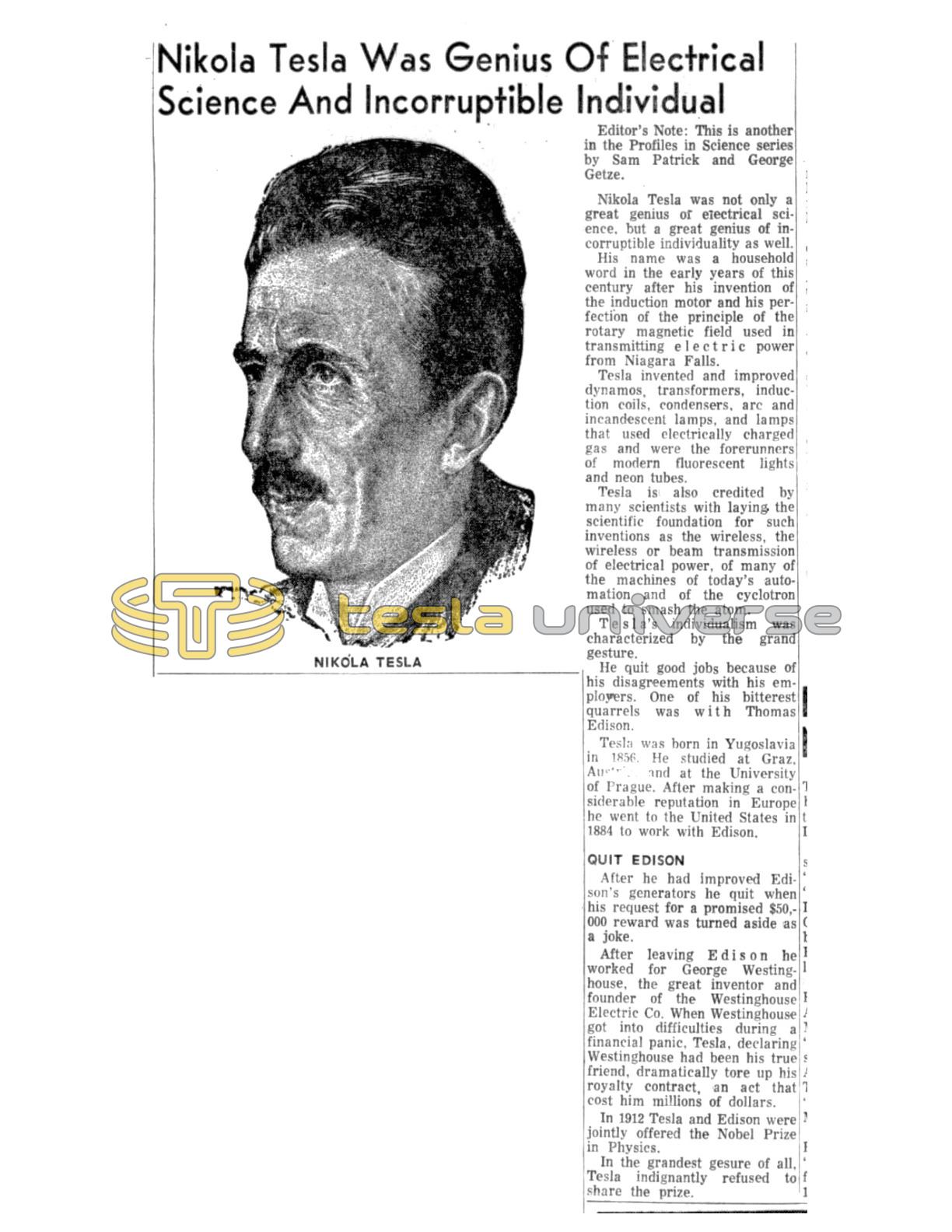
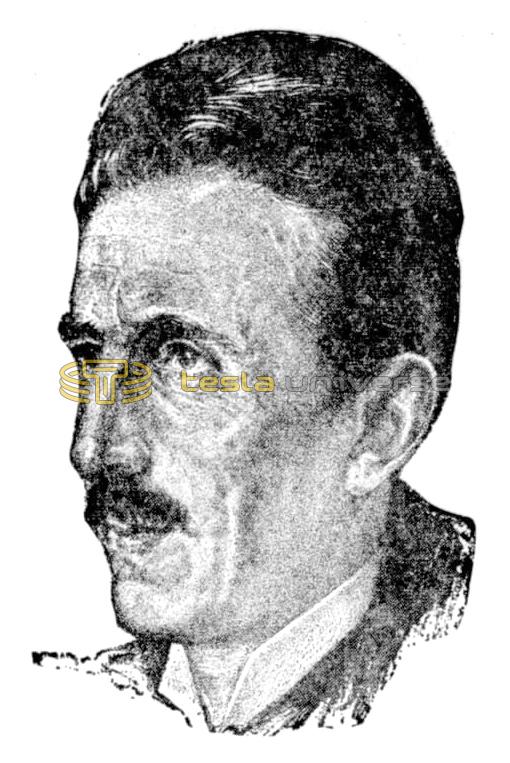
Nikola Tesla was Genius of Electrical Science and Incorruptible Individual
Editor's Note: This is another in the Profiles in Science series by Sam Patrick and George Getze.
Nikola Tesla was not only a great genius of electrical science, but a great genius of incorruptible individuality as well.
His name was a household word in the early years of this century after his invention of the induction motor and his perfection of the principle of the rotary magnetic field used in transmitting electric power from Niagara Falls.
Tesla invented and improved dynamos, transformers, induction coils, condensers, arc and incandescent lamps, and lamps that used electrically charged gas and were the forerunners of modern fluorescent lights and neon tubes.
Tesla is also credited by many scientists with laying the scientific foundation for such inventions as the wireless, the wireless or beam transmission of electrical power, of many of the machines of today's automation and of the cyclotron used to smash the atom.
Tesla's individualism was characterized by the grand gesture.
He quit good jobs because of his disagreements with his employers. One of his bitterest quarrels was with Thomas Edison.
Tesla was born in Yugoslavia in 1856. He studied at Graz, Austria and at the University of Prague. After making a considerable reputation in Europe he went to the United States in 1884 to work with Edison.
QUIT EDISON
After he had improved Edison's generators he quit when his request for a promised $50,000 reward was turned aside as a joke.
After leaving Edison he worked for George Westinghouse, the great inventor and founder of the Westinghouse Electric Co. When Westinghouse got into difficulties during a financial panic, Tesla, declaring Westinghouse had been his true friend, dramatically tore up his royalty contract, an act that cost him millions of dollars.
In 1912 Tesla and Edison were jointly offered the Nobel Prize in Physics.
In the grandest gesure of all, Tesla indignantly refused to share the prize.