Nikola Tesla Articles
Tesla's Electrolytic Clock
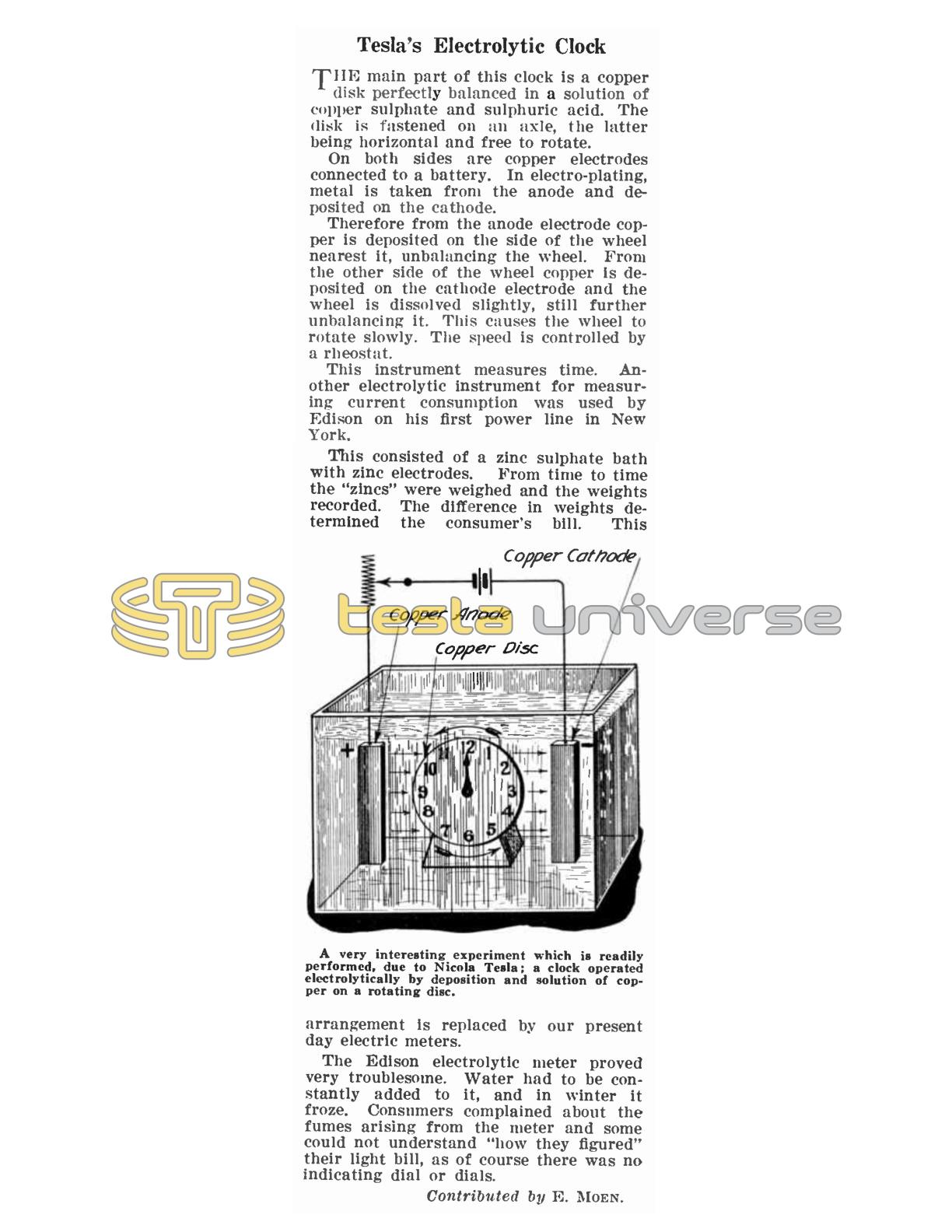
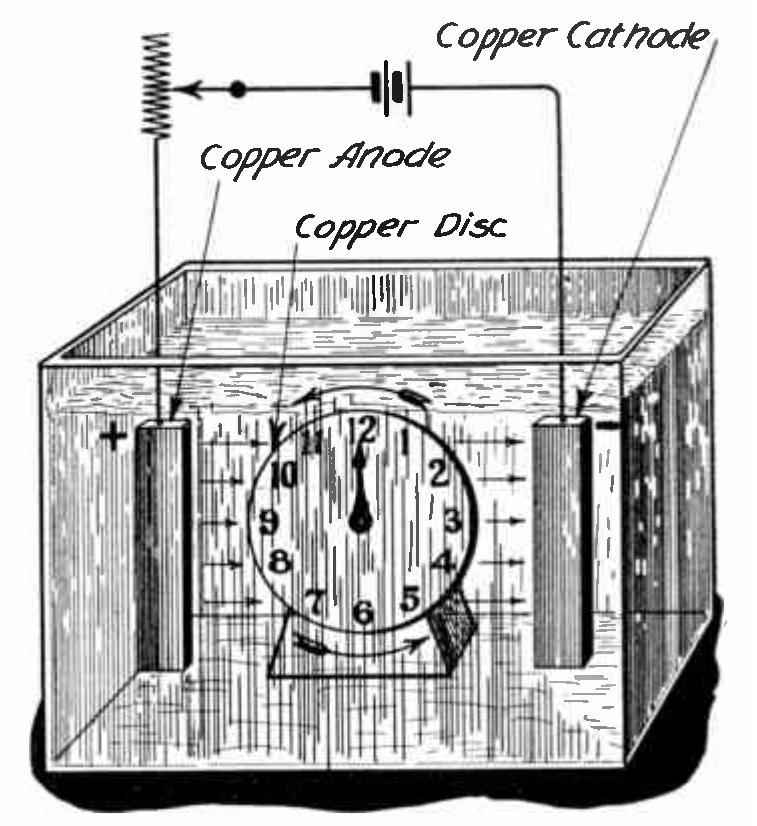
The main part of this clock is a copper disk perfectly balanced in a solution of copper sulphate and sulphuric acid. The disk is fastened on an axle, the latter being horizontal and free to rotate.
On both sides are copper electrodes connected to a battery. In electro-plating, metal is taken from the anode and deposited on the cathode.
Therefore from the anode electrode copper is deposited on the side of the wheel nearest it, unbalancing the wheel. From the other side of the wheel copper is deposited on the cathode electrode and the wheel is dissolved slightly, still further unbalancing it. This causes the wheel to rotate slowly. The speed is controlled by a rheostat.
This instrument measures time. Another electrolytic instrument for measuring current consumption was used by Edison on his first power line in New York.
This consisted of a zinc sulphate bath with zinc electrodes. From time to time the "zincs" were weighed and the weights recorded. The difference in weights determined the consumer's bill. This arrangement is replaced by our present day electric meters.
The Edison electrolytic meter proved very troublesome. Water had to be constantly added to it, and in winter it froze. Consumers complained about the fumes arising from the meter and some could not understand "how they figured" their light bill, as of course there was no indicating dial or dials.
Contributed by E. MOEN.