Nikola Tesla Articles
Three Nobel Prizes for Americans
Announcement is made in the daily press that the Nobel prize for great discoveries in physics is to be awarded this year to two Americans — Edison and Tesla — and the chemistry prize to another American, Prof. Theodore W. Richards, of Harvard. The physics award, we are told editorially by The Electrical World (New York, November 13), will give especial satisfaction to the engineering profession, to which both the recipients have rendered distinguished service, though the successes of both in contributing to the advance of pure science have been no less notable. Among many other familiar scientific feats, those performed by Edison include the perfection of the incandescent electric lamp and its utilization, his improvements in telegraphy and telephony, and his invention of the phonograph; while to Tesla our thanks must be given for the invention of the induction motor, the foundation of our present use of alternating currents for distribution, for brilliant experimental work with the high-frequency current, and for pioneer investigation in wireless telegraphy. Says the journal named above, in substance:
"The name of Thomas Alva Edison has been long associated with the invention and development of the incandescent electric lamp. But Mr. Edison would still rank as one of the very greatest inventors of modern times if someone else had done this splendid work and his reputation had to rest solely on other achievements. His well-known labors in purely telegraphic matters were triumphs of ingenuity, but yet more striking and original was his now almost forgotten invention of the electrolytic relay, which is reputed to have won for him one of the largest payments ever made for a patent. Later his ingenuity was lent to develop the telephone-transmitter, and at about the same time came the beginnings of the phonograph, by all means his most brilliant contribution to physics. And later yet have come his contributions to art and science in the invention and development of motion-pictures.
"To Nikola Tesla the world owes that great impulse which has resulted in the whole modern art and science of power-transmission. The use of alternating current for practical electrical distribution began with his development of the induction motor, which at once gave the general flexibility and usefulness of the system its due place in the practical world. With that invention the struggle between direct and alternating currents presently ceased, and each fell into its proper sphere of usefulness, of which the boundaries are still expanding. His later pioneering work in the development of high-frequency currents in theory and practice displayed brilliant resourcefulness. In wireless telegraphy, on which he spent a long period of tireless research, inventors of the present and future will find themselves often confronted with the results of his inventive energy and keen scientific insight. Those who remember Tesla's lecture before the Institute of Electrical Engineers on high-frequency phenomena, now nearly a quarter of a century ago, realize the extent to which his investigations opened the way to a field of which we have not even yet seen the full fruition."
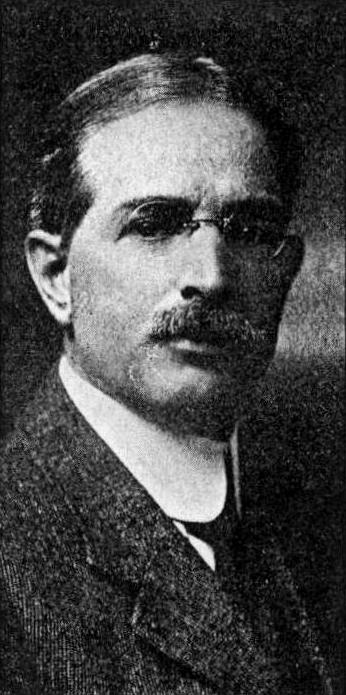
The award to Professor Richards is for chemical-research work that in all its essentials was completed ten years ago and has since been of high practical value in both analysis and theory. The particular work covered by the award is Professor Richards's method for ascertaining atomic weights. Says a writer in The Christian Science Monitor (Boston, November 17):
"By this system the smallest unit of nature, the atom, has been weighed with an accuracy not approached by any investigator preceding Professor Richards, say chemists. By this method, which has been widely accepted and put into use, new ratios have been established in the assaying of ores. Copper ore, for example, is bought upon a metal value, established by chemical analysis, a value based upon the weight of atoms in the ore. Until the Harvard experiment results were announced, this atomic weight was represented as 63.2; whereas, the experiments showed the figure to be 63.6. This difference of two-fifths of 1 per cent. means an increase in value to the seller of about $6,000 on $1,000,000 worth of ore, it is said. Conditions of sale of other metals commercially handled were similarly affected by the discoveries of the new system.
"The revised tables of atomic weights have been arrived at by determining the relative weight of the atoms tested in different elements, not by attempting to weigh the atoms themselves, an impossible task in view of the fact that there are millions of atoms in a single drop of water. . . . .
"Highly accurate apparatus is needed, it goes without saying, in weighing units so minute, apparatus that is freed from the influences of atmospheric variations in heat and moisture. Allowances must also be made for altitude.
"At the Gibbs Memorial Laboratory, Cambridge, Mass., where Professor Richards works, the balance used in this field weighs down to a millionth of a milligram, or one three-millionth part of an ounce. As an illustration of such a breadth of weight, a short light mark by a lead pencil may be cited as something that this balance will weigh. Care is taken to have the platinum receptacle in which the material is to be weighed the same temperature as the rest of the balance, since an ascending current of air would be generated if the crucible were even slightly warmer than the rest of the apparatus, making it lighter on the balance, and thus making a difference of a fraction of a milligram in the weight recorded. For this reason the balance works in atmosphere of its own, confined within a glass case containing dried air.
"In the case of nickel and cobalt the chemist is obliged to contend with untoward qualities in the bromides of these elements in that they are decomposed by exposure to the air. In Professor Richards's experiments they had to be bottled, therefore, in the tubes in which they were made, so that they should not be exposed to the air for an instant.
"The bromide of nickel, for example, was made in a porcelain tube containing dry gas. Thence it was pushed into a glass attachment in which was a weighing-bottle. After it had been got into the weighing-bottle the stopper, which lay on a bulge of the tube, was shaken out and pushed into place with a glass rod — thus performing the operation absolutely under cover.
"This is one of many devices Professor Richards has perfected. Each experiment with a single compound is repeated, moreover, four or five times for the sake of accuracy, and then the element which is being studied is tested in other compounds and in connection with various different substances, until the series, as it is called, consisting of twenty-five or even fifty determinations, is concluded, and the element dismissed in favor of another.
"The experiments have been so uniformly successful that all atomic weights determined by them have been accepted by the scientific world and incorporated in the international tables used by all chemists in making analyses."