Plans
Tesla Coil (by Horace Brooks)
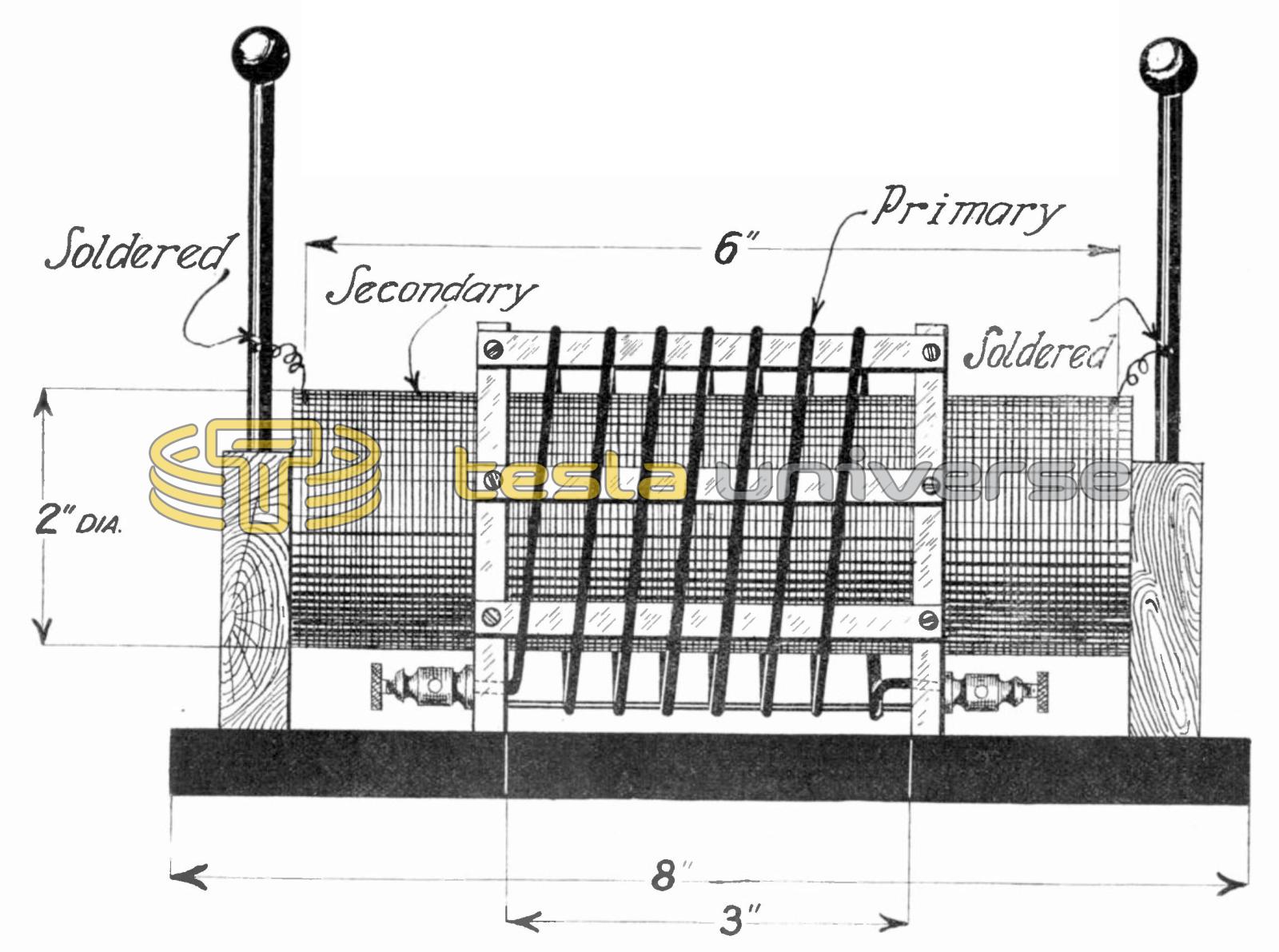
A Tesla coil is an interesting piece of apparatus, and with its aid many wonderful experiments can be performed. The apparatus shown here is a rather small one, but will give good results with a one-inch spark coil.
First cut a half-inch board about 8 by 3 inches. Give this a good coat or two of shellac or varnish.
The primary is composed of seven turns of No. 14 copper wire wound around two wooden drums that have an inside diameter of three inches. The drums are held together by eight strips of wood 3 1/2 inches long and are one-quarter of an inch wide. With small brass screws, screw these eight strips of wood at equal distances along the outside edges of the drums, allowing one-quarter inch on each end for screwing. Wind on the seven turns of No. 14 wire in a sort of slant, as shown in the illustration. Grooves may be cut in the strips for the wire. Fasten the ends of the wire to binding posts. Then screw the whole primary to the base.
The secondary is wound on a tube six inches long and two inches in diameter. Start a fraction of an inch from the end of the tube and wind on a smooth, even layer of No. 24 copper insulated wire. Leave a few inches of wire on each end for connections. Then saw out two round pieces of wood just large enough to fit snugly in the tube. These are screwed with brass screws, to two hard rubber uprights or supports. If hard rubber is not obtainable, wood boiled for a few minutes in paraffin will answer the purpose fairly well.
Then bore two holes in the top of the supports to hold two brass rods that are fitted with brass balls at the top. Fit one of the round boards into one end of the secondary and then place the secondary inside the primary. Arrange the primary and secondary so that they will be concentric; that is, have a common center. Then fit the other round board into the other end of the secondary and fasten the uprights to the base. Solder the ends of the secondary to the brass rods and the coil is finished.
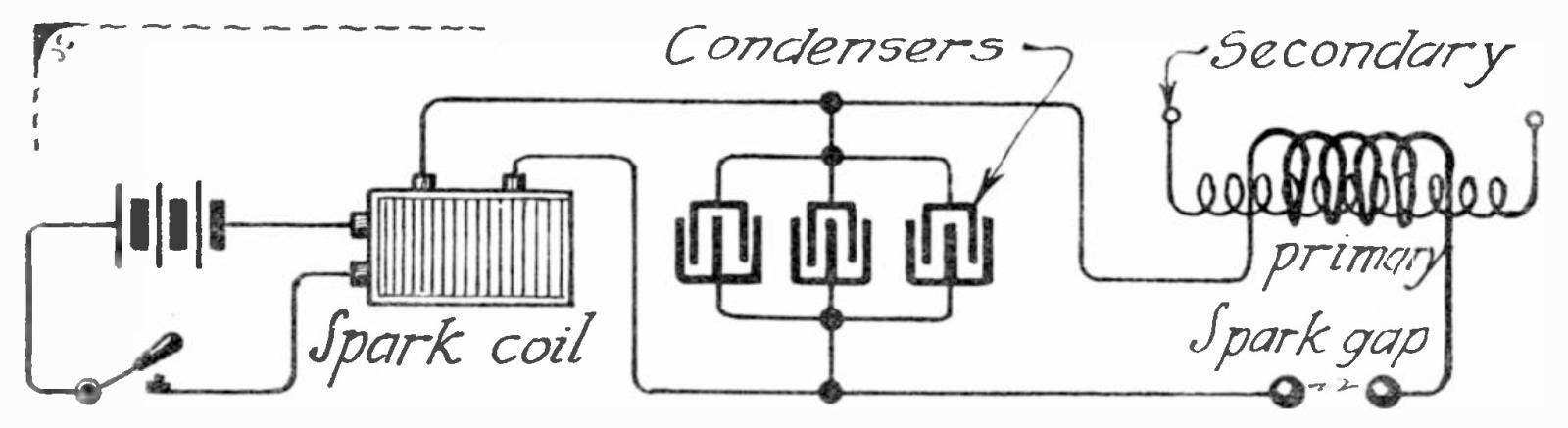
Use the hook-up shown in the illustration. If the coil is worked in the dark the effects are better. If one secondary terminal is grounded forked sparks will jump off the other terminal. Preceding numbers of PRACTICAL ELECTRICS on high-frequency may be consulted for other experiments.