Nikola Tesla Articles
Mind Evolved Theories Beyond Scientific Data
Many Inventions Followed in Wake of New Philosophies
Title of Lone Scientist Applicable Because of Individual Personality
Changed Electric Science
Pioneer in High Frequency Transmission and Circuits
About forty-five years ago a slender, dark-haired youth, with deep-set eyes — unknown, and from Serbia, then an almost unknown country — came to America.
In the succeeding decade or two the world witnessed a clear, pure flare of transcendent scientific and inventive genius, the like of which in all history could probably be counted on the fingers of one hand.
A remarkable series of lectures which he delivered during the years 1891 to 1893, and collected in a volume, "The Inventions. Researches and Writings of Nikola Tesla," is now a classic, ranking with the famous "Experimental Researches" of Faraday.
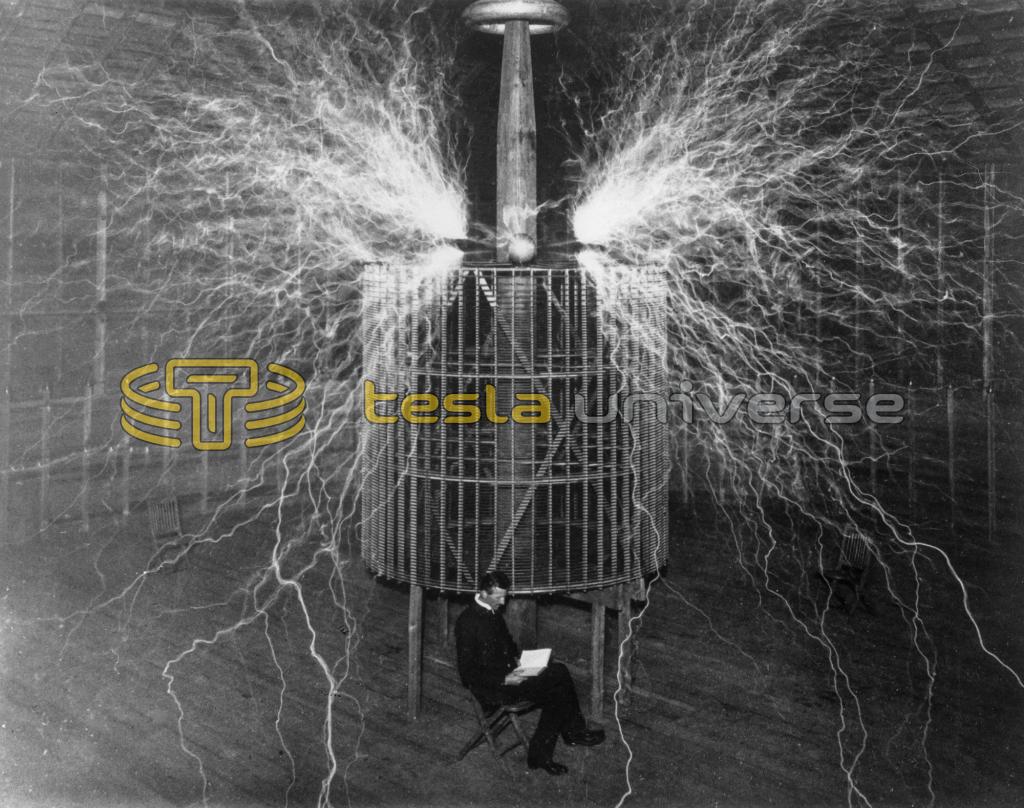
A wizard and ideal to some, a mere fanatical prophet to others, this young man — with a vision which all the knowledge of today has not exhausted — within a brief ten years had revolutionized the electric industry, laid the foundations of radio telegraphy and broadcasting, given a startling impetus to such researchers as Lodge, J. J. Thomson, Roentgen, Millikan, who were later to discover X-rays, electrons, the marvels of electrical conduction in gases, the structure of atoms.
Over a quarter of a century ago, Lord Kelvin said that Nikola Tesla had contributed more to electrical science than any man up to his time.
Seventy-five Years Old
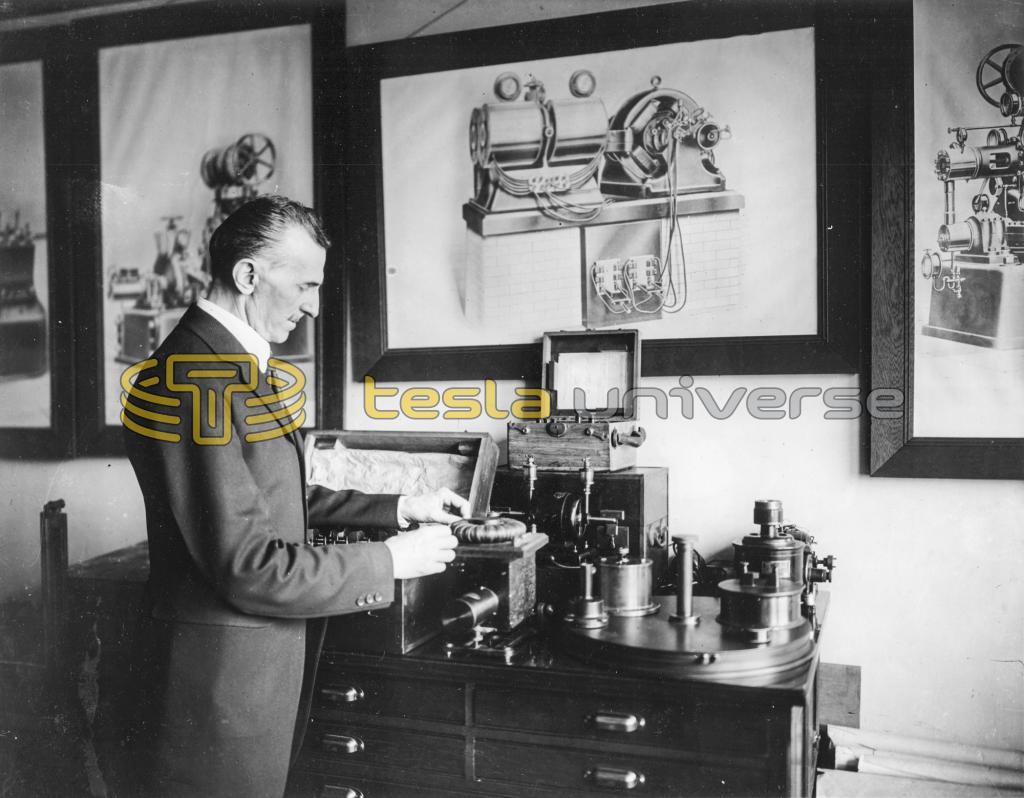
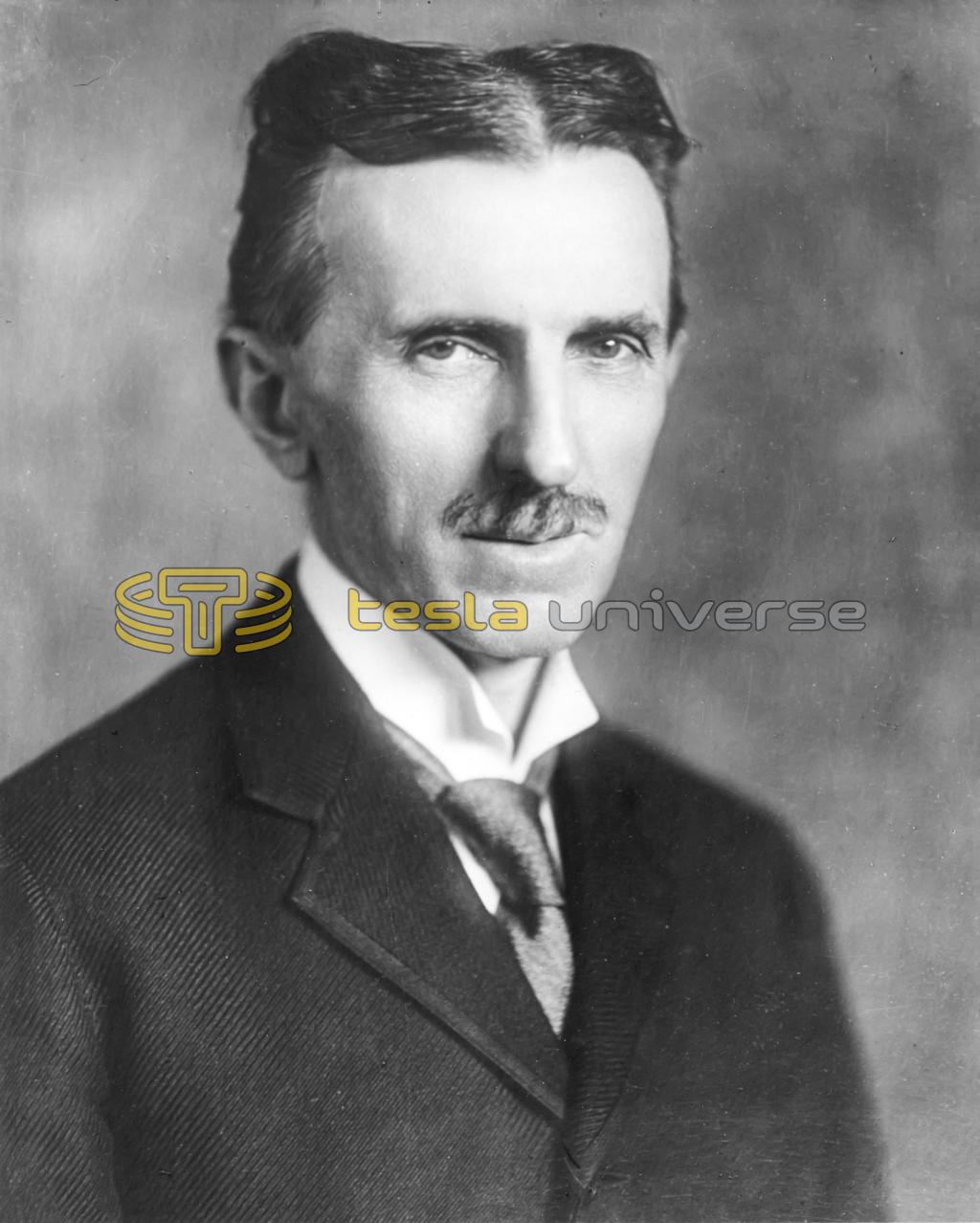
Last week, at seventy-five, Tesla found himself — vigorously active, still — in a world which was just beginning to realize to the full the fruits of his pioneering imagination. "In almost every step of progress in electrical power engineering, as well as as in radio," wrote Dr. E. F. W. Alexanderson, "we can trace the spark of thought back to Nikola Tesla." Professor William Pratt Graham, vice-chancellor of Syracuse University, considered Tesla's discovery of the rotating magnetic field, and the associated method of transmission of power, to have "done more toward the achievement of true freedom for the human race than any other discovery."
Scientists and engineers of both Europe and America began checking scores of the essentials of modern civilization with the early thought-germs of Tesla. To the lay public — and especially to the younger generation, who know Tesla only as a vague name — the results were startling.
When electric generation and transmission was in the "toy" stage, aggregating in the entire United States only a few thousand horsepower, Tesla visioned a second industrial revolution, in which steam power would be supplanted by electric power — houses and streets would be lighted, factories and mills run, trains propelled, by powerful electric pulsations throbbing from great central stations through thousands of miles of thin copper wires.
With the equipment of the time his vision was madness. The Edison, and other direct-current systems for the generation and distribution of electricity, were isolated and strictly local affairs — capable of supplying, economically, an area perhaps not half a mile in radius from the generating plant. Alternating-current systems, which were just beginning to make a little headway, were handicapped by the lack of an efficient alternating-current motor.
But young Nikola Tesla, in his vision, was not reckoning with existing systems and apparatus. Rapidly and clearly in his mind were evolving new apparatus, new systems. In his early boyhood, images of events which had occurred in the past would sometimes flash before his eyes with such vividness that he could not distinguish whether he was seeing an image of memory or a real thing.
Dreams of Future
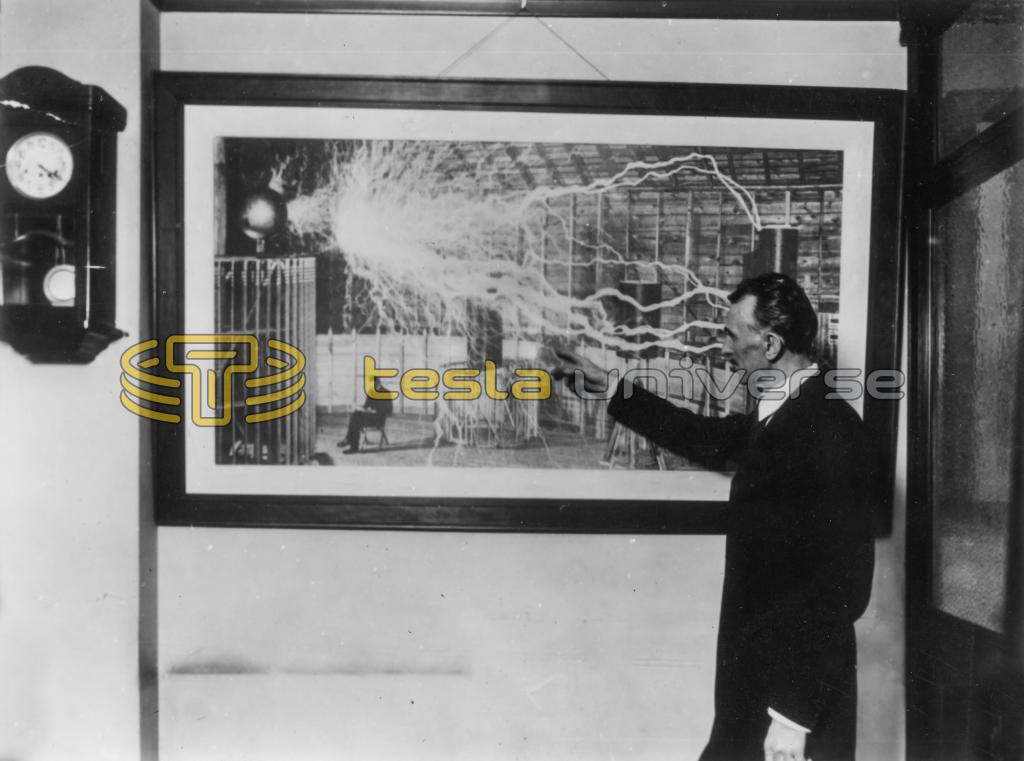
Now his vivid images were of the future. Bit by bit he created mentally the means for fulfilling his dream — the two chief necessities: a new motor, built on radical and beautifully simple principles, which could turn the electric energy into mechanical power, then a whole new system for generating and transmitting electricity economically over almost unlimited distances..
A series of patents describing these inventions were granted in 1888, and bought by the Westinghouse company. The first attempts to introduce them were met with tremendous opposition. But in 1895, at Niagara Falls, 100,000 horsepower of electrical energy — an output equalling that of all the other generating stations operating at the time in this country — was generated, transmitted, and a significant part reconverted into mechanical power, by the Tesla system. A year later, part of by this energy was transmitted twenty miles to Buffalo, inaugurating universal electric service.
The electric revolution had started. Old systems were rapidly scrapped. Almost all new systems became Tesla systems.
New Industries were created. Edison, who had so long and ardently fought the introduction of alternating currents, was now ready to accept them, realizing that his lamp would be given by their use a life and extension which by his own system would have been impossible.
Today some 40,000,000 electrical horse power are generated in the United States by the Tesla system. Millions of horse power of Tesla motors drive everything from phonographs to great mills. The naval aircraft carriers Saratoga and Lexington are propelled by 200,000 horse power each of Tesla generators and motors.
George Westinghouse was one of the few men who had faith in Tesla's ideas. He offered him what was then a fabulous salary and a large Interest in his firm. But Tesla felt that he could not be bound. Already — by 1890 — he had become interested in another field of achievement — the field of high voltage and high frequency currents, which later became known as "Tesla currents," and which are fundamental to all radio and certain types of therapeutic work.
Uncanny Foresight
From the viewpoint of our day of modern radio his vision was uncanny, stupendous. Several years before even the first experiments of Marconi he spoke of transmitting intelligible signals by radio, not only across the entire earth, but to the planets. What is more significant even than his prophesy, is the fact that he actually produced and demonstrated the apparatus which remained the best thing known for at least twenty years.
High frequency generators, coupled and tuned circuits, choke coils, rotary and series spark gaps, stranded conductors, serial and ground connection, the principle of heterodyning — many devices and principles which were introduced later, were clearly described in the lectures of Tesla before 1894.
