Nikola Tesla Articles
Tesla's Turbine
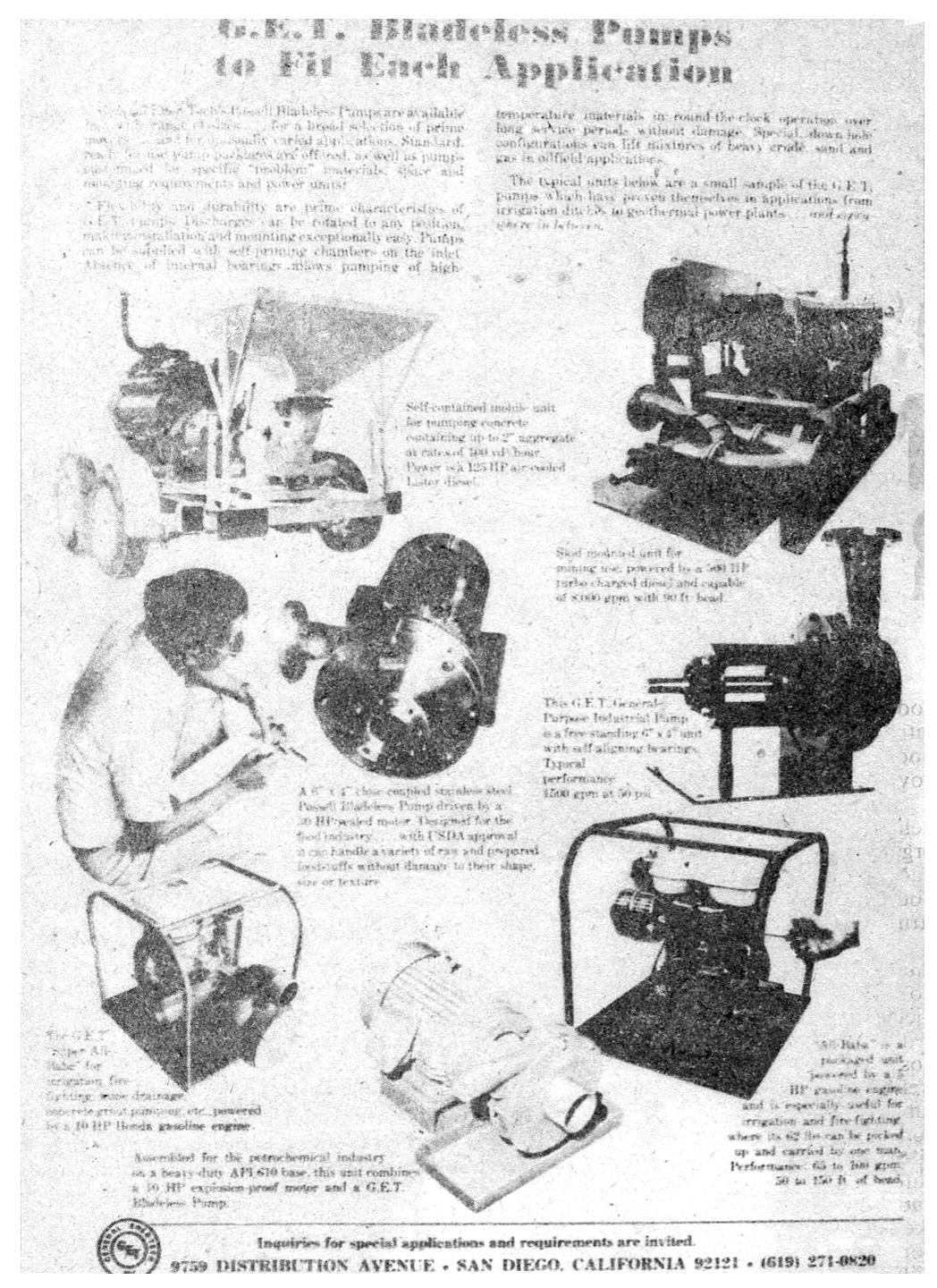
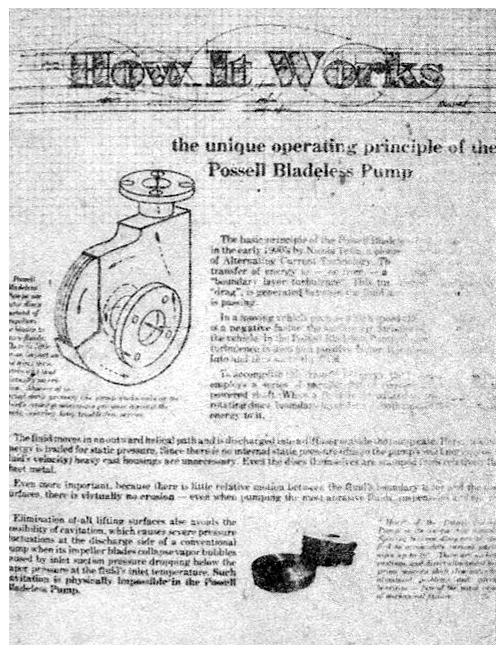
News recently arrived from America that in California two companies are engaged in researching and utilizing some of Tesla’s patents in the field of mechanical engineering. The first, “Sun Wind Ltd” of Sebastopol, is attempting to apply the “Myer vortex turbine,” whose operation is based on Tesla’s discovery of 1913, to an experimental three-wheeled automobile. The second, “General Enertech” of San Diego, manufactures and sells modernized Tesla friction turbines and pumps.
This news takes us back to the beginning of the century, for that is when the story of Tesla’s turbine began. To those who know Tesla only as a giant of electrical engineering and radio technology, it should be said that from approximately 1905 onward Tesla was occupied with investigating the possibilities of fluid propulsion, with the intention of creating in mechanical engineering an improvement comparable to the one his two-phase alternating-current motor had brought to electrical engineering.
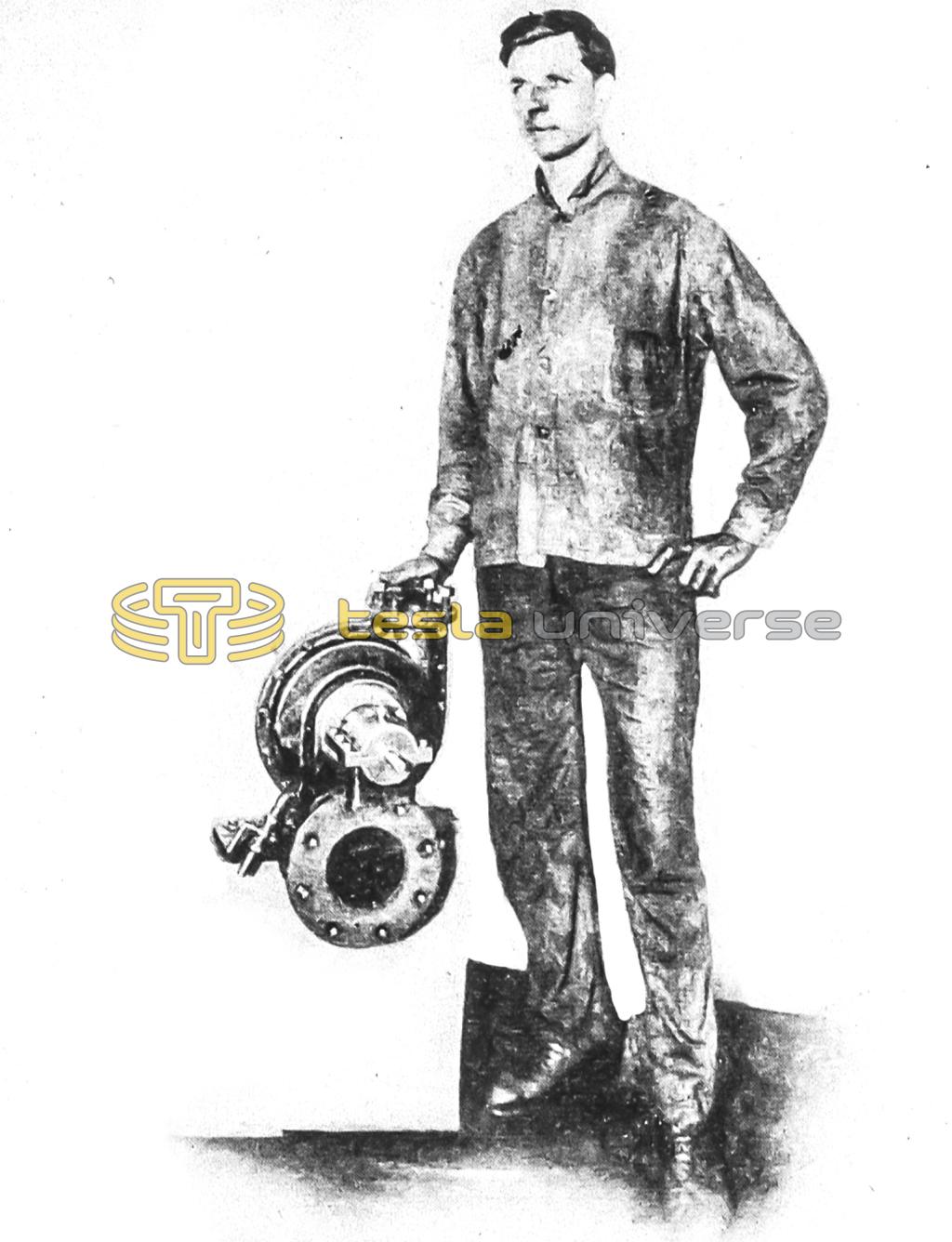
After a series of experiments carried out in his laboratory on Long Island, Tesla was able to present to his friends this new discovery — the friction turbine, or “turbine in a hat,” as he liked to call it because of its exceptional lightness, simplicity, and considerable power.
Observing the operation of Parsons and similar turbines then in use, which consist of one or more discs with blades around the circumference through which the energy of the fluid is converted into the kinetic energy of the turbine wheel, Tesla realized that smaller or larger impacts and shocks of the fluid were inevitable, and that frequent failures and limitations prevented such machines from performing well. Seeking to give the fluid that passes through the turbine wheel and does work a more natural and gradually changing path of flow, he arrived at a solution analogous to an engine he had built as a twelve-year-old boy.
The operation of the turbine is based on the properties of adhesion and viscosity of the fluid. Thanks to these properties, a body moving through a fluid encounters what is called surface resistance, which arises from the impact of the fluid against the irregularities of solid matter, that is, from the internal forces that resist the separation of molecules. As a result, a body placed in a fluid that is moving is drawn along in the direction of the fluid’s motion, and conversely, a body that moves draws a certain quantity of fluid along with it.
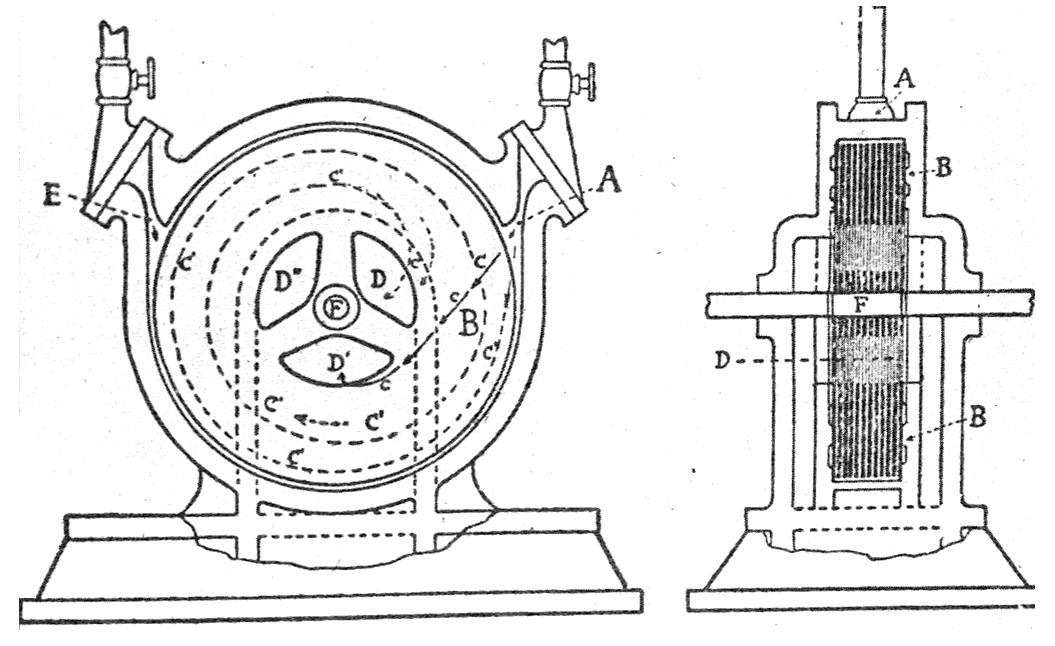
Tesla’s turbine consists of a certain number of discs with circular openings in the center, joined by straight spokes to a central shaft. The rotor is housed in a two-part casing that has two inlets on the periphery through which steam or gas enters; thanks to these the turbine rotor can easily reverse its direction of rotation, so the turbine possesses the valuable property of reversibility.
If, for example, steam under pressure is admitted through one of the inlets (marked A on the diagram), the rotor begins to turn and the steam follows a spiral path, gradually losing speed until it reaches the outlet openings (D D' D"), performing work on the motion of the rotor in the process. If the central shaft rotates on frictionless bearings, the edges of the rotor reach a speed close to that of the surrounding fluid; the spiral path of the fluid particles becomes correspondingly long and consists of many turns. If the rotor is loaded in some way, it slows down and the spiral path of the fluid particles shortens.
The first turbine on which Tesla tested his ideas was built by his technical associate Džulijus Sito (Julius Cito) in 1906. It had a diameter of only 10 cm, yet it produced 30 kW. The weight of the entire machine was 5 kg, with a rotor weighing 1 kg, and it produced 30 kW per kilogram of rotor.
The rotor consisted of 10 thin circular plates made of silver. The plates were almost in contact with one another, and the casing had a relatively large peripheral space, necessary because of the considerable stretching of the plates. This stretching was the result of the enormous speed of 35,000 revolutions per minute.
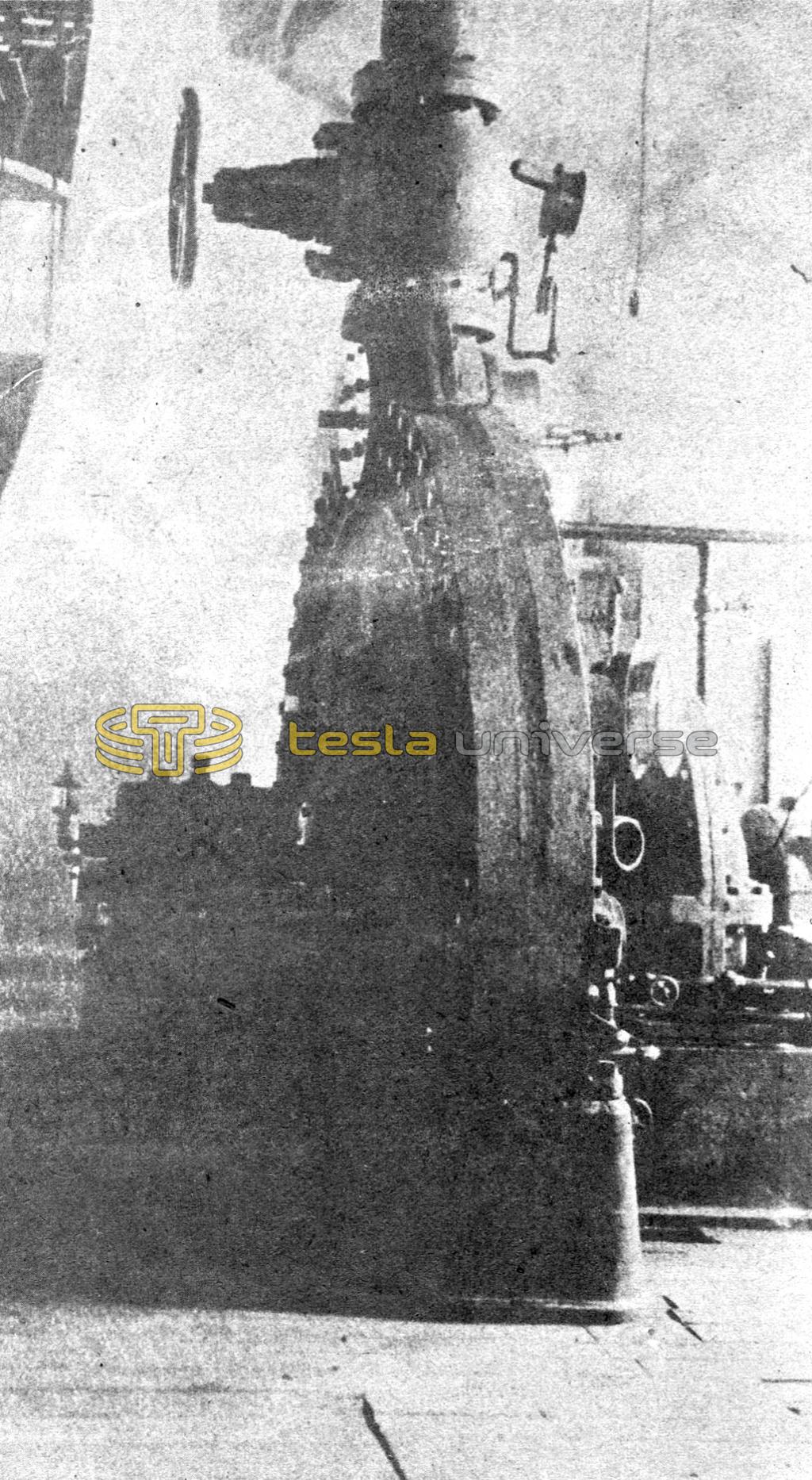
In 1911 Tesla had a larger turbine built, rated at 200 kW at 9,000 revolutions per minute, weighing 190 kg, with a rotor diameter of 40 cm. Steam consumption was 20.5 kg of saturated steam per kW per hour.
After successful experiments carried out at Edison’s Waterside station in New York, Tesla finally succeeded in interesting the Allis-Chalmers company of Milwaukee, a manufacturer of reciprocating engines and turbines.
In cooperation with the engineers of that company, three turbines were built. Two had a power of 147 kW, and the third was designed for 3,600 revolutions per minute and had a power of 500 kW.
The rather unfavorable reports about this turbine given by the chief technical associate, as well as the poor cooperation Tesla established with the company’s engineers, led to disagreements. Later, regarding that event, Tesla said: “They didn’t want to make the turbines the way I wanted them.”
Despite this failure, Tesla did not give up. He tried to assert his turbine in many ways, and one of them was its use in air propulsion. All these attempts, unfortunately, remained unsuccessful. How much Tesla cared about the turbine and the new principle of fluid propulsion applied there is shown by the fact that he patented his invention not only in the USA, but also in Argentina, Austria, Australia, Belgium, Brazil, Cuba, England, India, Italy, Japan, Mexico, New Zealand, Norway, Rhodesia, Spain, Switzerland, and the Transvaal.
When Tesla presented his “turbine in a hat” to the public in 1911, the first polemics and attempts to assess its efficiency appeared. Among the theoretical works, particularly interesting are Dr. Lorentz’s mathematical theory and Professor Merizho’s analogous theory. The first appeared in 1911 and the efficiency of the turbine and pump was poorly rated. Another, from 1913, was extremely laudatory. Tesla, however, believed that neither one nor the other fully described the thermodynamic processes in his machines.
With Tesla’s death in 1943, the turbine temporarily fell into oblivion. Of more than 100,000 documents found in Tesla’s legacy after his death, about 10,000 documents relate to mechanical engineering, primarily turbomachines. As is well known, the entire documentation, together with Tesla’s personal belongings and his posthumous ashes, was transferred, thanks to Sava Kosanović, to Belgrade and has been kept in the Nikola Tesla Museum since 1952.
This great potential, which exists in the form of Tesla’s technical drawings and sketches, photographs, scientific papers, and various experimental tests of turbines and pumps, was available to our scientific institutions and researchers but has not yet been thoroughly studied. Since 1952, no one has seriously interested themselves in and dedicated themselves to working on Tesla’s turbine.
The extraordinary possibilities offered by modern technology, together with computer processing of data, have yielded results and finally enabled the industrial production of Tesla’s devices.
This news would probably have pleased Tesla himself the most. Where he could not go alone and to the end in his research, Tesla opened doors and hinted at the paths that should be taken.
Branimir JOVANOVIĆ