Nikola Tesla Articles
The Genius of Electricity Who Lit the World
by Siniša Stanisavljevi, MD
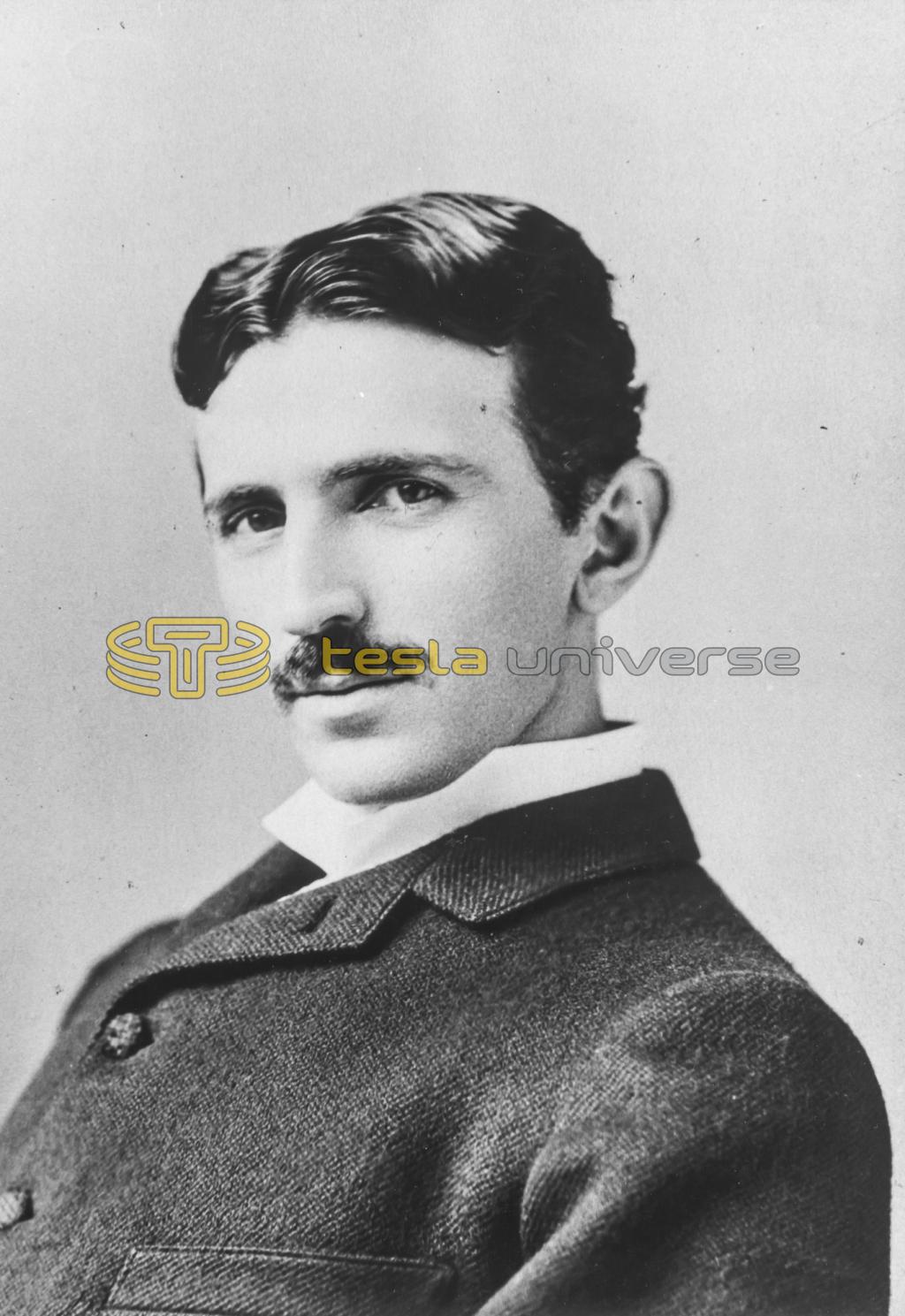
Nikola Tesla, a Serbian-American inventor, was born in Smiljan, in the province of Lika (then Austria-Hungary, now Croatia), on July 10, 1856. Tesla grew up in a religious family; his father and maternal grandfather were priests in the Serbian Orthodox Church. After studying mathematics and physics at the Polytechnic Institute in Graz and philosophy at the University of Prague, Tesla decided to turn to electrical engineering.
In 1881, at the age of 25, while working at the telephone exchange in Budapest, he invented a telephone repeater. While working 19 hours a day, he experienced a nervous breakdown and while recovering, he had a vision of his alternating current (AC) induction motor. In 1882, the Edison Company, based in Paris, hired Tesla, but no one expressed interest in his AC power system. Europe was unable to bring his idea to practical application.
Yet one of his bosses, Charles Batchelor, who had worked with Thomas A. Edison, sent Tesla to New York with one of the most prophetic letters of recommendation ever written. Batchelor wrote to Edison: "I know two great men and you are one of them: the other is this young man."
Without Tesla's AC power system our cities would be dark, subway trains would stop, modern life would be almost inconceivable.
In 1884, Tesla came to the U.S., with knowledge of a dozen languages. Edison hired him on the spot. Both Edison and Tesla were extremely brainy; however, Edison, who was committed to the use of direct current, rejected Tesla's ideas for AC power system. As a result, Tesla spent less than a year in Edison's workshop in New York. In 1888, he formed an alliance with George Westinghouse, a descendant of the aristocratic Russian von Wistinghousen family. Westinghouse had experience and vision; he realized the practical advantages of the AC power system. The Westinghouse Company financially supported Tesla's work and brought his AC system to practical application. However, a tug of war between the Tesla AC and Edison DC systems continued for years. Finally, in 1892, the Westinghouse Company and Tesla AC power system won the game — Westinghouse won the right to provide the power system to light the 1893 World's Columbian Exposition in Chicago.
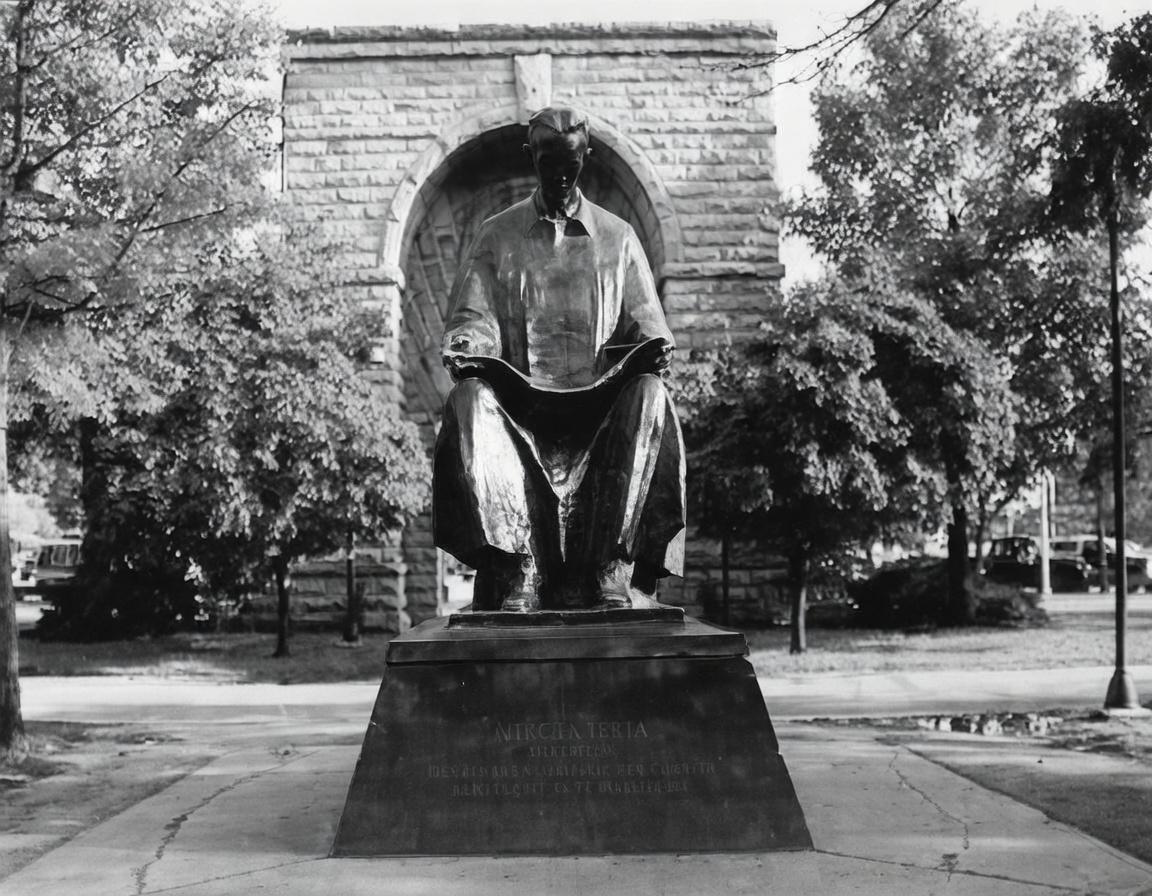
In 1894, Tesla received honorary doctorates from Columbia and Yale. The following year, Tesla put into commission the first electric power plant based on his principles in Niagara Falls. This crucial event signaled America's inevitable conversion to the Tesla AC power system. The Niagara Falls Project is the world's first hydroelectric power plant and a network for transmitting electric power. Owing to this successful project, Tesla and Westinghouse started the electrification of America and the world.
Tesla's tremendous contributions to power transmission revolutionized the power industry and provided the basis for the modern electric power industry. Without Tesla's AC power system, our cities would be dark, subway trains would stop, and modern life would be almost inconceivable. Among Tesla's other inventions are fluorescent and neon lighting, wireless transmission and remote control. In addition, he outlined the principles of radar, and anticipated the development of robotics and modern electrical technology.
In the U.S. National Hall of Fame, Tesla is included in the list of great men of this country.
It is considered that Marconi invented the radio; however, hardly anyone knows that Tesla described his first radio apparatus in detail in 1893, two years before Marconi presented his radio device, claiming it as his original invention. When Marconi sent his famous "S" signal across the Atlantic, Tesla said: "Let him continue. He is using 17 of my patents. Let the future tell the truth and evaluate each one according to his work and accomplishments." Despite that, Marconi won the Nobel Prize in 1909 for the development of wireless telegraphy. In 1943, a few months after Tesla's death, the U.S. Supreme Court upheld Tesla's radio patents and restored the priority of Tesla's patents over Marconi. Since it happened in the middle of World War II, the decision of the U.S. Supreme Court was unnoticed. How many facts are incorrectly described in our books, while the reality is completely different?
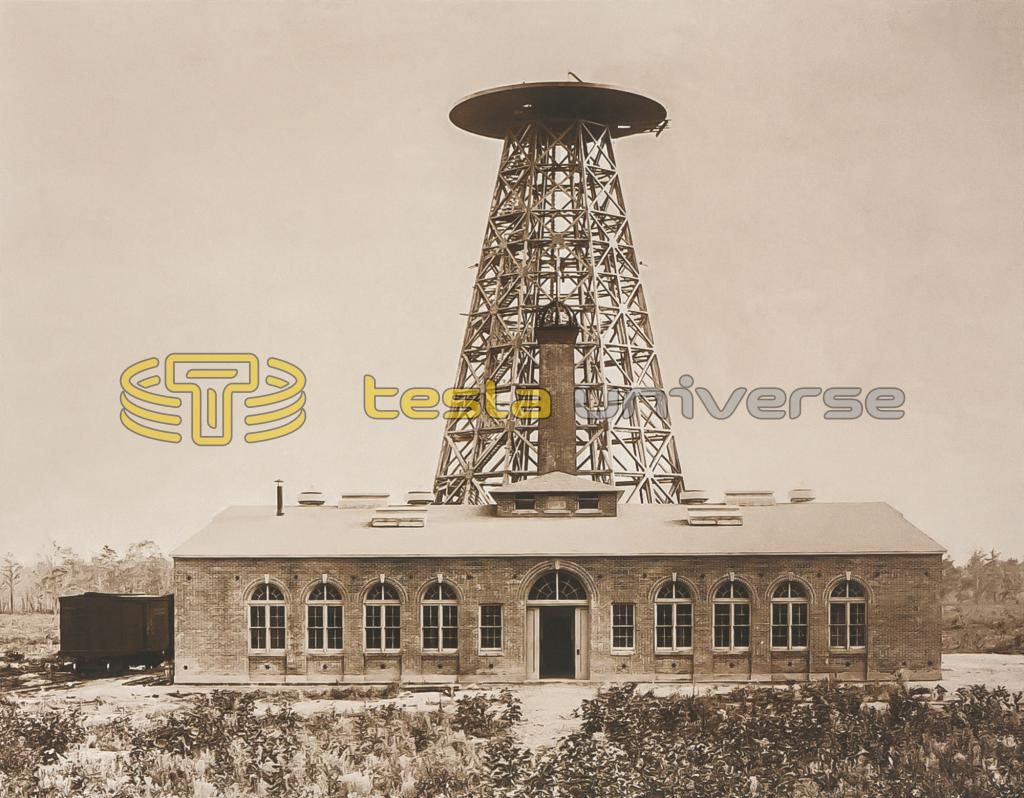
In 1901, with the financial backing of J. P. Morgan, Tesla began work on his "World System" for wireless communication and power transmission in Wardenclyffe, Long Island, New York. This was the first broadcasting system in the world. Tesla's dream was also to transmit electric power wirelessly from his laboratory to the whole globe using the ionosphere. In 1905, however, Morgan withdrew his support and Tesla's dream of wireless electric power transmission did not come true.
Although he enjoyed fame, Tesla made little money from his inventions. For the last decade of his life, Tesla was dependent on a yearly gift of $ 7,200 from the Yugoslavian government. In 1942, King Petar II of Yugoslavia visited him in New York and paid tribute to him for his inventions. In 1943, Nikola Tesla died at the age of 87 in the Hotel New Yorker in Manhattan in room 3327. More than 2,000 people attended the funeral at the Cathedral of St. John the Divine in Manhattan. President Franklin Roosevelt paid tribute to Tesla; the mayor of New York, Fiorello La Guardia, read a eulogy on the radio.
The memory of Tesla and his works goes on living in the United States, Serbia and throughout the world. In The U.S. National Hall of Fame, Tesla is included in the list of great men of this country. In 1956, The International Electrotechnical Commission adopted the name "Tesla" for the unit of magnetic flux density. According to The Discovery Channel, Nikola Tesla is among the "100 Greatest Americans." The website of The Tesla Memorial Society of New York has a great collection of Tesla's photographs and documents, keeping the memory of Nikola Tesla alive.
Yearly, The Nikola Tesla Foundation in Belgrade, Serbia, awards The Nikola Tesla Prize for exceptional students and inventors. The Nikola Tesla Museum in Belgrade presents his most significant discoveries, documents and personal belongings. In a special room of the museum, the urn with Tesla's ashes is kept. Humankind is permanently indebted by Tesla's epochal discoveries. Edwin H. Armstrong said: "I believe that the world will wait a long time for progress and imagination equal to Tesla's."
This year, the world celebrates the 150th birthday of Nikola Tesla. In view of this anniversary, in Belgrade, The Tesla Tower, visible from an airplane, will be constructed and will become a symbol of the capital of Serbia. In addition, Belgrade's International Airport was renamed Tesla International Airport. Also, last month The Njegoš Endowment at Columbia University held a Symposium on Nikola Tesla, gathering many scientists and Tesla researchers.
Tesla, the founding father of modern electrical technology and wireless transmission, summed up his own life in these words: "I continually experience an inexpressible satisfaction from the knowledge that my polyphase system is used throughout the world to lighten the burdens of mankind and increase comfort and happiness, and that my wireless system, in all its essential features is employed to render a service to and bring pleasure to people in all parts of the world." Doubtless, the history of the AC power system and wireless transmission is the history of human progress.
About the author:
Siniša Stanisavljevi, MD, is a Postdoctoral Fellow at the University of Illinois at Chicago and a Tesla Prize winner for 1999.
Further reading about the life of Nikola Tesla
Mark J. Seifer, "Wizard: The Life and Times of Nikola Tesla, Forgotten Genius of Electricity" (1996).
Margaret Cheney, "Tesla: Man Out of Time" (1981).
Robert Lomas, "The Man Who Invented the Twentieth Century: Nikola Tesla, Forgotten Genius of Electricity" (2000).