Nikola Tesla Articles
Nikola Tesla: Prophet of Tomorrow
The aged Slav with the thin silvery hair and hypnotic pale blue eyes was weary of the role of superman. "We are all meat machines," he told John J. O'Neill, science writer for The New York Herald Tribune. "We are composed only of those things which are identified in the test tube and weighed in the balance."
"I don't believe a word of it," O'Neill replied. "Under your theory we could not have a Nikola Tesla." When next they met, the electrical wizard confided in O'Neill: "You understand me better than anyone else in the world."
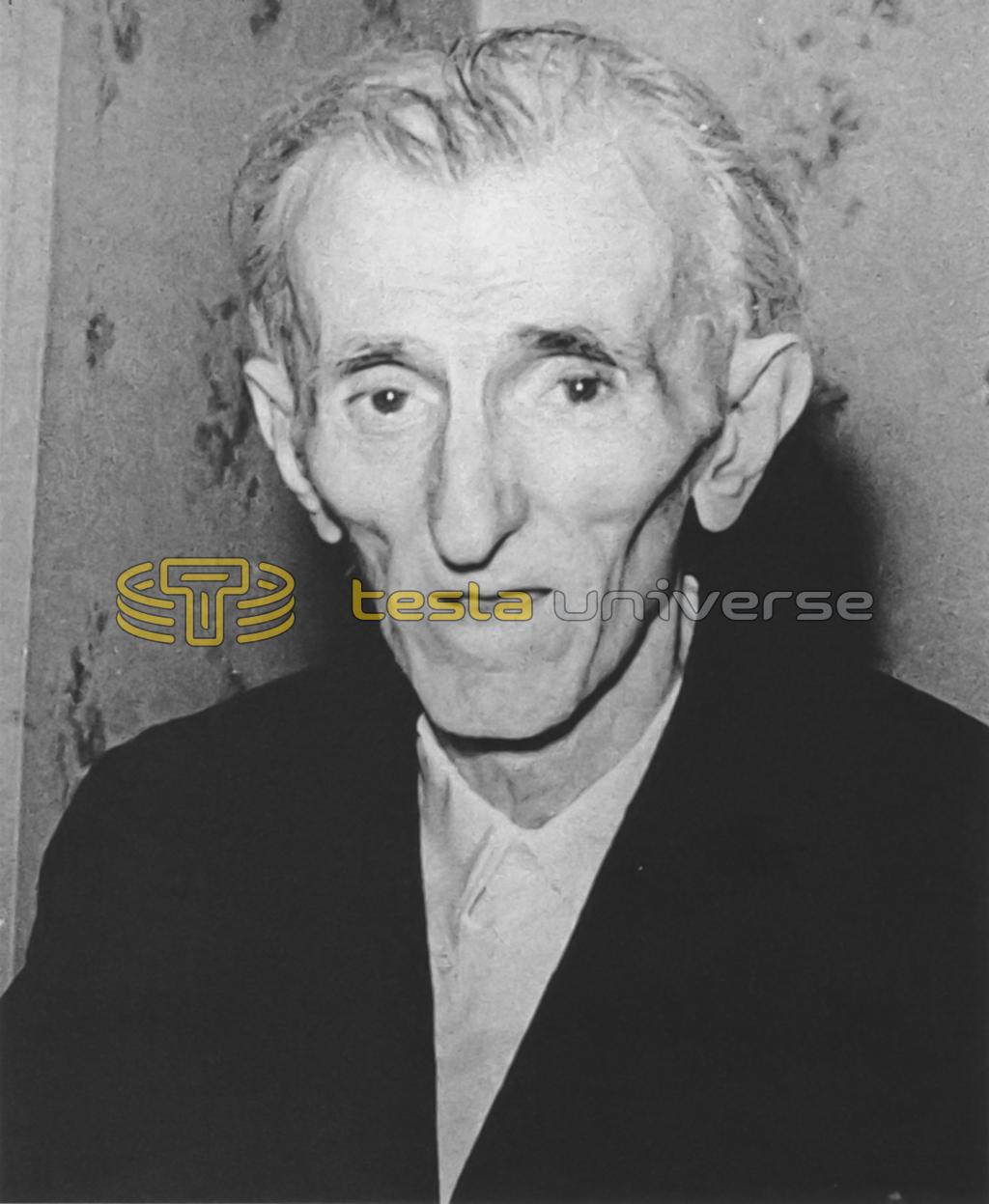
This week the man who knew Tesla best is bringing out the first biography of the father of radio, television, power transmission, the induction motor, and the robot, and the discoverer of the cosmic ray. In "The Prodigal Genius: The Life of Nikola Tesla" O'Neill, himself a scientist and in 1937 winner of a Pulitzer Prize for science journalism, gives a sympathetic and often stirring account of Tesla's life from the scientist's frail childhood near the shores of the Adriatic in what is now Yugoslavia to his death in 1943, a debt-ridden recluse of 86, in a New York hotel room.
Light and Power
When Nikola Tesla stepped off a boat at the Battery in New York in 1884, he had 4 cents, a book of poems, and plans for designing a flying machine. The young immigrant was well born and well educated. His father, Milutin Tesla, was a Greek Orthodox minister. His mother, Djouka, not only was brilliant but, according to Tesla, could at 60, "using only her fingers, tie three knots in an eyelash."
At the University of Prague, Nikola excelled in physics and mathematics and in 1881 began working for the Austrian Government in the telegraph engineering department. In the three years before his arrival in the United States, he invented a telephone repeater, built his first motor in Strasbourg, worked in electrical engineering projects in Budapest and Paris, and visited London, where he watched Lord Rayleigh, the noted physicist, conduct experiments.
It was inevitable that Tesla should work with Thomas A. Edison, then struggling in his south Fifth Avenue laboratory; inevitable, too, that the two giant minds should clash. On technical grounds, O'Neill explains, they were worlds apart. Edison belonged to the direct-current and Tesla to the alternating-current school of thought." When Edison failed to pay Tesla a promised bonus, the younger man quit.
In George Westinghouse, another inventor, Tesla found a more sympathetic coworker. In 1888, Westinghouse bought the rights to Tesla's polyphase system of power transmission (using alternating instead of direct current), which made possible the harnessing of Niagara Falls.
Success
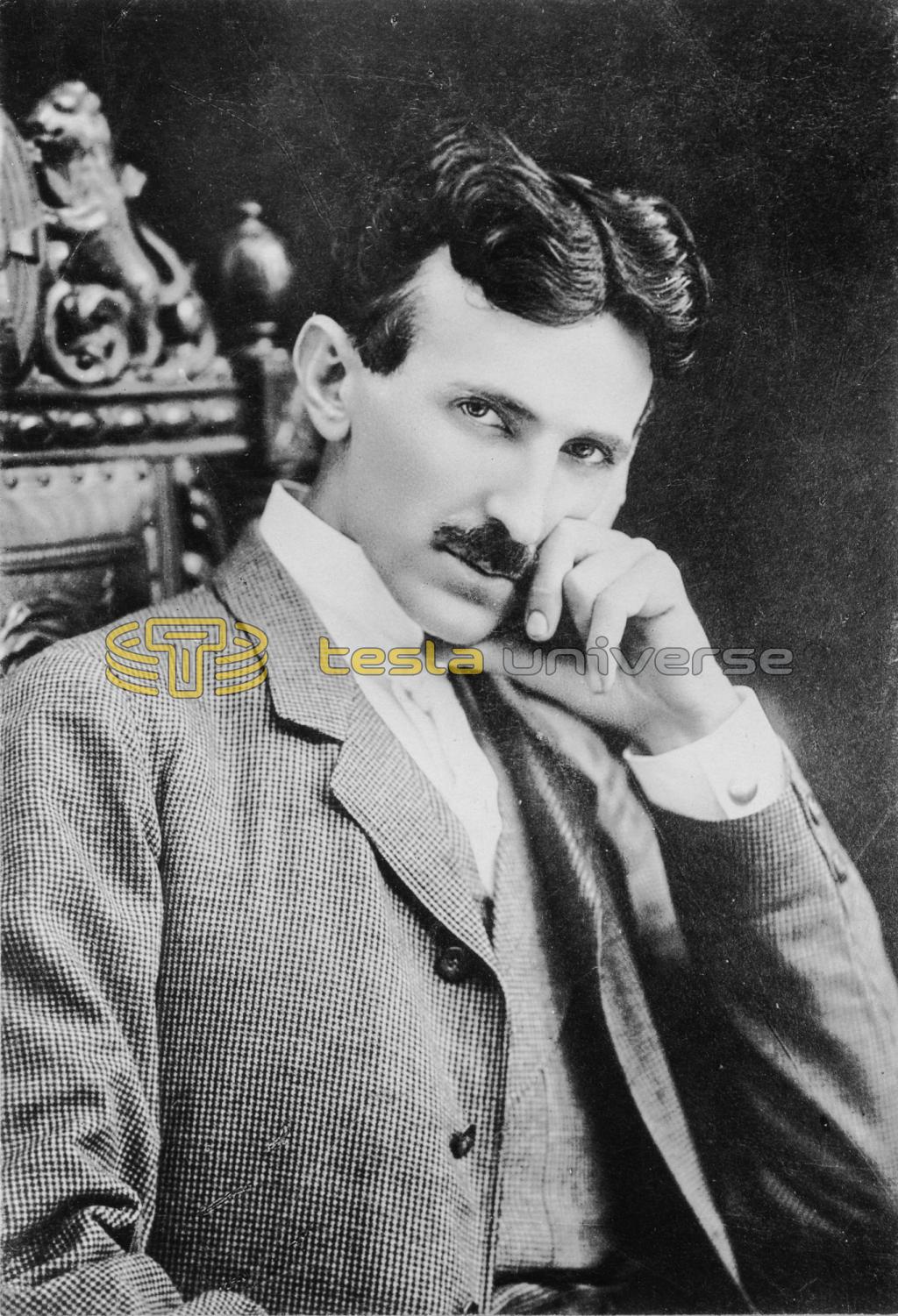
At 35 Tesla was a spectacular figure — a handsome bachelor with a million dollars, culture, and fame. His dinners at Delmonico's and the Waldorf-Astoria were the talk of the '90s. The inventor would escort guests to his laboratory below Washington Square, where he demonstrated electrical phenomena that "suggested this magician's chamber was connected directly with the seething vaults of hell." In 1895 the laboratory was destroyed by fire, and with it went most of Tesla's fortune.
Money was always a nuisance to him. For about fifteen years, following 1888, he lived well. J. P. Morgan the elder was his friend and patron; Robert Underwood Johnson, one of the editors of the Century Magazine, and Mark Twain were his close companions.
A gift of $10,000 from John Hays Hammond, famous mining engineer, helped finance experiments that led to a wireless and robot demonstration in Madison Square Garden. Col. John Jacob Astor gave Tesla $30,000 to carry on experiments in the Colorado mountains by which he produced the first man-made bolts of lightning and transmitted power through the earth without wires to a distance of 26 miles.
Meanwhile, hundreds of patents were registered in the name of Nikola Tesla — more than 900 in his lifetime. Those for which he became best known were the Tesla coil or transformer, the rotary magnetic field, an arc-lighting system, a bladeless turbine, a new speed indicator, pressure vacuum pumps, and a better lightning rod than Franklin's.
In 1912 Tesla was asked to share the Nobel Prize for physics with Edison. He declined the award of $20,000. "Tesla," O'Neill says, "declared himself a discoverer and Edison an inventor, and placing the two in the same category would completely destroy all sense of the relative value of the two accomplishments."
Twilight
"Pirated, lied about, ignored," the proud old inventor carried on his work, moving from one hotel to another. During the last half dozen years, he was paid an honorarium of $7,200 a year by the Yugoslav Government, but even with this income he still managed to fall behind.
Tesla never married. The thin figure, always immaculately clad in morning clothes, was glimpsed chiefly in Bryant Park and at St. Patrick's Cathedral, where he fed the pigeons. Each July on his birthday, Tesla gave a party for newspapermen where he served good Scotch, thick steaks, or a special roast duck and read a long paper on his achievements for the year.
There was no party in 1943. On Jan. 8 of that year, the superman died as he lived — alone. Operators from the Federal Bureau of Investigation opened the safe in his room at the Hotel New Yorker and took away papers reported to contain inventions of possible use in the war.
What secrets Tesla died with have not yet been revealed. They may have included his electrical death-ray machine which he predicted would wipe out armies, destroy airplanes, and "make any country, no matter how small," safe within its borders. "For even the gods of old, in the wildest imagining of their worshipers," O'Neill concludes, "never undertook such gigantic tasks of worldwide dimension as those which Tesla attempted and accomplished."
* 326 pages. Ives Washburn. $3.75.